


Improvisation comes from the Latin improvisus, meaning ‘unforeseen’ or ‘not anticipated’. At its essence, improvisation is about responding creatively to the unexpected. It’s a deeply human capacity that allows us to adapt, solve problems, and create meaning in real time. Every time we adjust to a new situation—whether in art, conversation, or life—we are improvising.
Psychologist and creativity researcher R. Keith Sawyer defines improvisation as ‘the art of being fully present, listening carefully, and responding with authenticity’ (Sawyer, Improvised Dialogues, 2003). This definition resonates strongly with the creative process of quilting, where each decision—a cut, a curve, a color—can shift the direction of the whole piece. Improvisation, then, is not random. It’s an art of awareness, a collaboration between intuition and experience.
Improvisation in the Arts
Across artistic disciplines, improvisation has always been a driving force of innovation. In jazz, musicians build on a harmonic framework but respond spontaneously to rhythm, tone, and one another. In dance, the body becomes a responsive instrument, echoing movement and emotion in the moment. In improvisational theater, the ‘Yes, and…’ principle encourages openness and trust, building dialogue through acceptance and collaboration.
These same principles—presence, listening, risk-taking, and trust in the process—are also essential to quilting. Improvisation invites us to embrace imperfection, to experiment, and to allow intuition to guide the creative act.
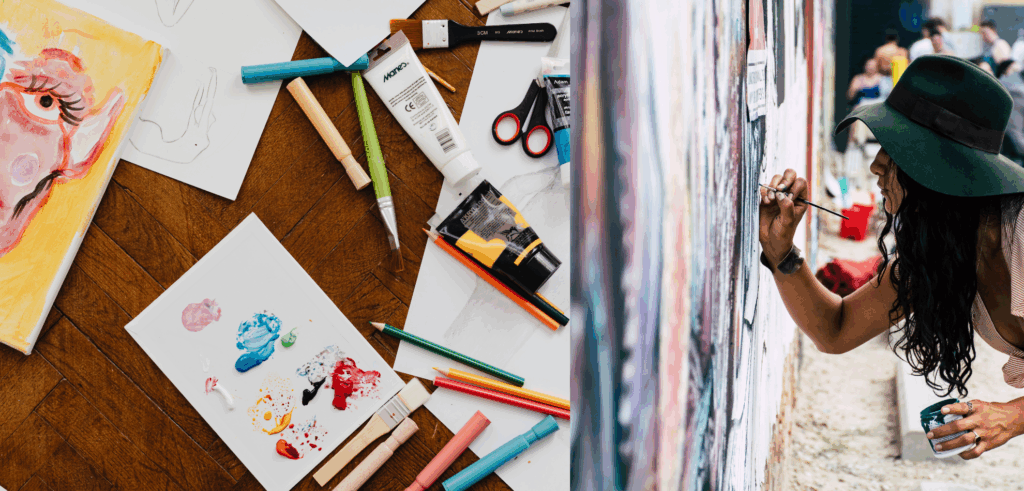
As writer and musician Stephen Nachmanovitch explains in Free Play: Improvisation in Life and Art, ‘Improvisation is not the opposite of structure; it is the act of finding structure in the moment.’ It’s a conversation between freedom and form—a dynamic that mirrors the creative heartbeat of textile art.
For a deeper look at how improvisation manifests across art forms, you can explore the Smithsonian’s overview on creativity and improvisation in the arts
Quilting and the Tradition of Improvisation
Improvisation has always been woven into the history of quilting. Long before it became a celebrated artistic style, quilters used what they had on hand—scraps, recycled garments, or leftover textiles—to construct functional and expressive pieces.
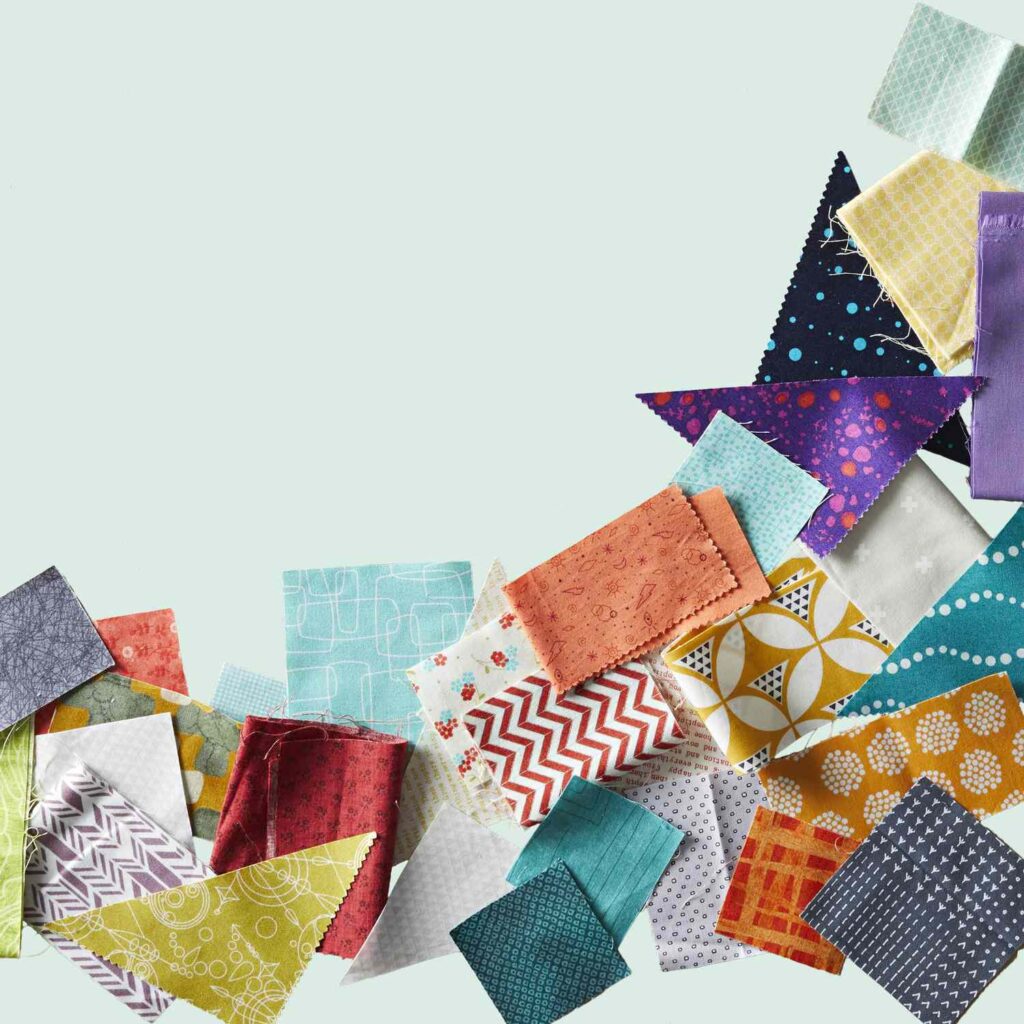
The Gee’s Bend quilters of Alabama are among the most iconic examples. Using minimal materials, they created vibrant, asymmetrical designs that broke from traditional patterns, often guided by instinct rather than templates. Their quilts are now celebrated as masterpieces of modern abstraction, exhibited in major museums worldwide (Beardsley et al., The Quilts of Gee’s Bend, 2002).
These quilters, and countless unnamed makers before them, show us that improvisation is not new—it is ancestral. It carries stories of resilience, survival, and artistic freedom. The stitches of improvisation link generations of women who, with limited resources, created beauty from constraint.

Why Improvisation Matters in Quilting Today
In our modern, highly planned world, improvisation in quilting feels like a radical act of freedom. It allows makers to step away from rigid perfectionism and rediscover joy, curiosity, and emotion through fabric.
Improvisation matters now more than ever because it offers freedom from perfection, creativity through constraints, emotional expression, and mindful presence. Improvisation cultivates flow, a state of deep engagement described by psychologist Mihaly Csikszentmihalyi in Flow: The Psychology of Optimal Experience (1990).
n other words, when we improvise, we enter a dialogue between mind, material, and moment—a kind of creative meditation that aligns our inner and outer worlds. For a fascinating perspective on creative flow, see the the American Psychological Association’s article on how flow enhances creativity
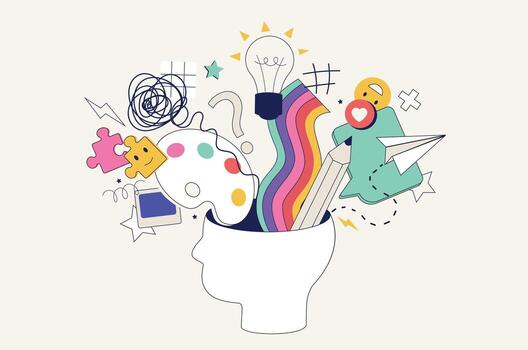
How to Practice Improvisation in Quilting
Improvisation doesn’t mean abandoning structure or skill—it means redefining them. Here are some ways to start:
• Begin small: Use leftover fabric scraps to create small compositions without overthinking.
• Set limitations: Work with a restricted palette or shape; constraints invite innovation.
• Use prompts: Try techniques like fabric collage, random color pulls, or guided exercises.
• Embrace mistakes: Let ‘errors’ lead to discovery; follow where the fabric takes you.
• Trust the process: As in music or dance, improvisation unfolds one moment at a time.
Improvisation teaches us to let go of control and trust our instincts—a lesson as valuable in life as it is in art. For quilters eager to develop this mindset, explore my online course ‘Limits and Creativity,,’ where I guide students through structured improvisation techniques.


Improvisation as a Life Practice
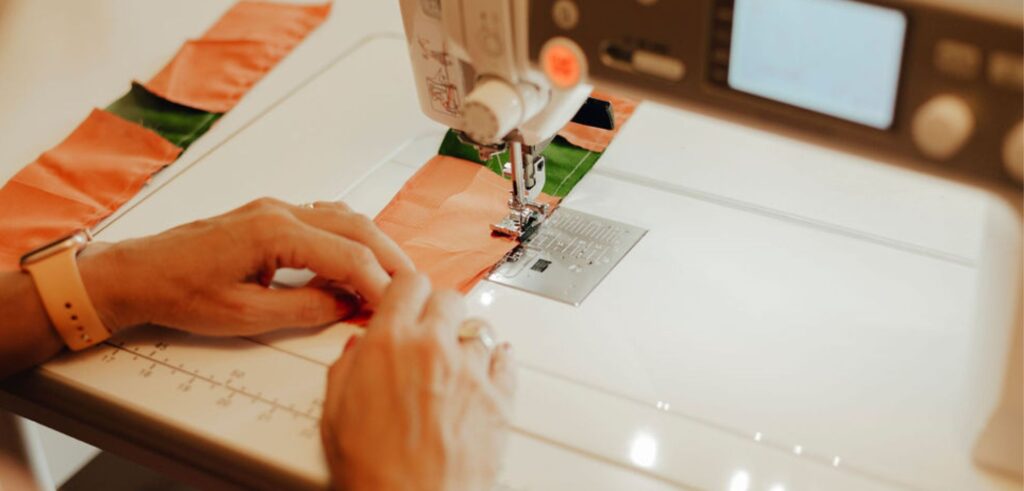
Improvisation in quilting mirrors how we navigate the unexpected in life. Not everything can—or should—be planned. Each choice, each change of direction, is a moment of adaptation. Through fabric, we learn to reframe uncertainty as opportunity.
Philosopher Donald Schön described this as ‘reflection-in-action’—thinking through doing (The Reflective Practitioner, 1983). In quilting, reflection happens in motion: the rhythm of the needle, the arrangement of color, the quiet conversation between hand and cloth. Improvisation also nurtures resilience by embracing emergence rather than resisting it.
Improvisation is not a technique reserved for jazz musicians or actors—it is a fundamental human ability that fuels creativity in all its forms. In quilting, it connects us to tradition, allows us to express emotion, and invites us to play with color and form.
By embracing improvisation, we give ourselves permission to explore, to fail beautifully, and to rediscover the joy of making. To improvise is to live creatively—to let art, fabric, and imagination remind us that beauty often begins where the plan ends.
Sources
Beardsley, J., Arnett, P., Livingston, J. (2002). The Quilts of Gee’s Bend. Tinwood Books.
Csikszentmihalyi, M. (1990). Flow: The Psychology of Optimal Experience. Harper & Row.
Klein, G. (1998). Sources of Power: How People Make Decisions. MIT Press.
Sawyer, R. K. (2003). Improvised Dialogues: Emergence and Creativity in Conversation. Ablex Publishing.
Schön, D. A. (1983). The Reflective Practitioner: How Professionals Think in Action. Basic Books.