

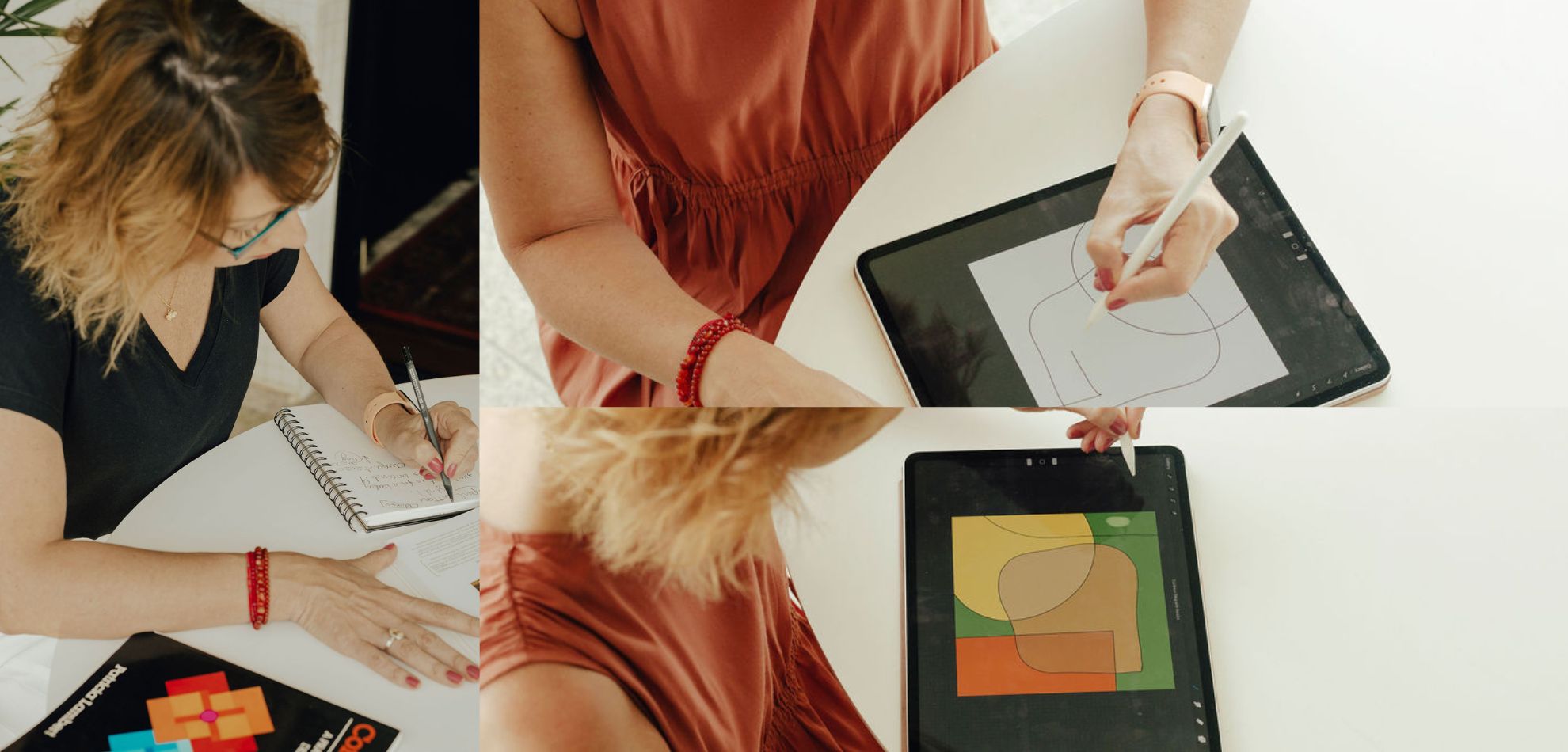
Every quilt begins long before fabric is cut. It begins as an idea — sometimes clear, sometimes uncertain, sometimes no more than a sensation or a question.
Translating that initial impulse into a finished quilt is not a linear process. It is a dialogue between intention and discovery, between thinking and making. The path from sketch to stitch is not about control, but about building a structure that allows ideas to evolve.
For me, this transformation is where design becomes alive.
The Idea as Direction, Not Destination
An idea does not need to be complete in order to be strong. In fact, the most fertile ideas are often open-ended.
My starting point may be:
- a color relationship
- a sense of movement
- a place or memory
- a compositional question
Rather than defining the final image, the idea sets a direction. It establishes intention without fixing outcome. This openness allows the work to respond to material, scale, and time.
Sketching as a Thinking Tool
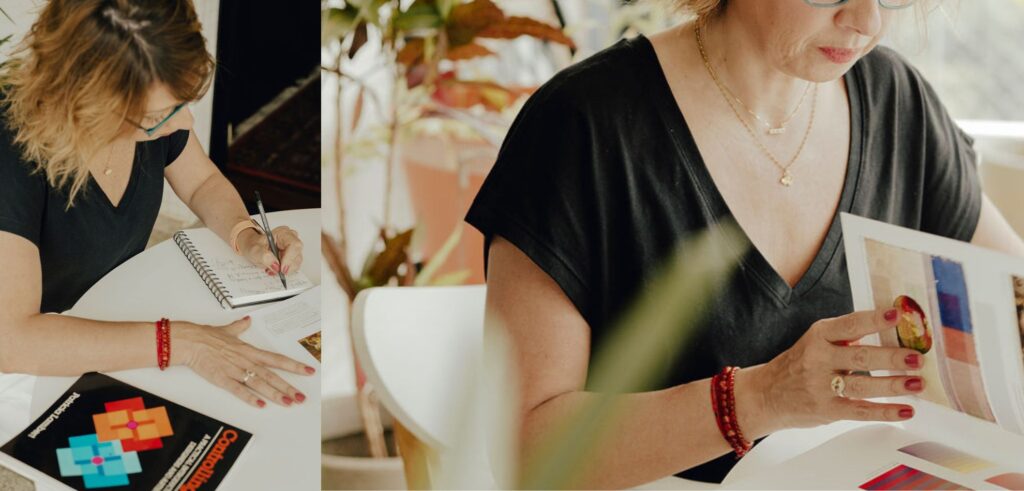
Sketching is often misunderstood as planning. I see it as thinking on paper. A sketch allows me to explore proportion, rhythm, balance, and negative space quickly and without commitment. It captures relationships, not details. It is a place to test possibilities, not to finalize decisions.
Designer Bruno Munari described sketching as a way to “think with the hands,” where drawing becomes an extension of cognition rather than preparation for execution (Design as Art, 1981).
At this stage, the sketch remains flexible. It guides, but it does not dictate.
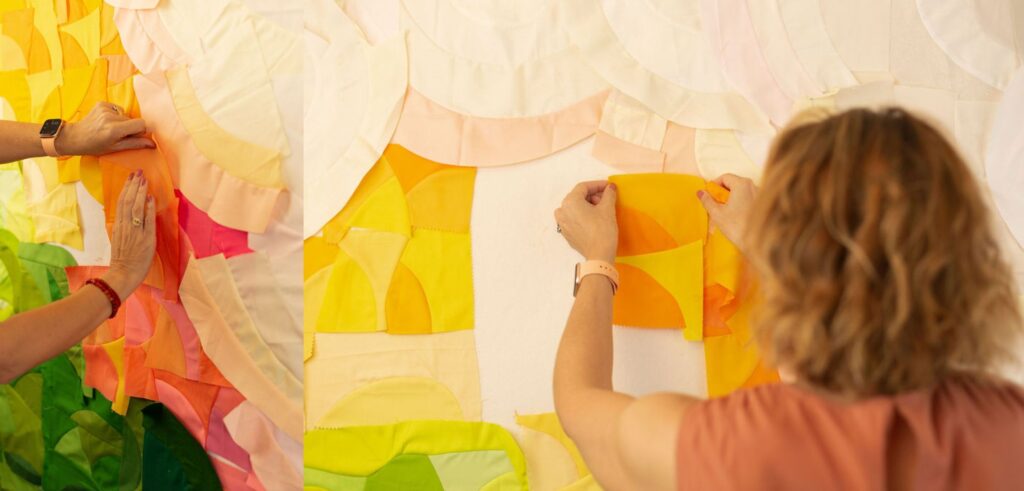
The design wall is not just a practical tool; it is a compositional thinking space. It creates distance, allowing the eye to read the work as a whole rather than as individual pieces. This shift is crucial. What feels right at the sewing table often looks very different when viewed vertically.
By pinning or placing shapes on the wall, I can begin composing intuitively:
- adjusting proportions
- testing rhythm and repetition
- evaluating movement and balance
- seeing how fabrics interact at scale
This stage often reveals what sketches cannot. The wall allows the quilt to emerge through seeing, not planning.
When Fabric Changes the Idea
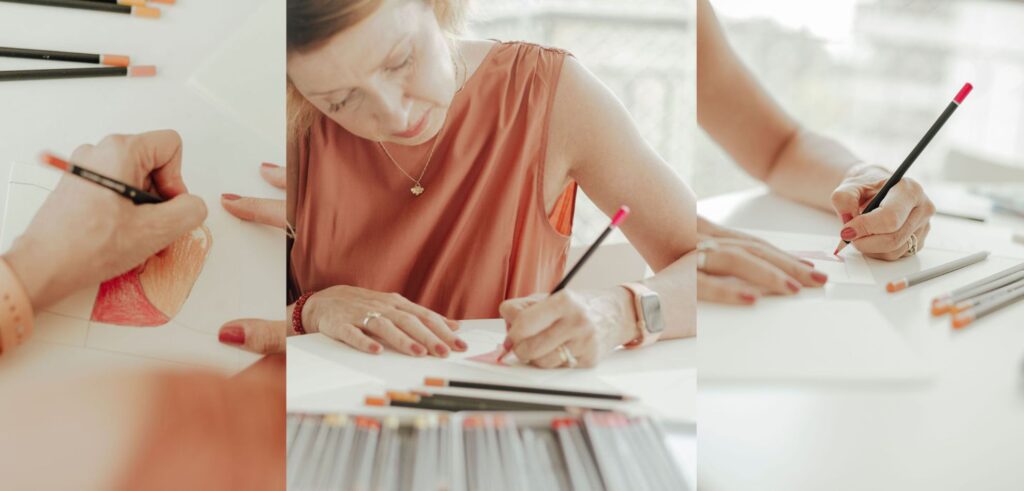
The moment fabric replaces paper, the idea evolves. Fabric has weight, texture, grain, and resistance. It reflects light differently than paint or pencil. Colors shift in scale and intensity. What worked in a sketch may feel rigid or flat once translated into cloth.
Rather than forcing fabric to follow the sketch, I allow the sketch to become a reference point. The design wall becomes the place where negotiation happens — where the idea adapts to material reality.
This is not deviation. It is collaboration.
Piecing as Design, Not Execution
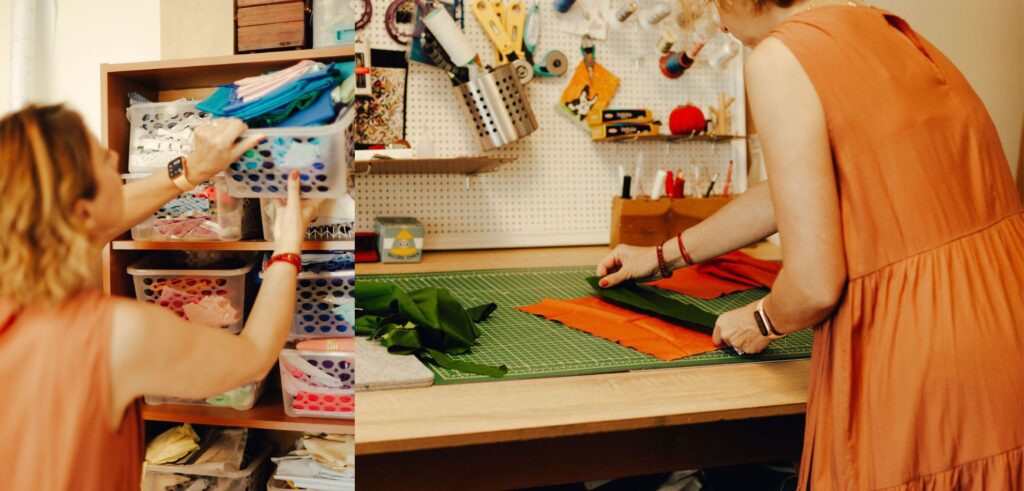
Piecing is often treated as a technical phase, but for me it is a design language.
Every seam alters rhythm. Every junction affects movement. Every adjustment reshapes the composition.
As I piece, I am constantly evaluating what I first saw on the design wall:
- how the eye moves
- where tension builds or releases
- whether the structure supports the idea
Here, my engineering background becomes central. I think in systems, sequences, and efficiency — not to restrict expression, but to strengthen it. Structure allows intuition to operate with clarity.
Allowing the Quilt to Lead
There is a point in the process when the quilt begins to suggest its own solutions. A color wants repetition. A shape asks for space. A section needs quiet. This stage requires trust.
Trying to impose the original idea too rigidly often weakens the work. Allowing the piece to evolve usually deepens it. The final quilt may differ from the initial sketch, but it often carries the idea more honestly.
Philosopher and educator Donald Schön referred to this process as “reflection-in-action” — thinking through doing, adjusting decisions while the work is still unfolding (The Reflective Practitioner, 1983).
Resolution Without Closure
Finishing a quilt does not mean resolving every tension. Some ambiguity is necessary.
I aim for:
- visual coherence
- intentional movement
- emotional clarity
but not perfection. A successful translation from sketch to stitch preserves the spirit of the idea, even if the form has changed. Integrity matters more than accuracy.
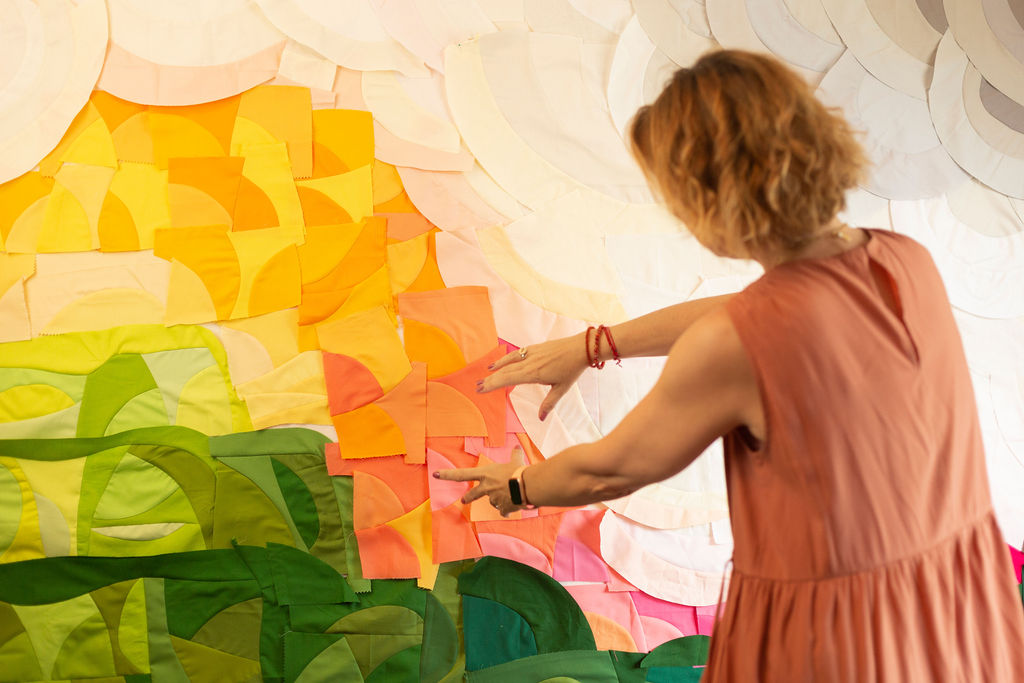
From sketch to stitch, quilting is a process of interpretation. Ideas evolve as materials respond. Decisions accumulate. Meaning emerges through seeing, adjusting, and making.
The design wall plays a central role in this journey — it is where intuition meets structure, where fabric begins to speak, and where the quilt becomes visible before it is sewn.
The finished quilt is not a copy of the original idea. It is the result of a conversation — between thought and hand, wall and table, structure and intuition.
That conversation is where the work truly lives.