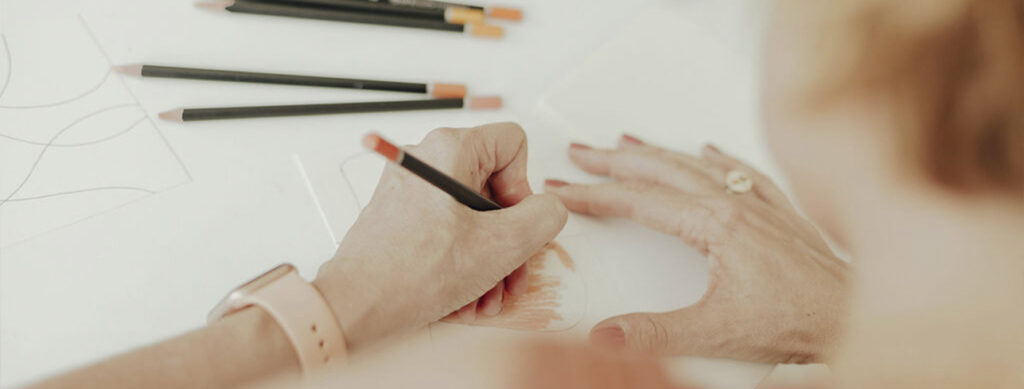

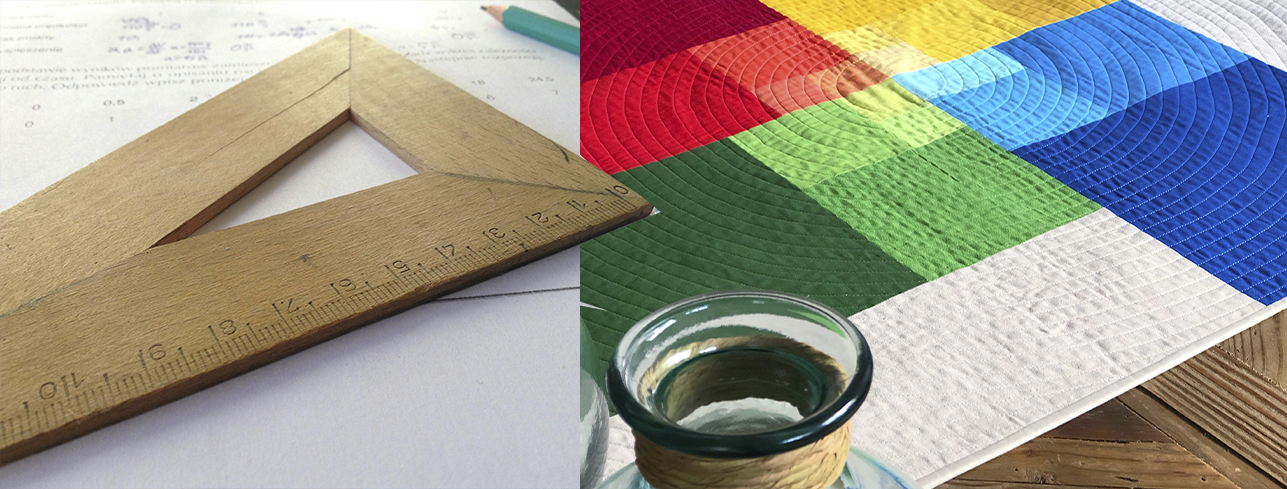
In high school, maybe you wondered how you’d use Geometry in the real world. After all, you likely didn’t expect that geometry, math, and quilting are deeply intertwined. Quilters often apply mathematical concepts intuitively, crafting visually compelling and structurally sound designs
Behind every stunning quilt lies a foundation of geometric precision, where angles, symmetry, and proportional relationships work together to create visual harmony. Did you expect there to be so much geometry in quilting? If not, read on to see how math and art intersect!
The Mathematical Foundation of Quilt Blocks
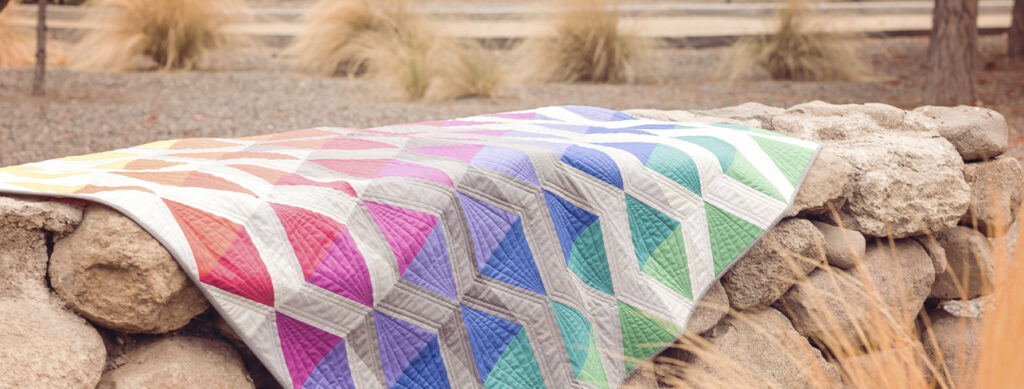
Traditional quilt blocks serve as the building blocks of larger designs, and each one represents a geometric puzzle solved through careful planning and design. The classic Nine Patch block, for instance, divides a square into nine equal segments using a 3×3 grid system. This simple division creates endless possibilities for pattern variation while maintaining mathematical consistency across the entire quilt surface.

Star blocks demonstrate more complex geometry in quilting applications, requiring precise angle calculations to achieve perfect points. The popular Ohio Star block relies on 45-degree angles and isosceles right triangles, where quilters must cut fabric pieces with mathematical accuracy to ensure the star points meet cleanly at their center.
Symmetry as the Language of Design
Symmetry governs how quilters arrange their blocks and motifs to create balanced compositions. Rotational symmetry appears frequently in quilt designs, where elements rotate around a central point to create medallion-style quilts. The traditional Wedding Ring pattern exemplifies this concept, with interlocking circles that create both bilateral and rotational symmetry throughout the design.
Reflection symmetry, or bilateral symmetry, creates mirror images across horizontal, vertical, or diagonal axes. Many appliqué quilts utilize this principle, particularly in floral designs where leaves and petals mirror each other across a central stem. Quilters instinctively understand that symmetrical arrangements feel more pleasing to the eye, though they may not realize they’re applying mathematical principles of visual balance.
The Golden Ratio and Proportional Harmony
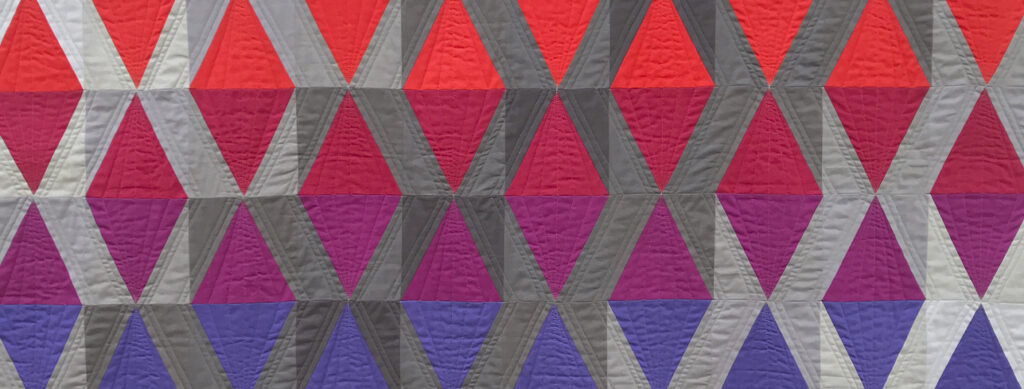
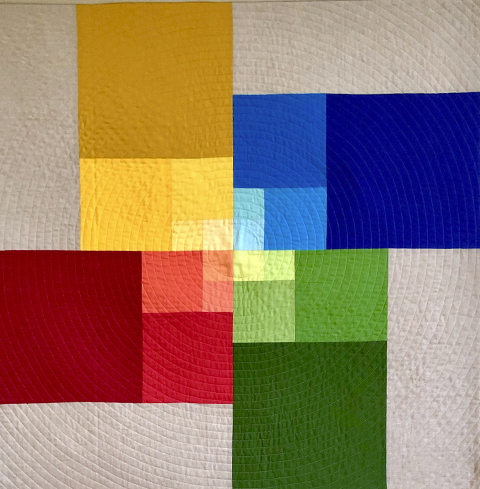
The golden ratio, approximately 1.618, appears naturally in many traditional quilt proportions, contributing to their timeless appeal. Quilters often instinctively choose fabric strip widths, border proportions, and block sizing that approximate this mathematical relationship. A quilt with borders measuring roughly 5 inches and 8 inches, respectively, creates proportions close to the golden ratio, resulting in a composition that feels naturally balanced.
Angles and Their Impact on Design
Understanding angles is crucial for successful quilt construction, particularly in designs featuring triangles, diamonds, and other angular shapes. Sixty-degree diamonds used in Tumbling Blocks quilts must be cut with perfect precision to create the three-dimensional illusion that makes this pattern so striking. The mathematical relationship between these angles creates the optical effect that makes flat fabric appear to have depth and dimension.
Modern Applications of Quilting Geometry
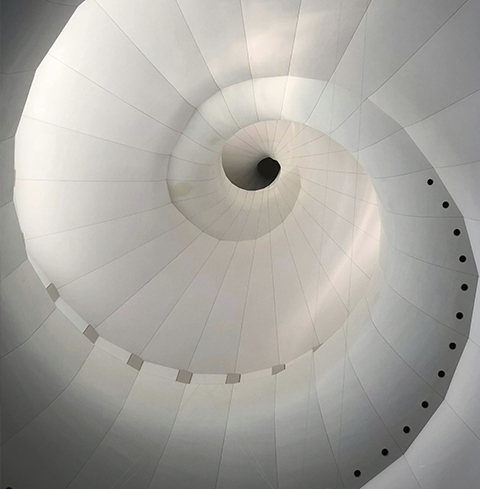
Contemporary quilters are pushing the boundaries of traditional geometric applications, using computer software to explore complex mathematical relationships in their designs. Fractal patterns, mathematical sequences like the Fibonacci series, and algorithmic design processes are finding their way into modern quilt art.
The geometry in quilting extends beyond mere decoration into the realm of mathematical art, where quilters serve as applied mathematicians, creating functional beauty through geometric precision. Each carefully measured seam, perfectly aligned point, and proportionally balanced border represents the successful application of mathematical principles to artistic expression.
Want to learn more about how an understanding of patterns and geometric shapes can expand your quilting? Check out the courses section.