

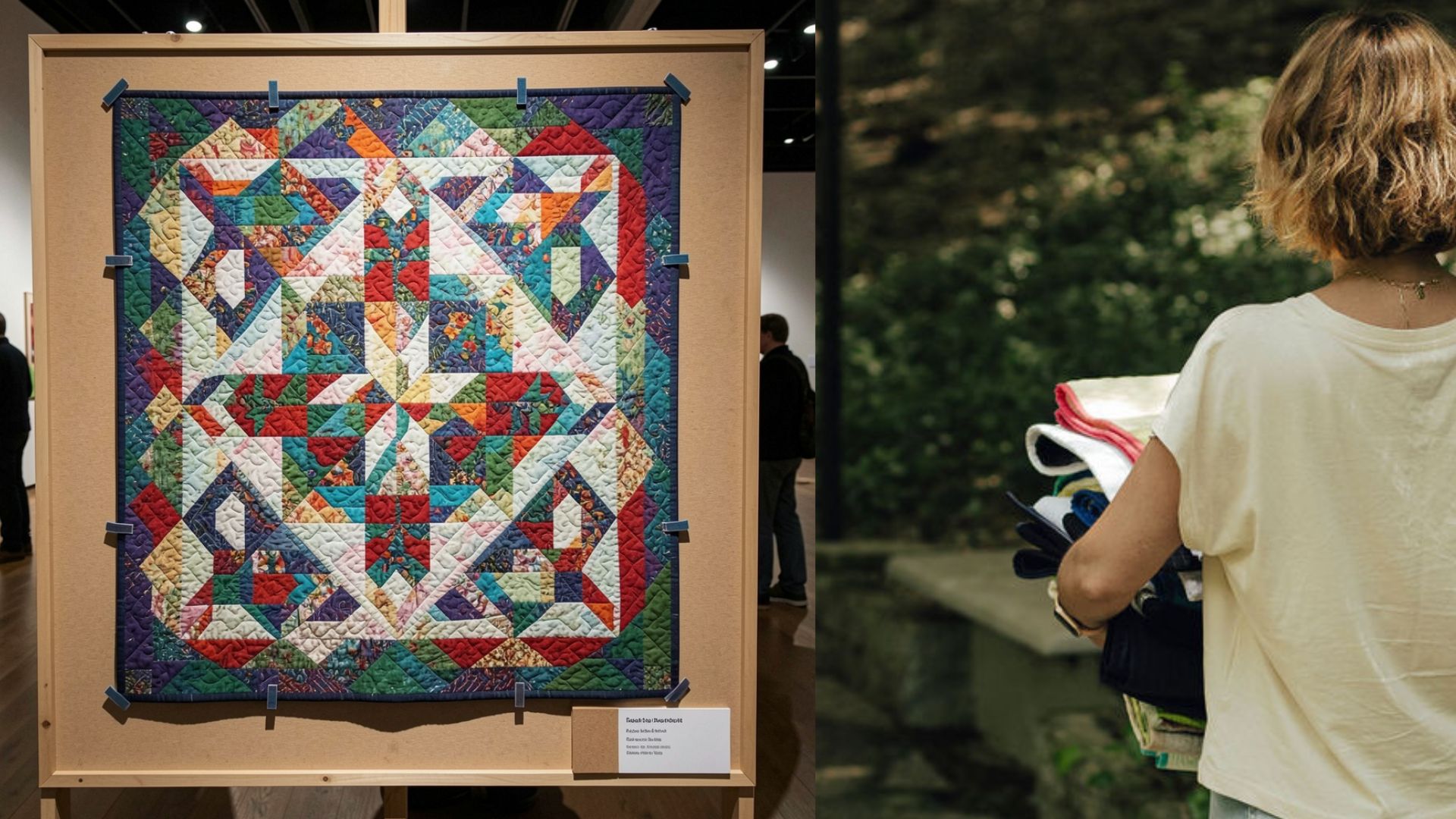
Exhibiting a quilt is not the same as finishing a quilt. Juried exhibitions — such as QuiltCon, AQS QuiltWeek, and international shows — evaluate work through structured criteria. Preparing a quilt for exhibition requires intentional design, technical refinement, and strategic presentation.
Understanding how to prepare a quilt for exhibition increases both clarity and competitiveness.

Phase 1: Concept Development
1. Start With Intentional Design
Before fabric is cut, define:
- What is the core idea?
- Is the quilt formal (design-driven) or conceptual (idea-driven)?
- What experience should the viewer have?
Design theory emphasizes that strong work emerges from intentional constraints rather than accidental composition.
In juried contexts, clarity of intent strengthens cohesion.

2. Study the Exhibition Criteria
Every exhibition has defined parameters.
For example:
- Modern Quilt Guild (QuiltCon) publishes detailed judging criteria:
https://quiltcon.com/judging - American Quilter’s Society (AQS) outlines workmanship and design standards:
https://www.americanquilter.com
Read category descriptions carefully. Many rejections result from category misalignment rather than weak design.
Phase 2: Design & Composition
Strengthen Figure-Ground and Value Structure
Gestalt psychology explains that the brain seeks organized visual systems.
Before committing to final construction, evaluate:
- Is there a clear value hierarchy?
- Does the focal area hold at a distance?
- Is negative space intentional?
- Is movement controlled?
Use your design wall as a laboratory. Photograph and convert to grayscale to assess value clarity.

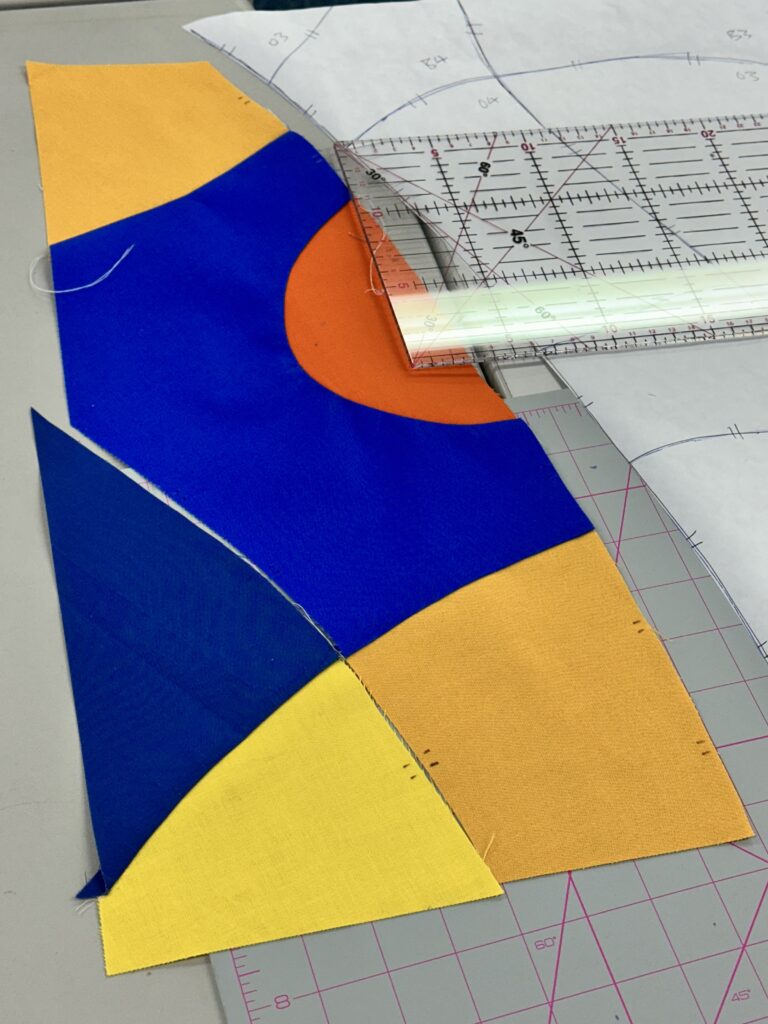
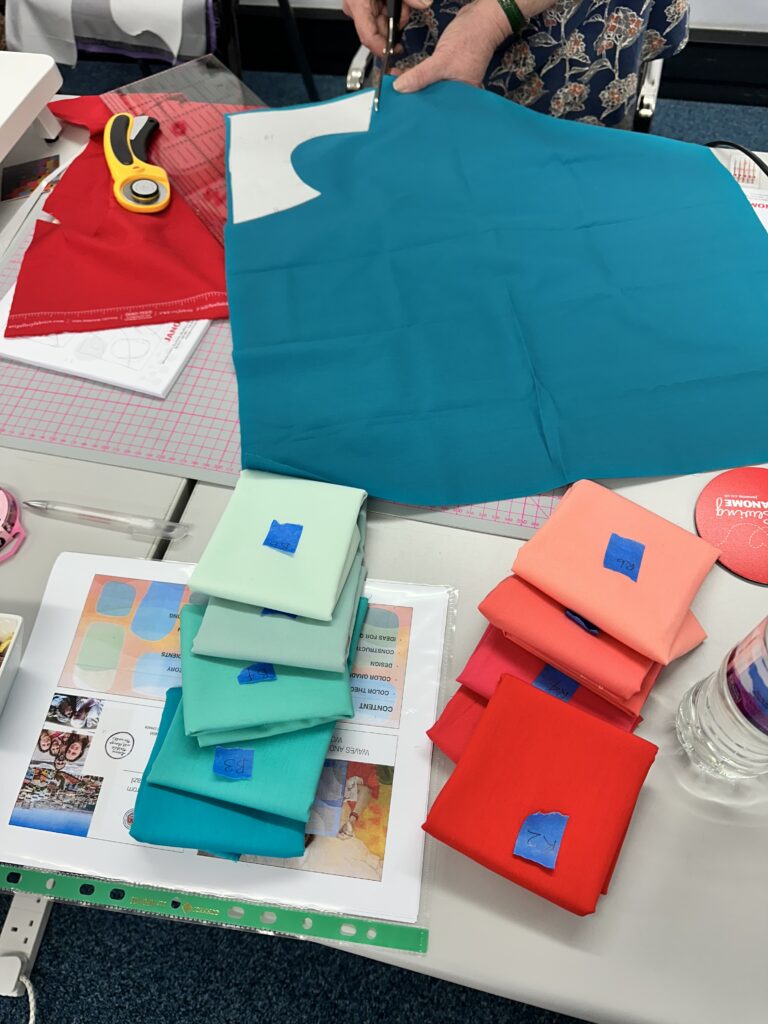
Color decisions should be deliberate.
Josef Albers demonstrated that color perception is relational in Interaction of Color.
Ask:
- Does saturation balance support the design?
- Are complementary contrasts controlled?
- Do colors reinforce hierarchy or compete unintentionally?
Award-winning quilts often show intentional color logic.
Phase 3: Technical Execution
Elevate Craftsmanship
Even in concept-driven exhibitions, technical execution matters.
Judges often evaluate:
- Seam precision
- Consistent seam allowances
- Flat construction
- Smooth borders
- Clean binding
- Secure hanging sleeve
The American Quilter’s Society emphasizes workmanship in its judging standards. Technical excellence supports design clarity.



Quilting as Structural Element
Quilting lines should not be an afterthought.
Evaluate:
- Does quilting reinforce movement?
- Does density support or overwhelm the design?
- Is thread tension consistent?
- Does texture enhance the concept?
Quilting can strengthen figure-ground or unintentionally disrupt it.
Phase 4: Professional Presentation
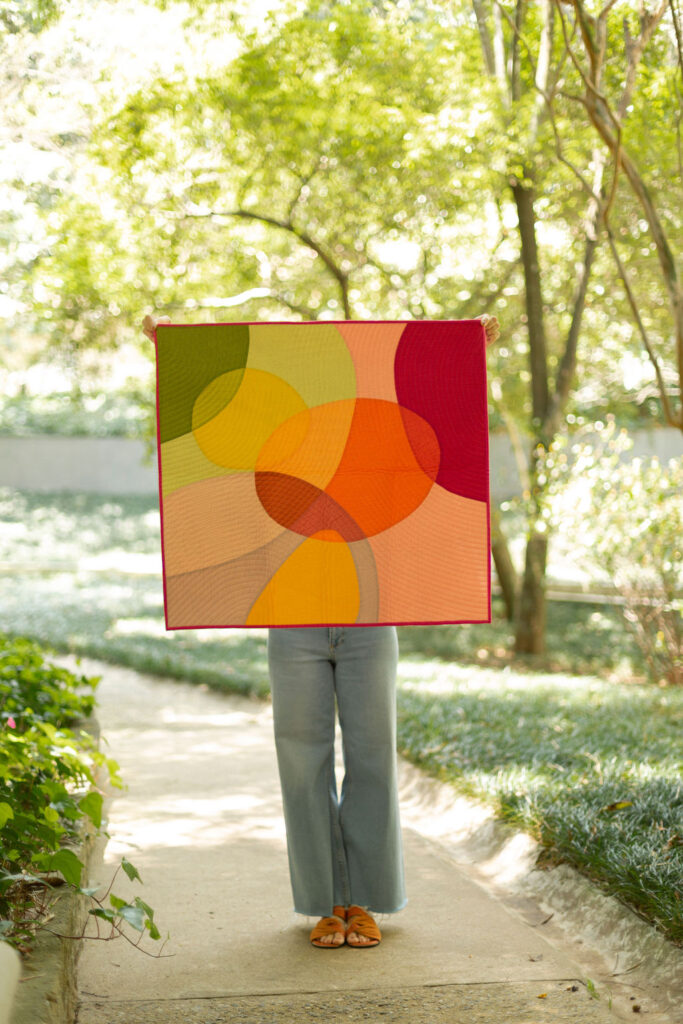
Photographing Your Quilt for Submission
Many exhibitions are juried from digital images. Photography quality directly impacts acceptance.
Best practices:
- Use indirect natural light.
- Photograph straight-on (no distortion).
- Crop tightly.
- Avoid shadows and wrinkles.
- Ensure accurate color balance.
Organizations like the Modern Quilt Guild provide image guidelines for submissions.
Poor photography can undermine strong work.

Writing the Artist Statement
If required, write clearly and concisely.
An effective statement:
- Explains intent.
- Avoids over-description.
- Connects concept to design choices.
- Is professional and free of excess emotion.
Art critique theory emphasizes separating description from interpretation.
Judges evaluate clarity of thought as well as design.
Phase 5: Submission Strategy
Understand That Judging Is Comparative
Quilt competitions are comparative, not absolute. A strong quilt may not win in a particularly competitive year. Resilience is part of professional artistic practice.
Review Before Submission
Before submitting, ask:
- Does this quilt represent my strongest work?
- Is the design resolved?
- Is craftsmanship refined?
- Are images professional?
- Does it align with category requirements?
Have a trusted colleague review both images and statement.

Emotional Preparation
Structured critique frameworks reduce emotional harm. Art education research supports critique models that resilience. Public exhibition involves vulnerability.
Submission requires acceptance of:
- Possible rejection
- Public critique
- Comparative evaluation
Professional artists separate outcome from identity.

What Judges Often Notice Immediately
Experienced judges typically notice:
- Intentional risk
- Clear focal point
- Strong value hierarchy
- Cohesion
- Technical precision
- Innovation
Ambiguity, imbalance, or unresolved composition are often visible quickly.
Preparing a quilt for exhibition is not simply about finishing.
It is about:
- Intentional design
- Structural clarity
- Technical refinement
- Professional presentation
- Emotional resilience