

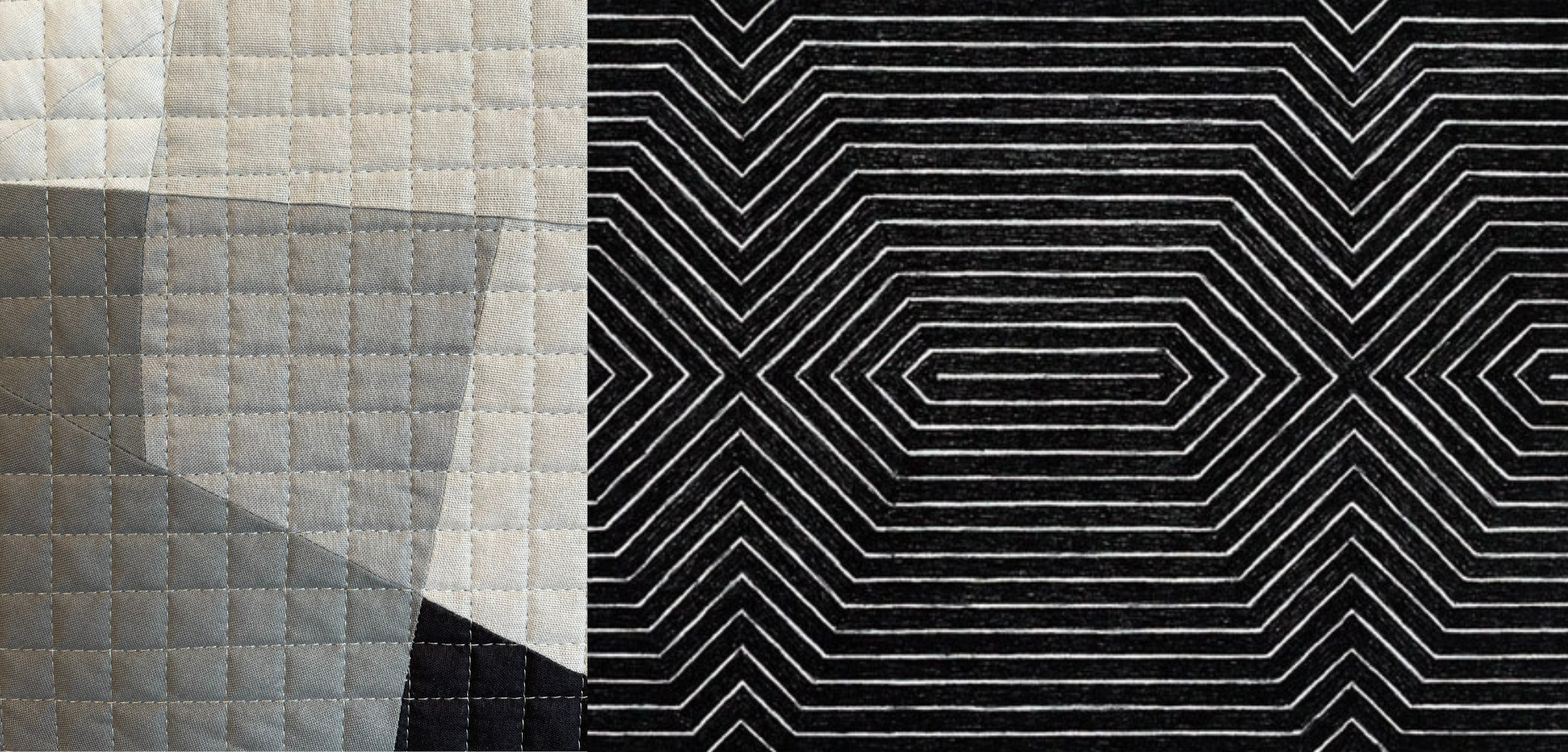
Minimalism in quilting is often associated with:
- Reduced ornamentation
- Large areas of negative space
- Limited color palettes
- Simple geometric or organic forms
- High contrast compositions


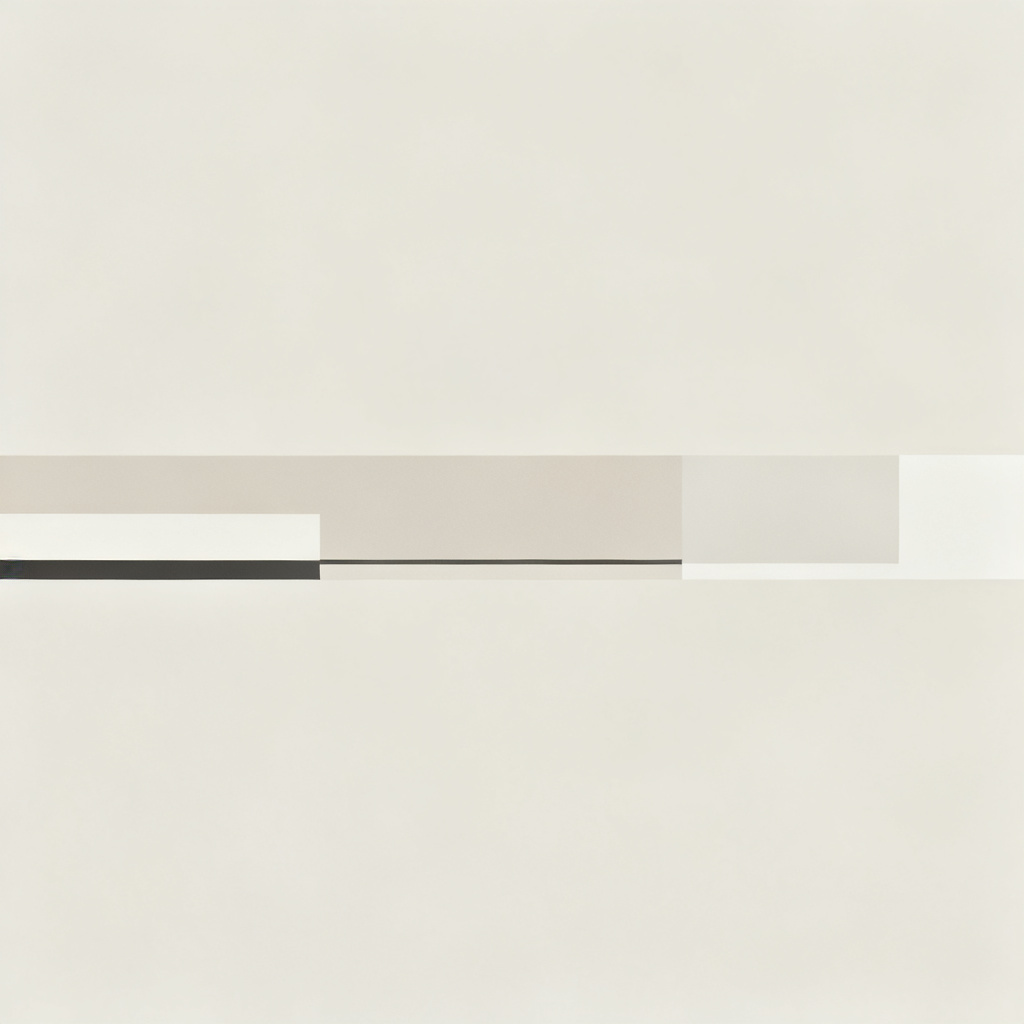
But an important question remains:
Is minimalism in quilting simply an aesthetic choice — or is it a philosophical position about design, intention, and visual clarity?
To answer this, we need to look beyond quilting and into modern art theory.
The Origins of Minimalism in Art
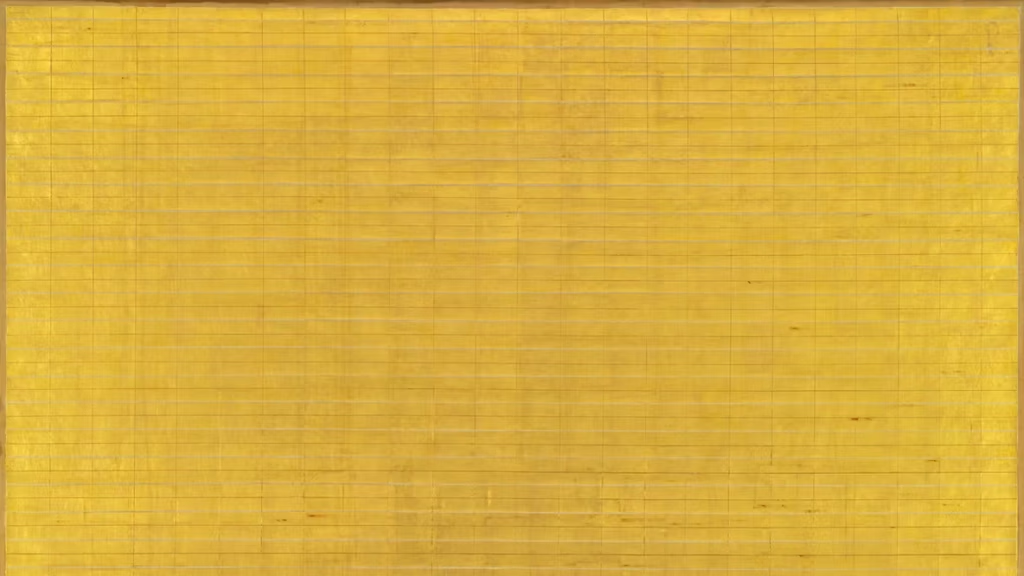
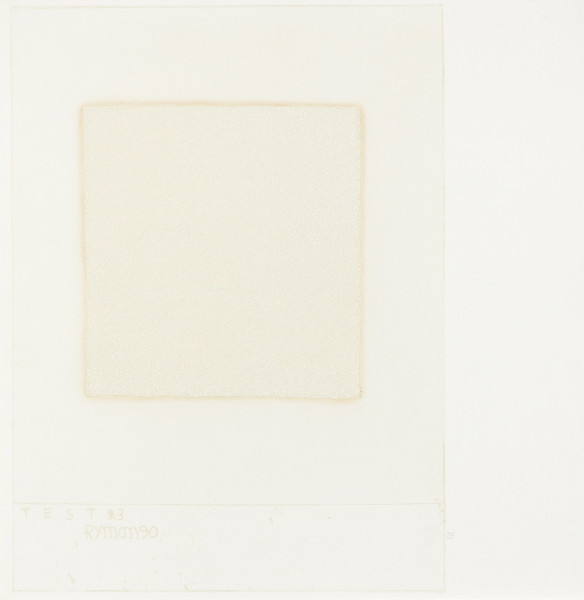
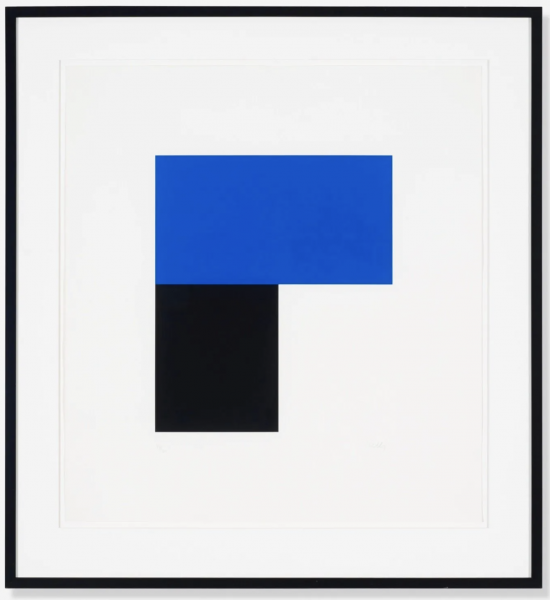
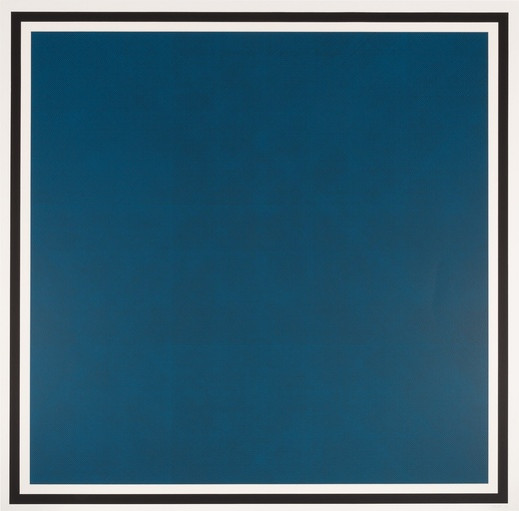
Minimalism emerged in the 1960s as a reaction against Abstract Expressionism. Artists rejected emotional excess and gestural complexity in favor of clarity, reduction, and objecthood.
Key minimalist artists include:
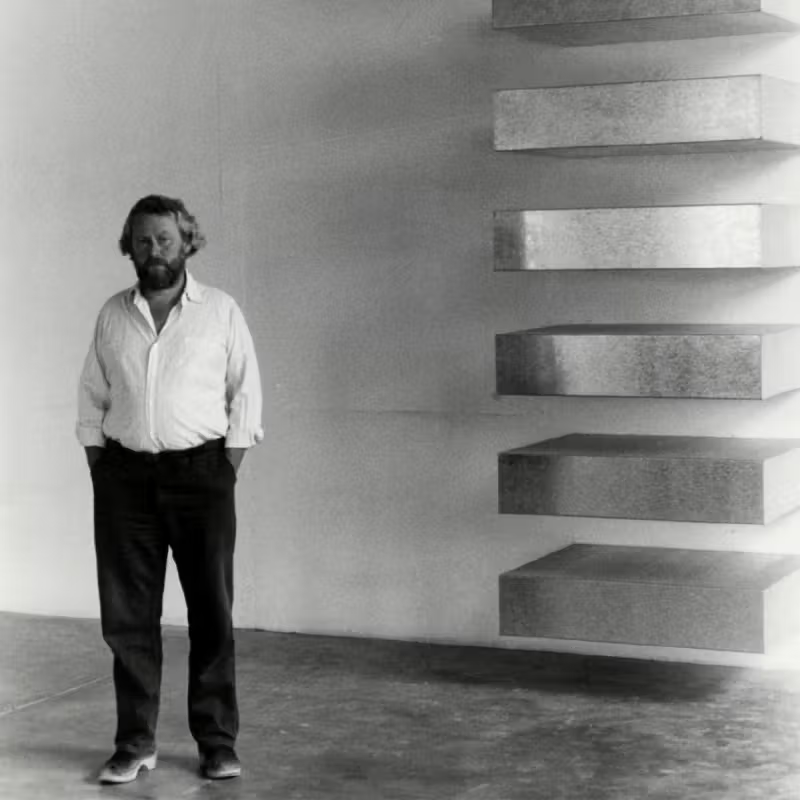
- Donald Judd
- Agnes Martin
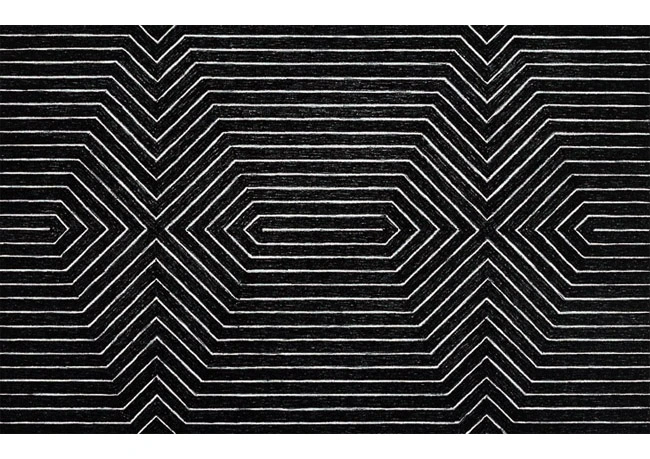
- Frank Stella
Minimalist art emphasized:
- Focus on material presence
- Industrial precision
- Repetition
- Geometric structure
- Elimination of narrative
Minimalism was not decorative simplicity. It was conceptual reduction.
Minimalism and Bauhaus Influence
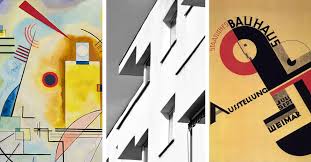
Minimalism is also influenced by Bauhaus design principles, particularly the belief that form follows function.
The Bauhaus school, founded by Walter Gropius, promoted:
- Functional clarity
- Structural honesty
- Geometric abstraction
- Reduction of ornament
Modern quilting often inherits this visual language:
- Clean lines
- Structural balance
- Geometric clarity
- Intentional use of negative space
This connects minimalism in quilting to design philosophy — not just style.
Minimalism in Modern Quilting
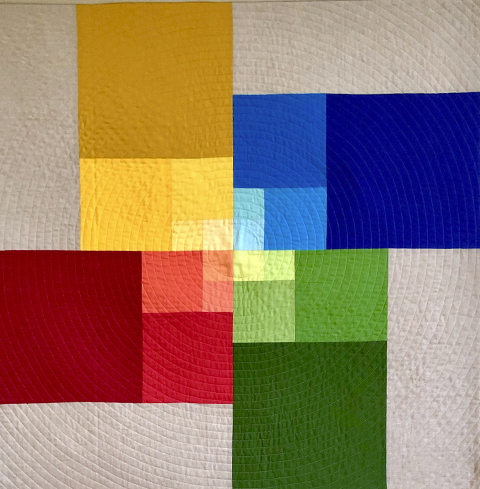
Within contemporary quilting — particularly through the influence of the Modern Quilt Guild — minimalism has become visually recognizable.
Characteristics include:
- Expansive negative space
- Asymmetrical balance
- Controlled color palettes
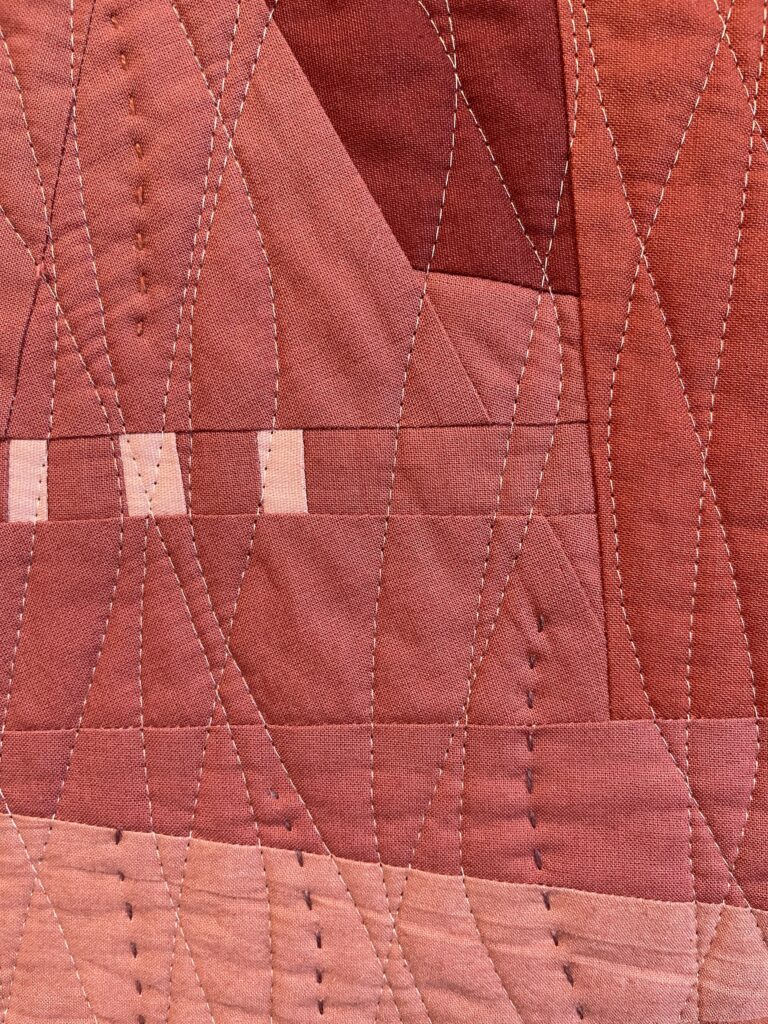
- Emphasis on quilting lines as structure
However, minimalism in quilting operates differently from painting or sculpture.
Quilts inherently contain:
- Soft materiality
- Stitch structure
- Tactile surface
- Repetition of labor
This adds complexity to the minimalist framework.
The Role of Negative Space
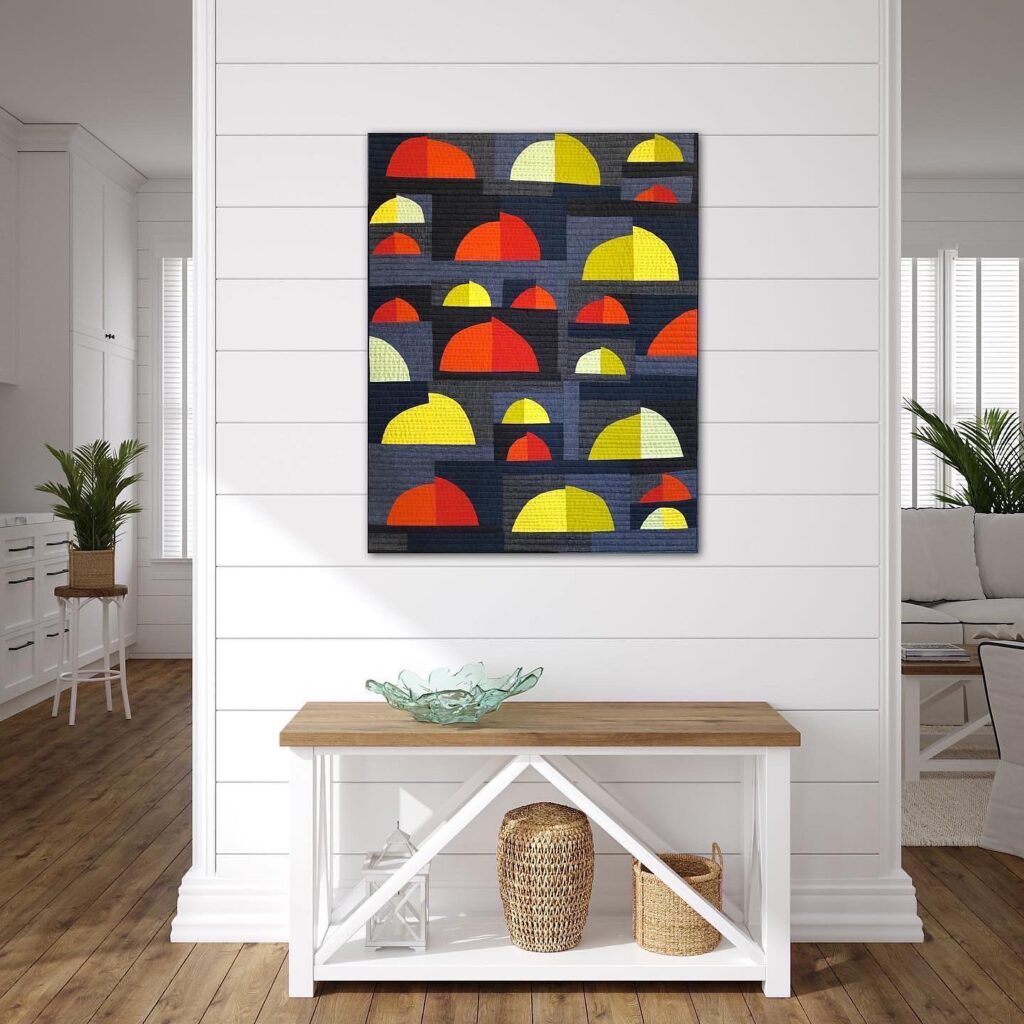
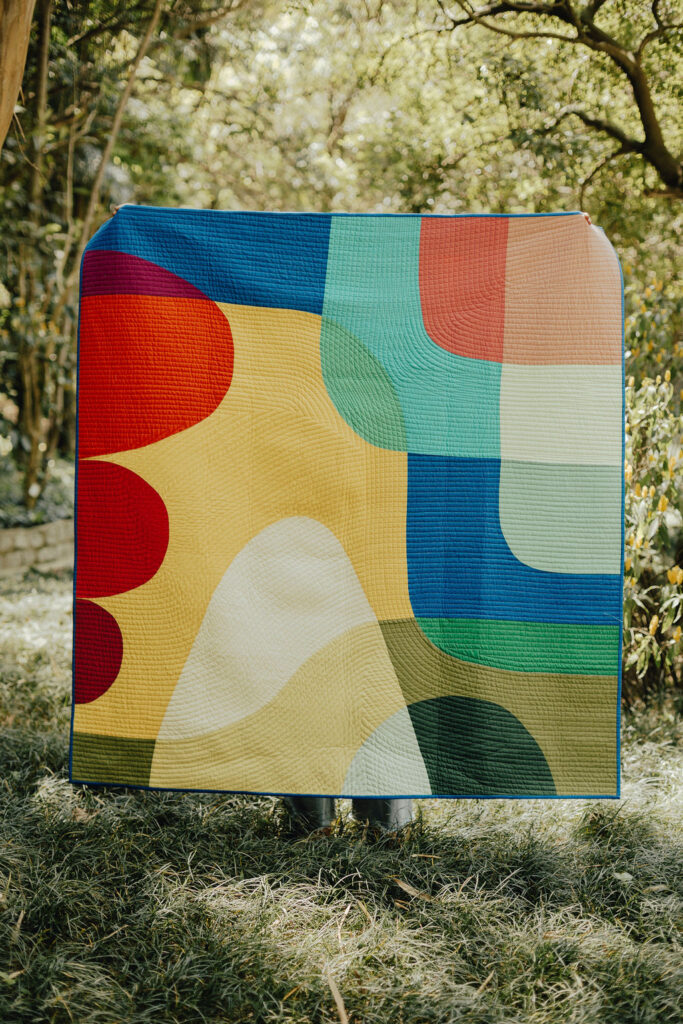
Negative space is central to minimalist quilt design.
In visual perception theory, empty space is not neutral. It shapes hierarchy and figure-ground clarity. Gestalt psychology explains how the brain organizes figure and ground relationships.
In minimalist quilts:
- Negative space amplifies focal shapes.
- It increases visual tension.
- It creates breathing room.
- It establishes hierarchy.
Without strong figure-ground control, minimalism becomes emptiness rather than clarity.
Minimalism as Aesthetic
From an aesthetic perspective, minimalism in quilting:
- Reduces visual complexity
- Limits color variation
- Emphasizes structure over decoration
- Prioritizes composition
In this view, minimalism is a stylistic decision. A quilt may be minimalist because the maker prefers restraint. But this alone does not make it philosophical.
Minimalism as Philosophy
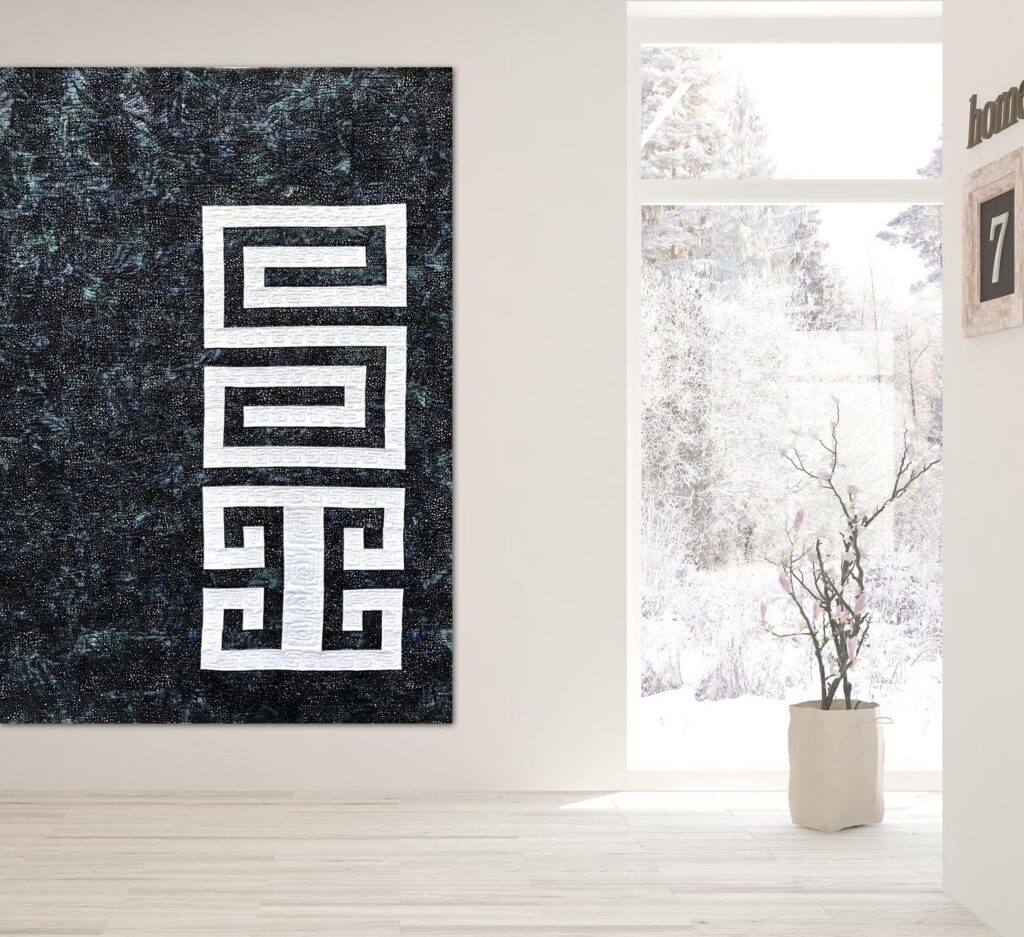
Minimalism becomes philosophical when it reflects intentional design principles such as:
- Reduction to essential elements
- Emphasis on material honesty
- Structural clarity
- Elimination of unnecessary ornament
- Focus on perception rather than narrative
In art theory, minimalism is often connected to phenomenology — the study of experience and perception.
Minimalist works invite viewers to engage with:
- Space
- Scale
- Material
- Proportion
In quilting, this may translate into:
- Emphasis on quilting lines
- Exploration of texture over imagery
- Investigation of color interaction
- Focus on compositional balance
Minimalism then becomes an inquiry.
The Risk of Superficial Minimalism
A common misunderstanding in modern quilting is equating minimalism with:
- Few pieces
- Large blank areas
- Simple blocks
True minimalism requires structural precision. Because there are fewer elements, each decision carries greater weight:
- Value contrast must be intentional.
- Negative space must be balanced.
- Proportion must be controlled.
- Saturation must be deliberate.
Reduction increases responsibility.
Minimalism and Color Theory
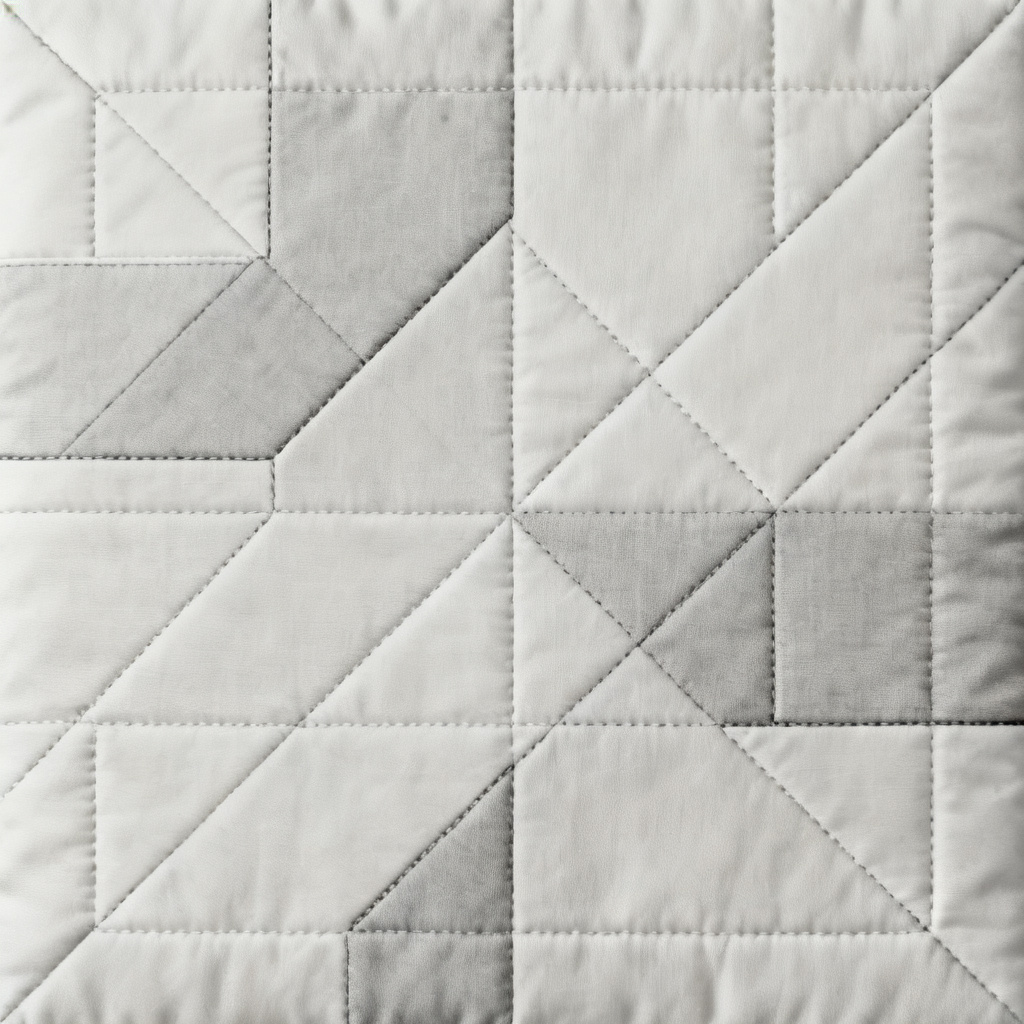
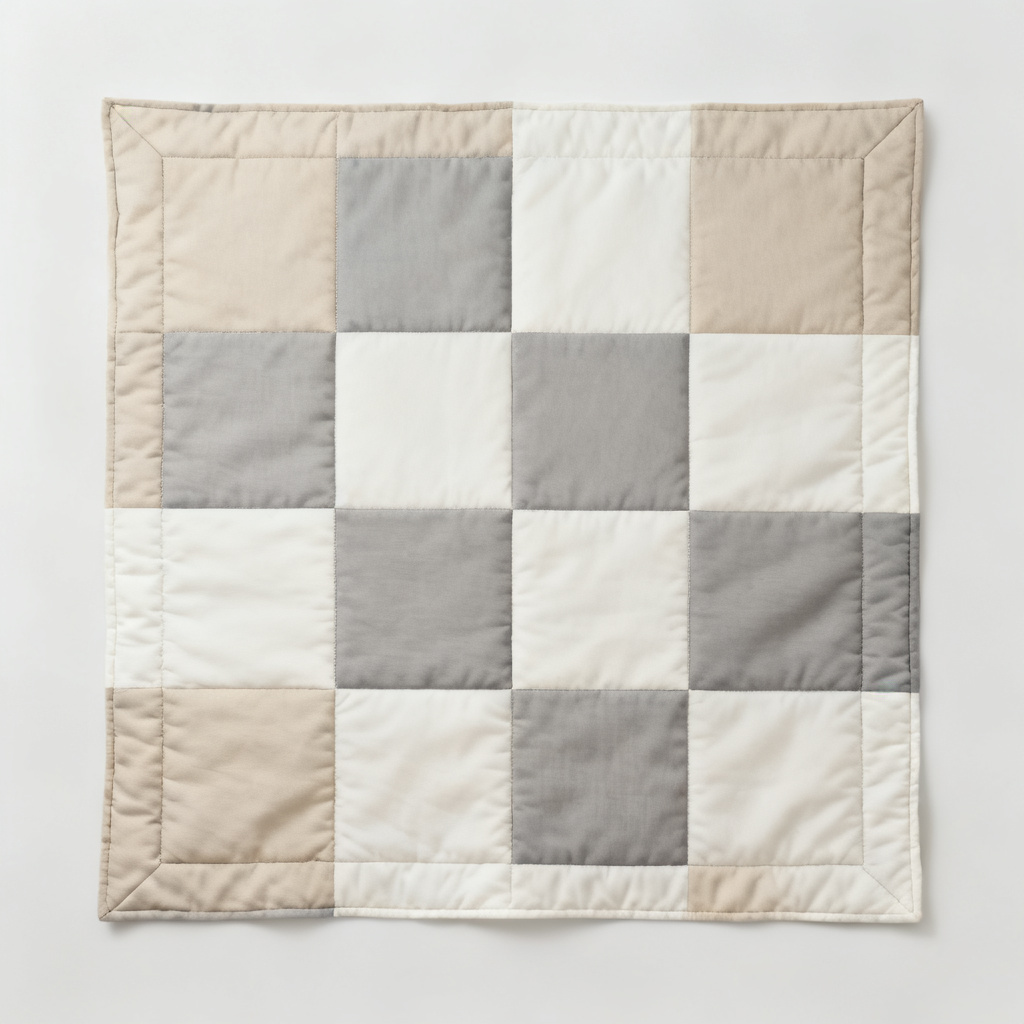
In limited palettes, color relationships become more visible. Josef Albers demonstrated that color is relational and unstable.
When working minimally:
- Small shifts in hue become significant.
- Value contrast becomes structural.
- Saturation imbalance becomes obvious
Minimalism magnifies design decisions.
Is Minimalism in Quilting Still “Modern”?
An important contemporary question is whether minimalism remains innovative or has become conventional within modern quilting. When a visual language becomes widespread, it risks becoming formulaic.
Minimalism remains philosophically relevant when:
- It is used to explore perception.
- It investigates space and structure.
- It challenges expectation.
- It is intentional rather than trendy.
Otherwise, it remains aesthetic styling.
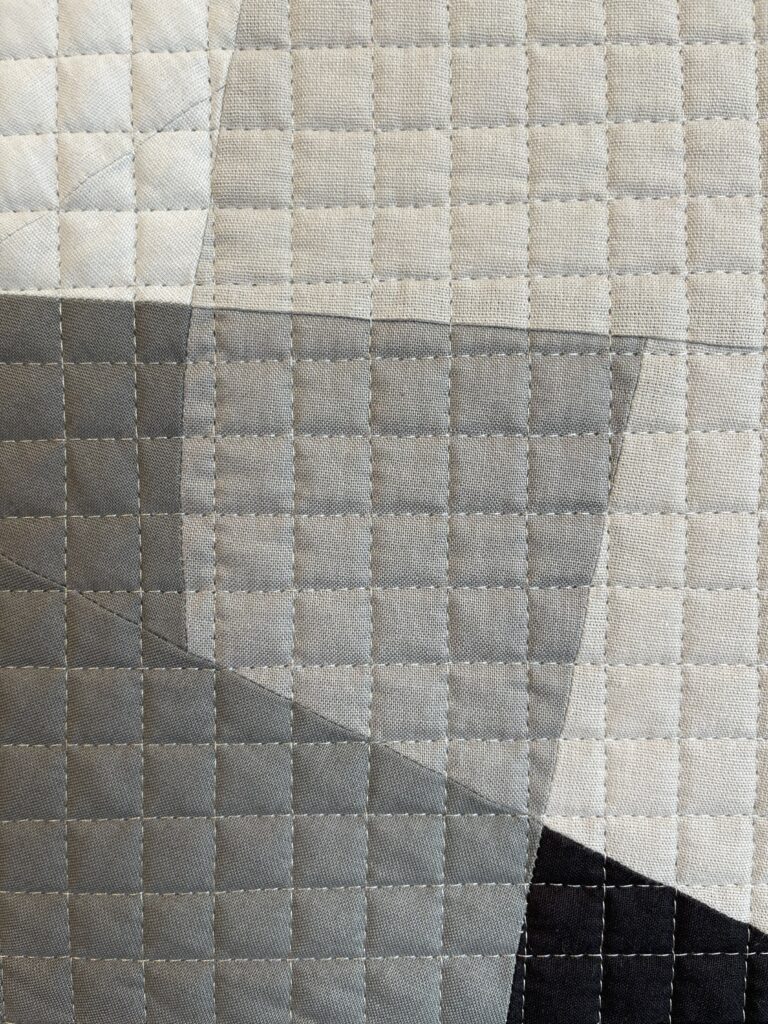
Minimalism in quilting can be both aesthetic and philosophy.
As aesthetic:
- It simplifies.
- It reduces.
- It clarifies visually.
As philosophy:
- It prioritizes structure.
- It values intention.
- It explores perception.
- It removes excess deliberately.