

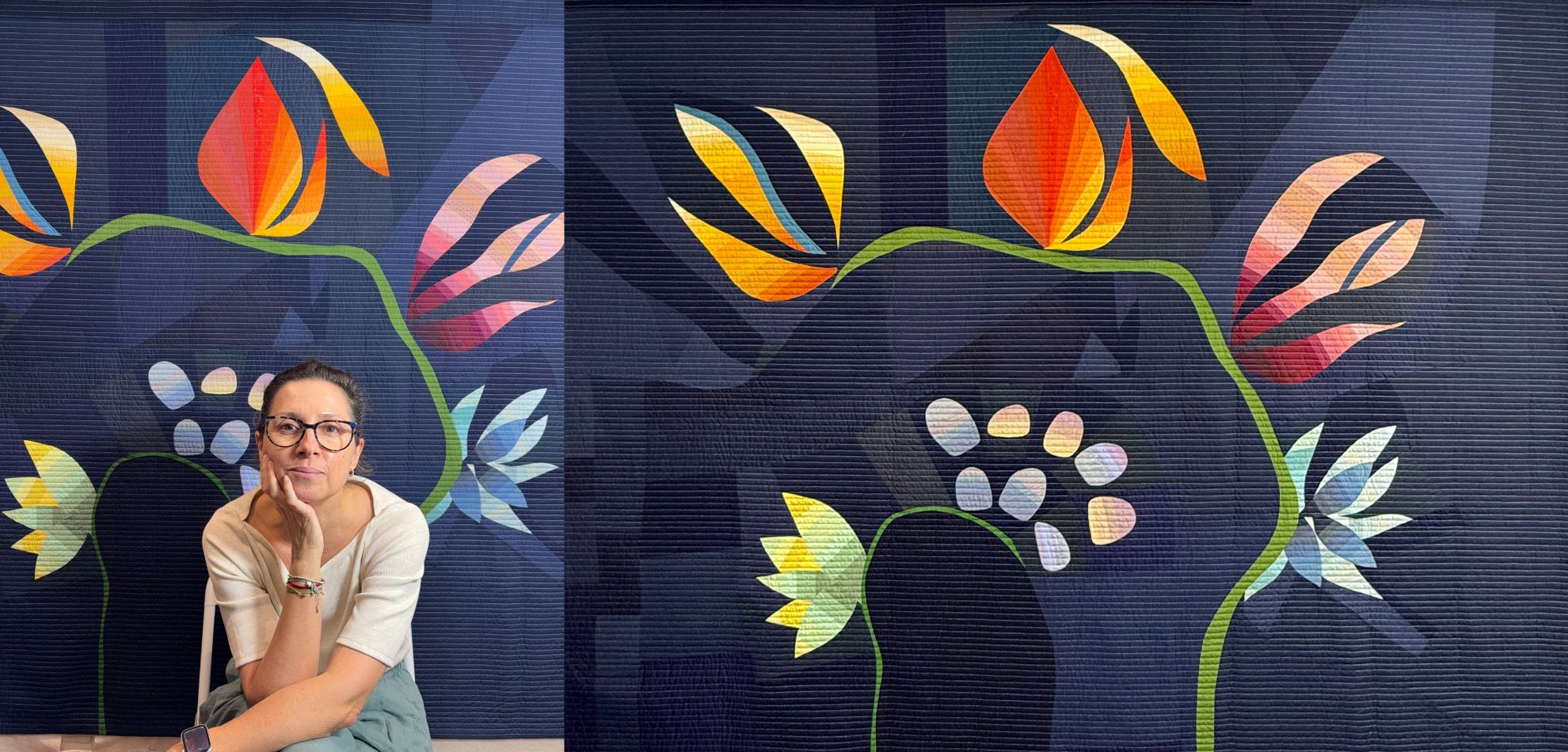
Some quilts begin with a plan — others bloom from memory.
“Casagrande” was born from longing: a longing for the vibrant colors, humid air, and lush nature of the place I once called home in southern São Paulo, Brazil.
Now living in Mexico, I often find myself missing that feeling — the warmth of the weather, the rhythm of tropical light, and the deep greens that seemed to breathe life into everything. Through this quilt, I tried to bring those sensations back: the energy of flowers, the whisper of the mata atlântica, and the calm of long walks in our neighborhood park, which felt like a small sanctuary inside a huge city.
A Place Called Casagrande
Casagrande wasn’t just the name of our home — it was a place of harmony between city and nature. Every morning, I could hear birds before the sound of cars. There was always a touch of mist in the air, a kind of living humidity that softened everything.
Our neighborhood had a park full of native trees and flowers that reminded me of the mata atlântica — a tropical forest where color, scent, and sound intertwined. That park became a place of meditation, a moment of peace within the energy of São Paulo.
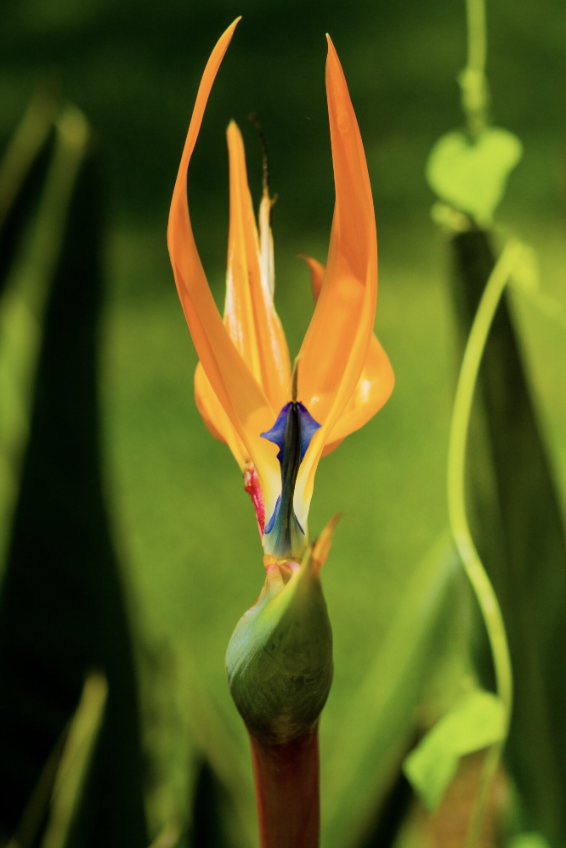
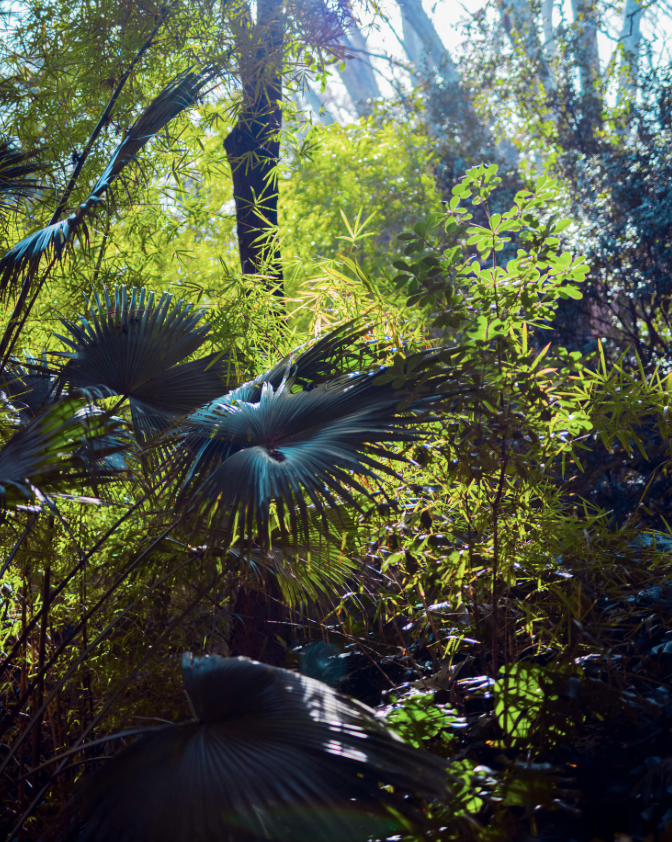
When I began creating this quilt, I wanted to capture that exact contrast: the vitality and movement of the flowers against the quiet depth of the background — a memory of sunlight glowing through shade.
Translating Nature Into Fabric
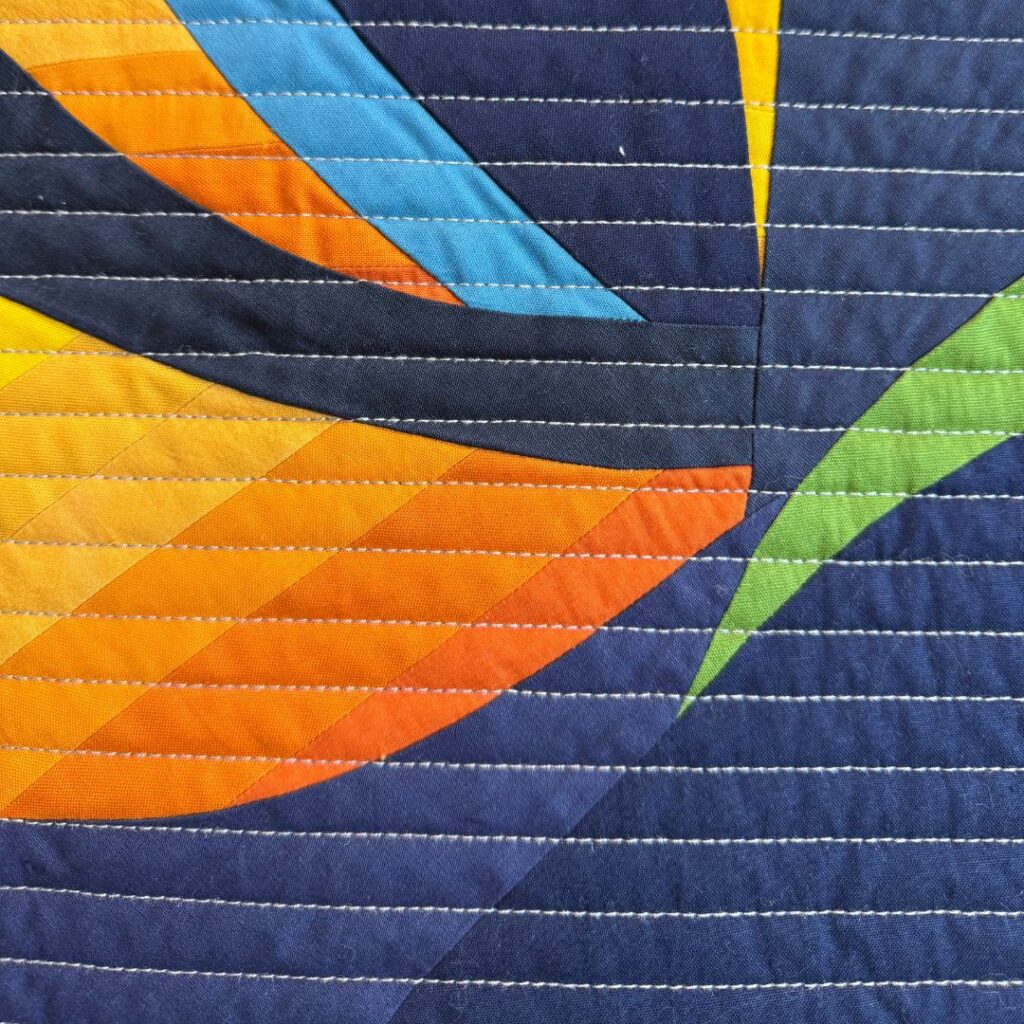
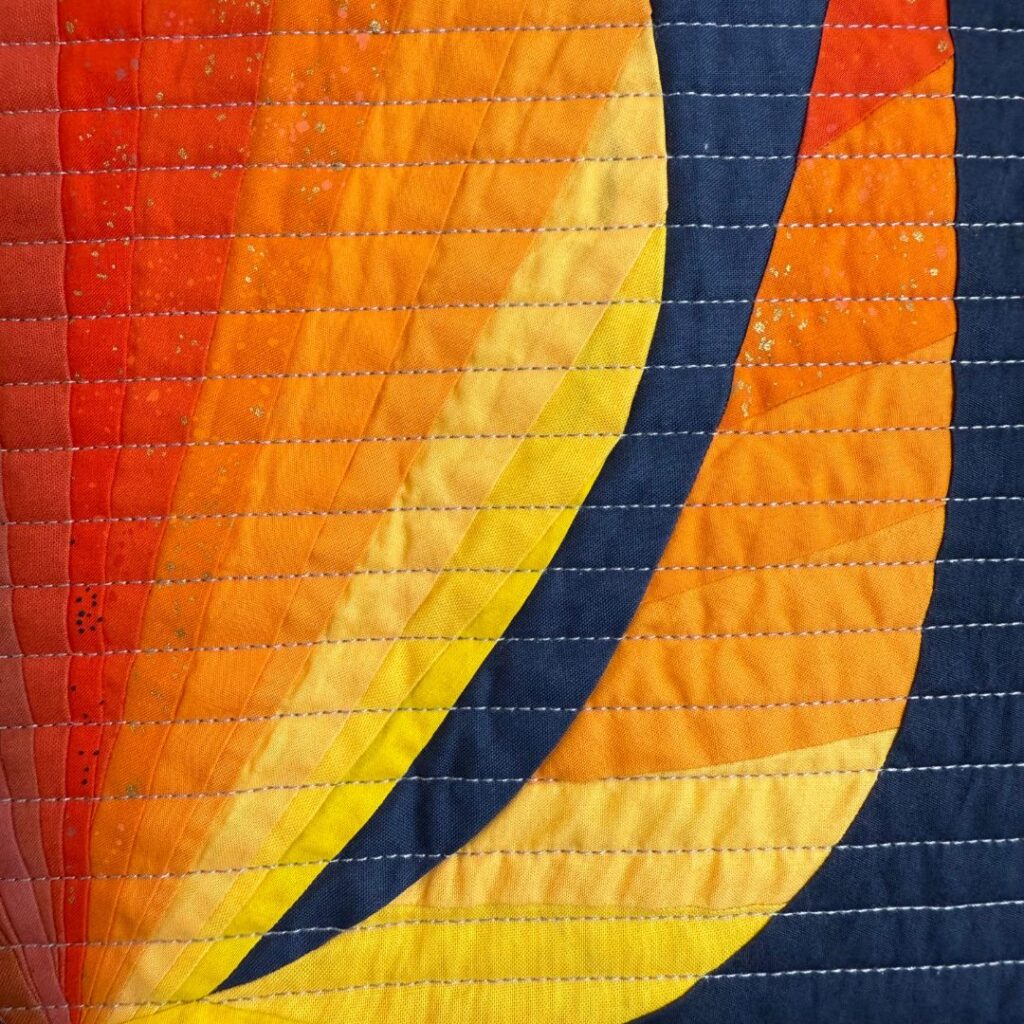
In Casagrande, color is the main character. I worked intuitively, cutting each flower shape freehand, without templates or rulers. This method allowed me to move fluidly, like drawing with scissors — letting my hands follow the organic curves that mimic petals, leaves, and stems.
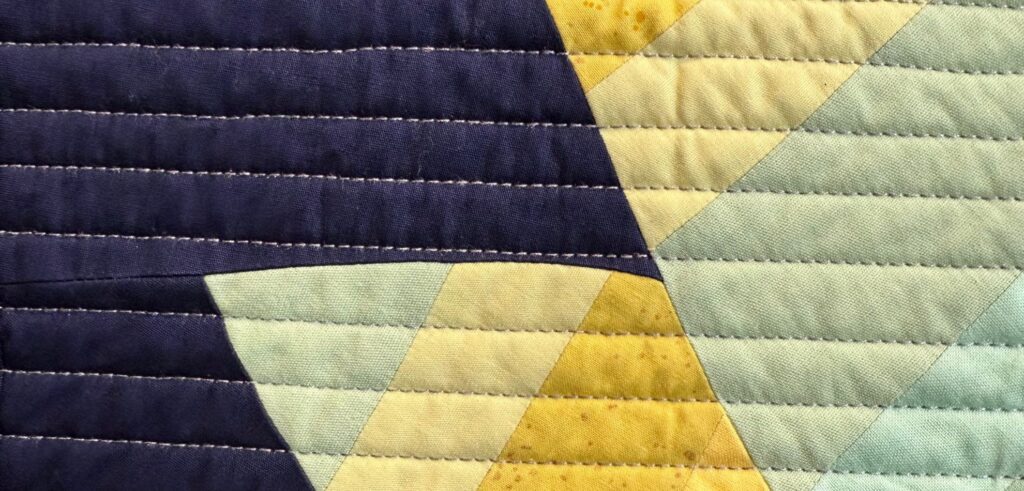
I played with color transitions to emulate the changing hues of tropical flowers: from fiery reds to glowing oranges, from pinks fading into violet, from cool blues into fresh greens. These transitions evoke not just the physical color of nature, but its energy — that feeling of light shifting through petals, of sun meeting humidity.
The dark background, composed of multiple shades of deep blue and indigo, represents the city — solid, geometric, structured. Against it, the flowers shine brighter, echoing the natural bursts of color you find everywhere in Brazil. Contrast, for me, became a form of storytelling: a dialogue between stillness and life, between memory and presence.
Improvisation and Emotional Memory
Like many of my works, Casagrande was made through improvisation — not random, but deeply intuitive. I didn’t plan where each element would go; instead, I responded to color and form as the piece evolved.
Improvisation, as described by creativity scholar R. Keith Sawyer (2003), is the art of being fully present — of listening and responding authentically. In this quilt, I allowed myself to listen to memory. Each curve, each transition of color, became a fragment of my experience in São Paulo.
For those who wish to explore this approach, my workshop “Limits and Creativity” guides quilters in using restriction — of color, shape, or material — as a path toward expressive freedom.
The Role of Color and Contrast
Color in Casagrande is both emotional and structural. According to Johannes Itten (1961), every hue carries temperature and character: warm tones (reds, oranges, yellows) advance toward the eye, while cool tones (blues, greens, violets) recede.
I used this principle to create movement and depth. The warm petals feel closer, almost glowing, while the cooler tones settle softly into the background. The result is a sense of transparency and vibration, as if the flowers were illuminated from within.
Contrast here isn’t just visual — it’s emotional. It speaks of the tension between presence and nostalgia, between the vibrant life of Brazil and the quiet reflection of remembering it from afar.
You can learn more about the science of color harmony at Color Matters – Color and Design.
From São Paulo to Mexico: A Continuation of Light
Now, living in Mexico, I see color differently — the light is drier, the air clearer, the plants more structured. Yet through quilting, I remain connected to the lush softness of São Paulo.
Every time I look at Casagrande, I feel that humidity again — that shimmering green stillness that surrounded our lives there. It reminds me that art is not about recreating what we see, but about translating what we feel.
Through fabric, I built a bridge between two worlds: the tropical abundance of Brazil and the vivid sunlight of Mexico. The quilt became a geography of emotion — a map of color that guides me home.
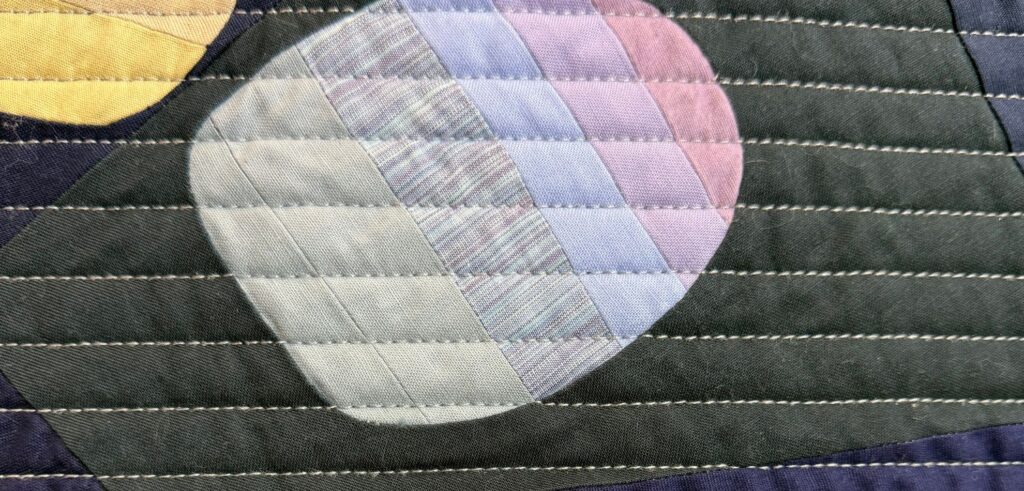
Casagrande is more than a quilt; it is a memory made tangible. It captures a time and place where nature and life were intertwined — where the sound of rain met the scent of flowers, and color seemed to pulse from the earth itself
Through improvisation, color transitions, and contrast, I tried to preserve the essence of that world — not as a photograph, but as a living abstraction.
Quilting allows us to hold on to what fades and to rediscover it with new eyes.
For me, Casagrande will always be that — a sanctuary of color, a reminder of Brazil’s beauty, and a quiet celebration of belonging.