


Many quilters learn technique. Far fewer learn how to critique quilts.
Yet the ability to analyze and articulate what we see is essential for artistic growth. Whether you are attending QuiltCon, visiting a local guild show, or reviewing your own work on the design wall, developing skills in art critique for quilters transforms instinctive reactions into informed evaluation.

Instead of:
- “Why did that win?”
- “I love it.”
- “I don’t like it.”
We learn to ask:
- Where is the focal point?
- What design principles are working here?
- How is color functioning?
- What creates visual movement?
Critique is not about judgment. It is about clarity.

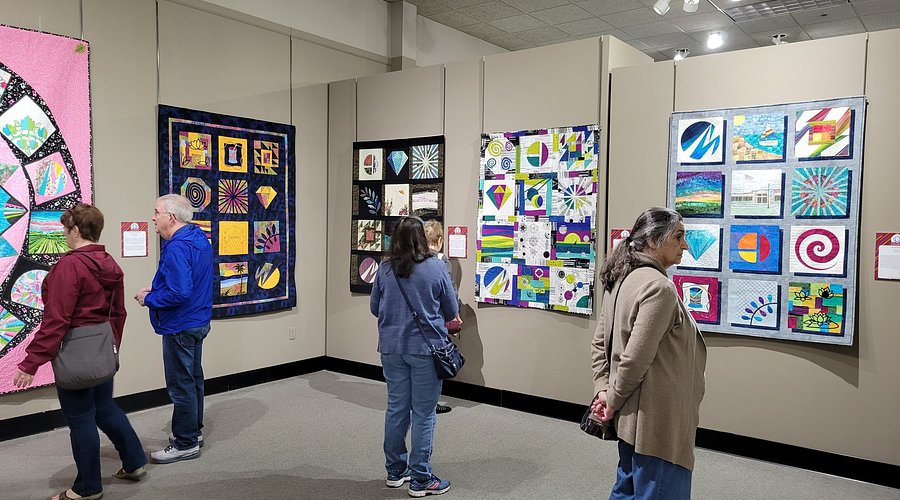
What Is Art Critique for Quilters?
Art critique is a structured way of analyzing visual work. In art education, one of the most widely used models is the Feldman Method:
- Description
- Analysis
- Interpretation
- Evaluation
Step 1: Description — The Foundation of How to Critique Quilts
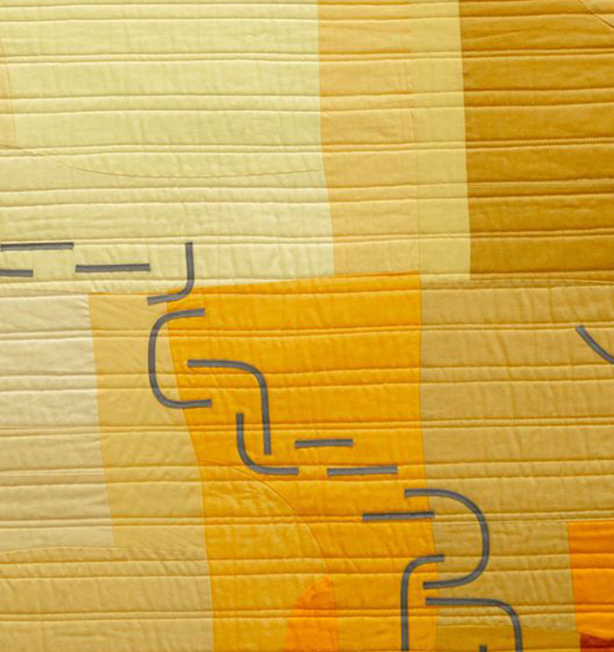
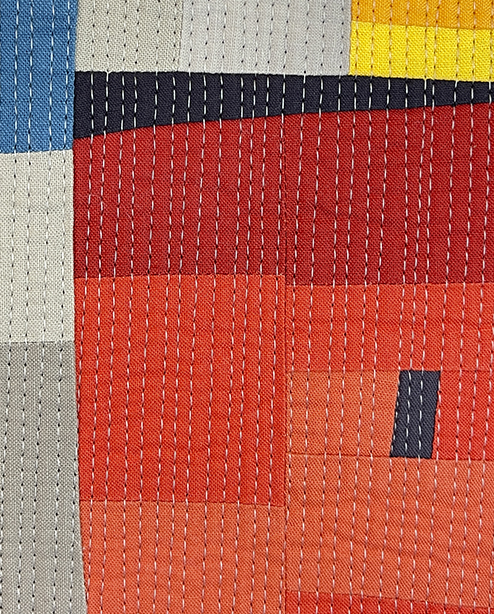
Description is objective observation.
Ask:
- What colors are present?
- Is there strong negative space?
- Are shapes geometric or organic?
- Is quilting dense or minimal?
- Is there strong value contrast?
Avoid evaluative words like “beautiful,” “boring,” or “bad.” This step builds visual literacy — a key component of modern design education.

Step 2: Analysis — Using Design Principles in Quilting
This is where critique becomes powerful.
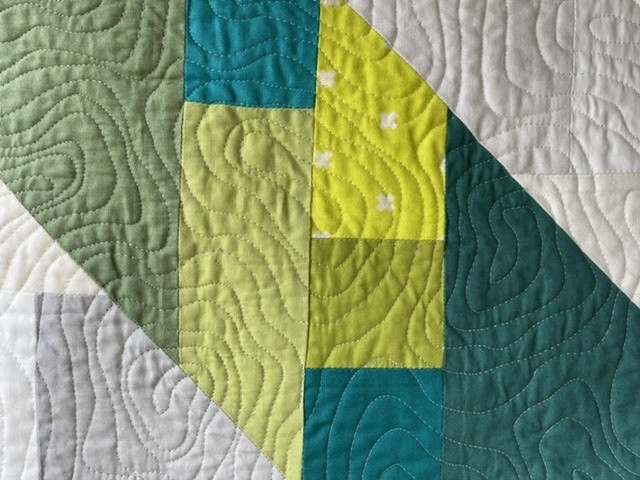
Analyze through the elements and principles of design, including:
- Line
- Shape
- Color
- Value
- Texture
- Space
- Balance
- Contrast
- Rhythm
- Movement


Instead of saying:
- “I don’t like it.”
- You might say:
- “The low value contrast reduces visual depth.”
- “The repetition of curves creates strong rhythm.”
- “The asymmetry increases tension.”
Step 3: Interpretation — Understanding Meaning in Quilt Critique
Interpretation asks:
- What might the maker be exploring?
- What mood does this create?
- Is this quilt primarily formal (design-focused) or conceptual (idea-focused)?
Interpretation should be supported by observation — not speculation.
In modern quilting critique, it is important to recognize that some quilts prioritize technical innovation, others emphasize emotional storytelling, and others explore social themes. Understanding intention improves evaluation.
Step 4: Evaluation — How to Critique Quilts Respectfully

Evaluation is where personal response enters.
But respectful critique:
- Focuses on the work, not the maker.
- Uses design vocabulary.
- Acknowledges subjectivity.
- Avoids dismissive language.
For example:
Instead of:
“This quilt is chaotic.”
Try:
“The high saturation contrast creates strong visual intensity, which feels overwhelming to me.”
This approach aligns with best practices in art education and museum dialogue.
Why Quilt Critique Improves Your Own Work
Learning how to critique quilts strengthens:
- Value awareness
- Color confidence
- Composition skills
- Design wall decision-making
- Exhibition readiness
When you can articulate what works (and why), you gain control over your own design process.
Critique is not about superiority. It is about refinement.

How This Connects to My Elements & Principles Workshops
In my Elements & Principles of Design workshops, we practice structured critique regularly.
Students learn to:
- Identify design elements clearly
- Analyze value relationships
- Discuss saturation and hue intentionally
- Evaluate figure-ground dynamics
- Give and receive feedback constructively
The goal is not to decide whether something is “good” or “bad.”
The goal is to build visual literacy.
When students develop critique skills, they:
- Make stronger compositional decisions
- Gain confidence on the design wall
- Submit work to exhibitions with greater clarity
- Engage more thoughtfully at quilt shows
Critique becomes a design tool — not a judgment tool.
A Practical Quilt Critique Checklist
At your next exhibition, try this:
- What do I notice first?
- Why do I notice it?
- What design principle creates that effect?
- How does color function here?
- Can I express my response respectfully?
This simple structure transforms casual opinion into informed critique.
The modern quilting community is strong because it combines:
- Technical innovation
- Conceptual exploration
- Personal storytelling
- Public exhibition