In this new showcase I’m featuring four Modern Quilters that you will love!
Amanda McCavour
My name is Amanda McCavour and I work as an artist in Toronto, Ontario, Canada.
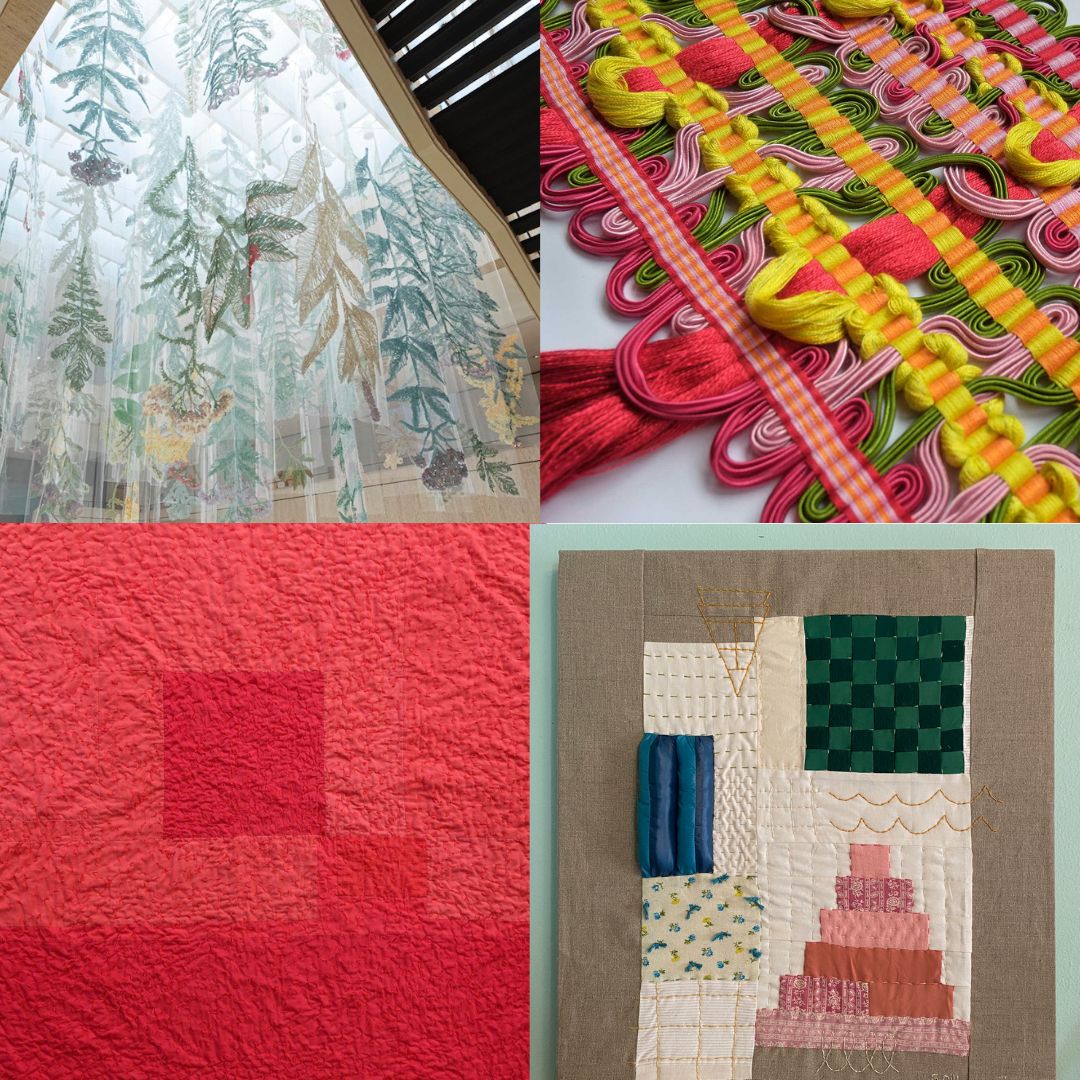
In my work, I use a sewing machine to create thread drawings and large scale installations. I want my works to bring viewers into a playful, imaginative, dream-like space filled with line, color and texture. Viewers are invited to walk through paths that I create in the installation works. They are also invited to lay underneath the pieces and look up at the artwork.. The works start to spin and move as you walk around them.
I make my installations by using a sewing machine, I often stitch into fabric that dissolves in water. With this process I can build up stitched lines on a temporary surface so the crossing threads create strength. Then when the fabric is dissolved, the thread drawing can hold together without a base. With only the thread remaining, these images appear as though they would be easily unraveled and seemingly on the verge of falling apart, despite the works raveled strength.
I love thinking about embroidery as a way to draw and I have found ways to use free motion embroidery with my sewing machine to create drawings out of thread. I love all colors and use a wide range of hues in my work- sometimes neon, sometimes pastel, color is often a starting point for my pieces.
I studied fine art at York University in Toronto for my undergraduate degree which I received in 2007. In 2014, I completed my Masters of Fine Art in Fibers and Material Studies from Temple University in Philadelphia, PA, USA.
I just finished a large installation for the Chazen Museum of Art in Madison Wisconsin that uses Herbarium Specimens as its source material. With this site-specific installation that is the largest I’ve ever made (3 stories high!), I am reimagining the Museum’s 3 story open Court area as a field of floating flowers, blending fantasy and document, imagination and observation. The installation shifts the perspective of a traditional prairie, inviting viewers to walk underneath—rather than through—a floating field of flowers.
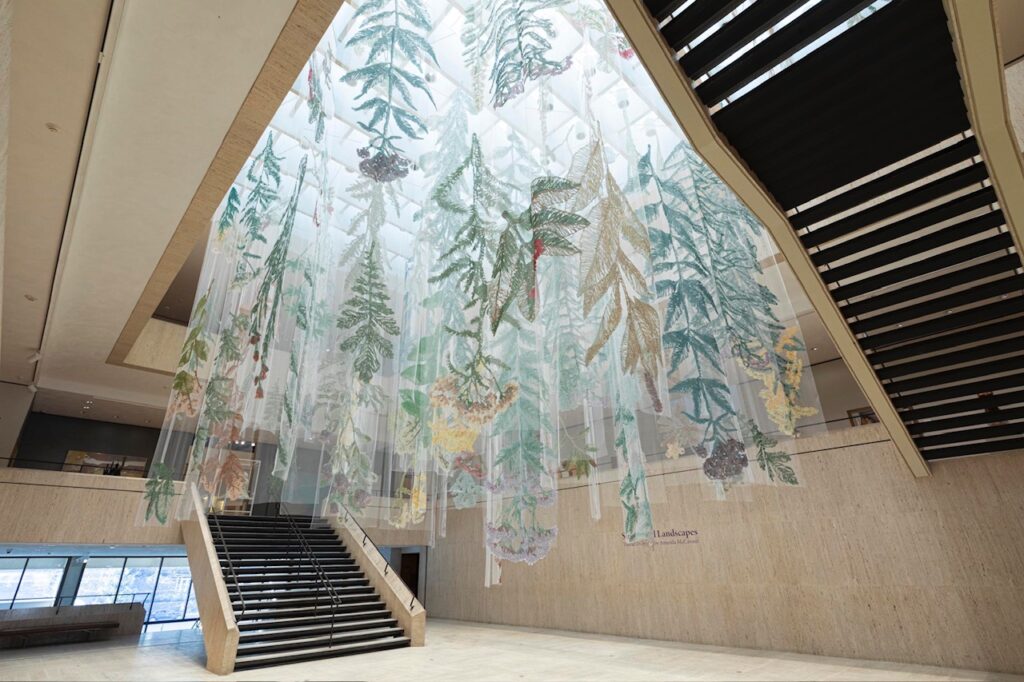
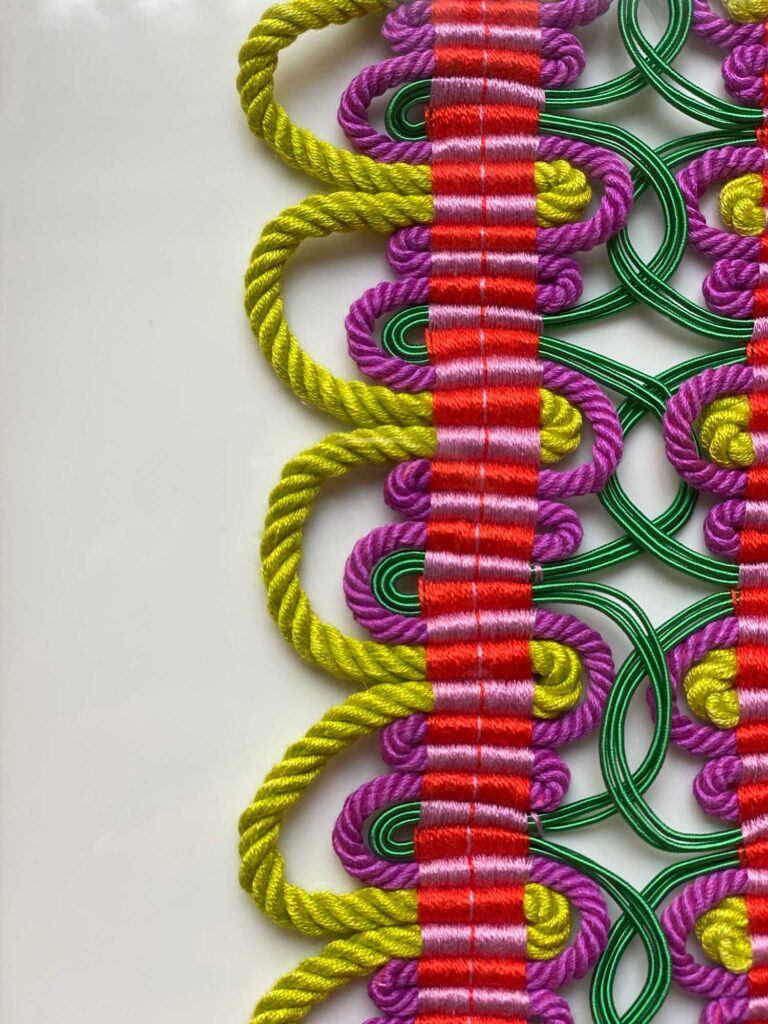
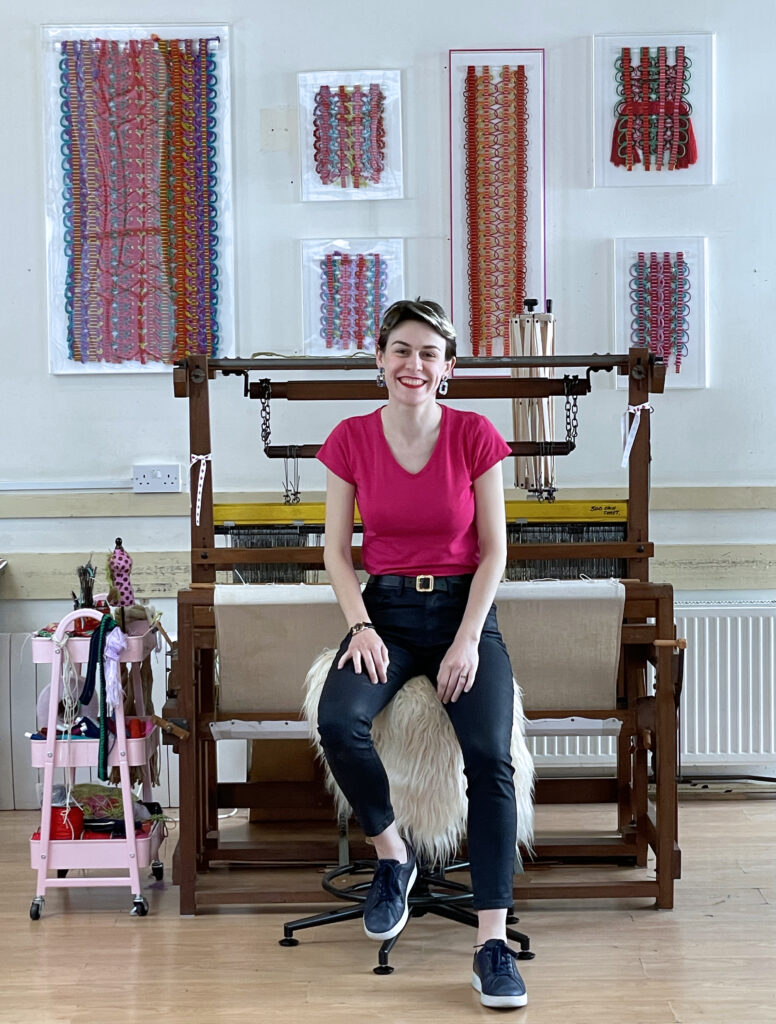
I am an artist working with the rare and endangered craft of Passementerie. Working from my studio in London, I create hand woven artworks that are full of intricacy, pattern and energetic colour combinations.
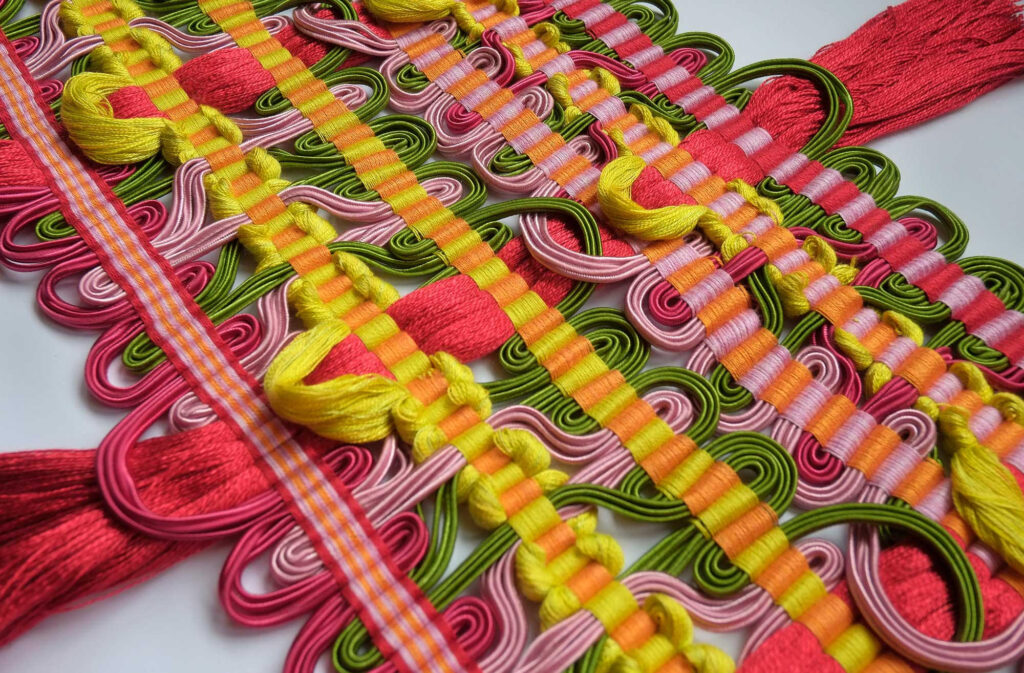
I am one of only 6 passementerie creators left working in the UK. Passementerie is a very old and mysterious craft that is rooted in tradition. I feel that it is my role as a contemporary artist to not only respect this heritage craft, but to move it on and develop it in new ways. My approach is to build upon the traditional hand making skills of passementerie, combing these techniques with a contemporary and unique sensibility in order to create striking, bold and highly tactile one-off hand woven artworks.
Bringing something new and innovative to the world of passementerie is the key driver behind all of my work. My playful approach to working with passementerie is focused on elevating this craft form to the next level.Through innovating with colour, pattern, technique, material and scale, my practice focuses on promoting and appreciating passementerie for what it is – a true art form.
I am motivated by the desire to create work that is beautiful. I express this through the creation of playfully sophisticated hand woven artworks that are full of colour, vibrancy, texture and energy. Colour inspires me – I adore colour in all of its permutations, especially dynamic and energetic colour combinations. My use of colour is deeply intuitive, surprising, emotional and dramatic.
Through my work I tell stories about textile heritage and I am especially drawn to the work of artists that have used textiles in unusual and surprising ways, such as the outsider artist Arthur Bispo Do Rosario. I am drawn to people and places throughout history that have used textiles and colour as part of ceremonies and rituals, especially unusual folk art celebrations. All of this research is combined with my historical research into antique examples of passementerie.
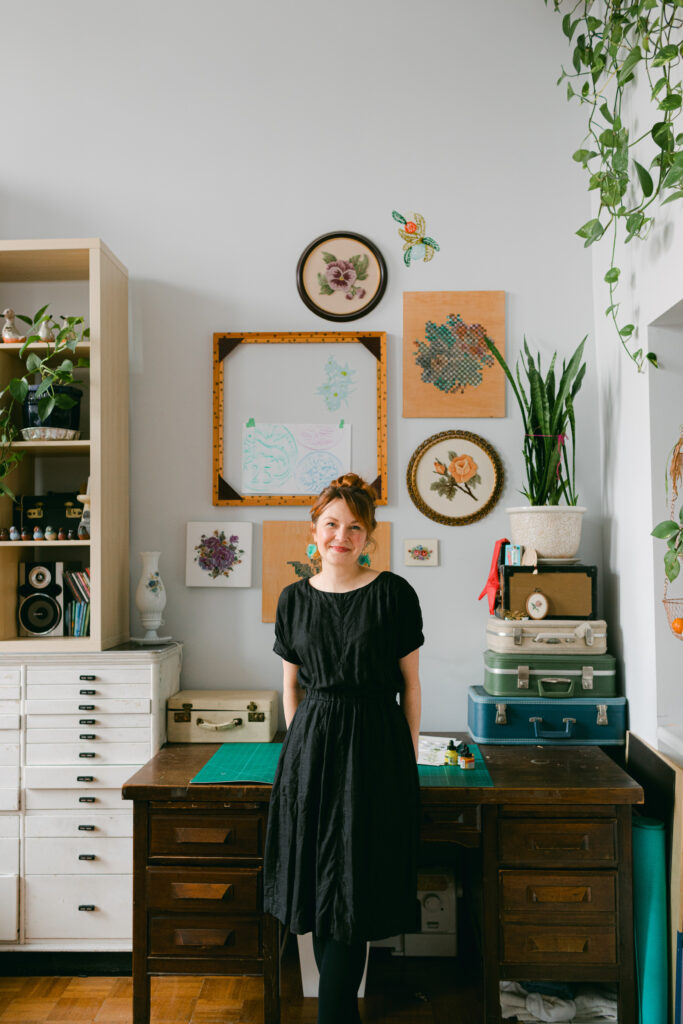
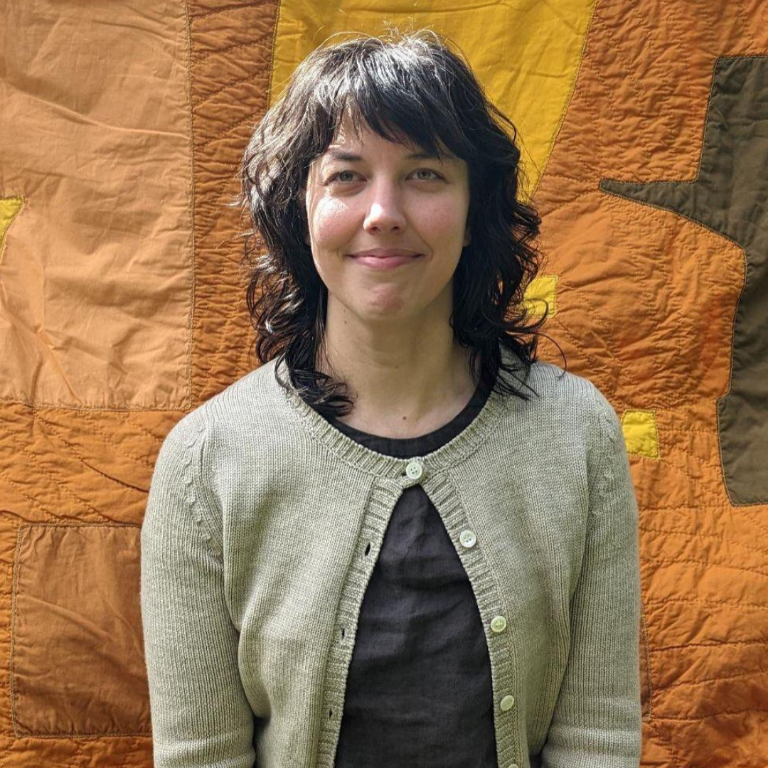
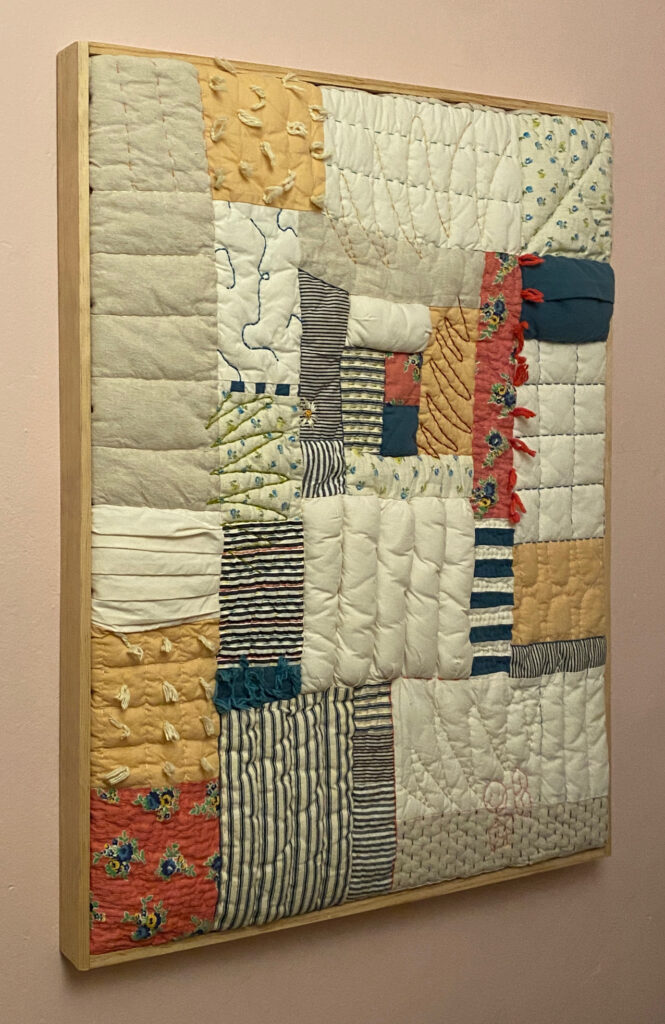
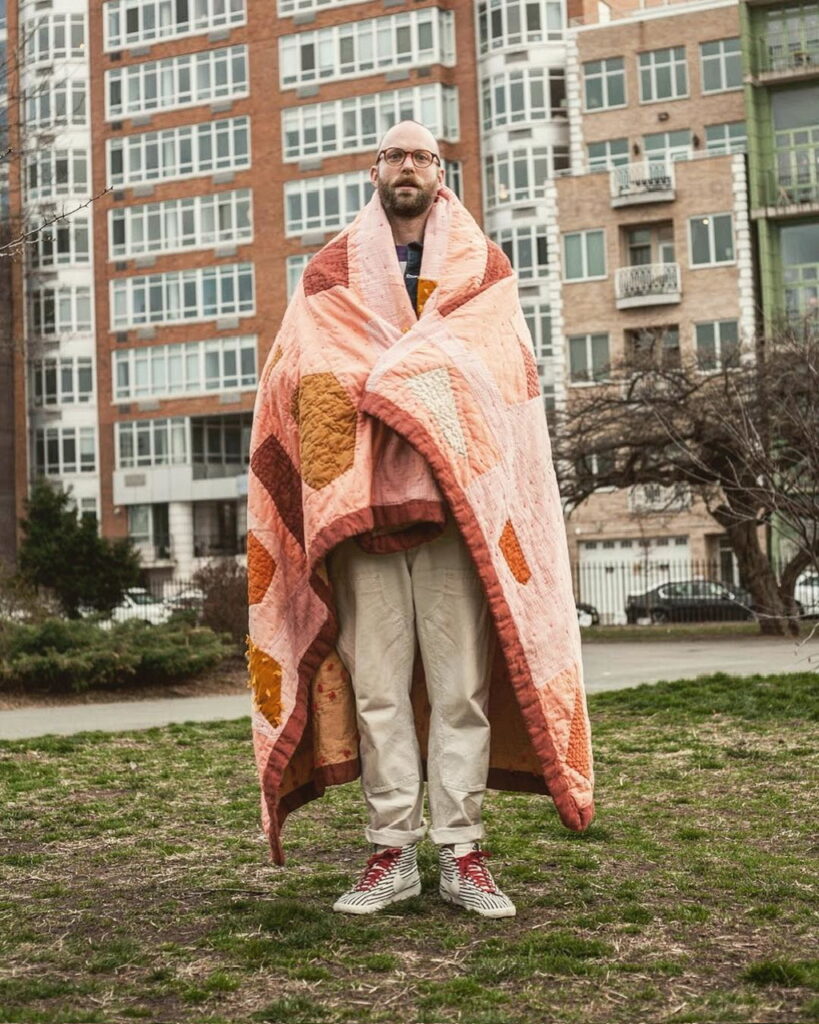
I’ve been sewing on and off throughout my life -my mom taught me how when I was little- but I didn’t start sewing frequently, with a fervent quilt obsession, until 2021. I don’t entirely understand why I started sewing so much, but I know a lot of people with a similar story, which goes something like: I started sewing and then didn’t stop.
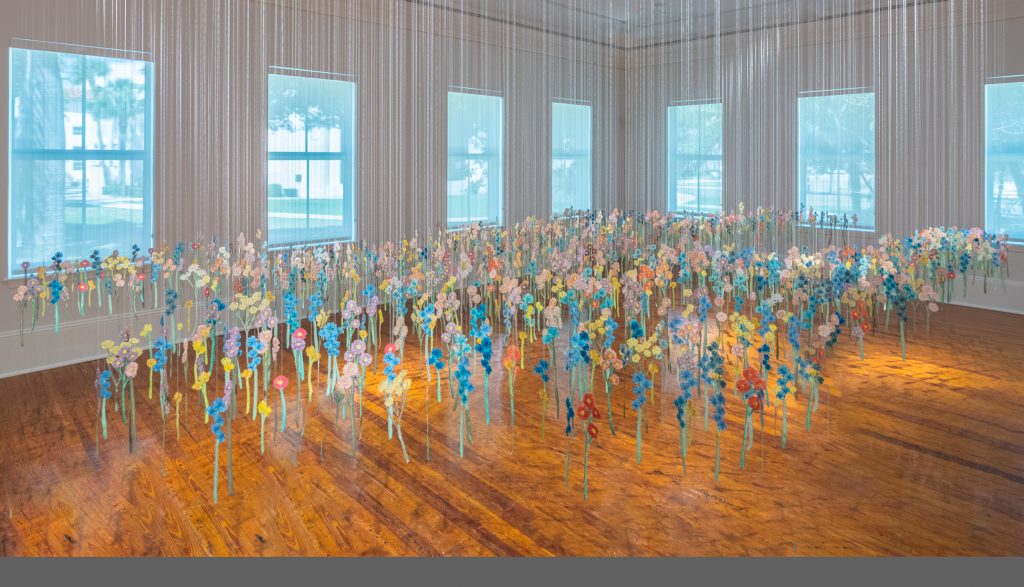
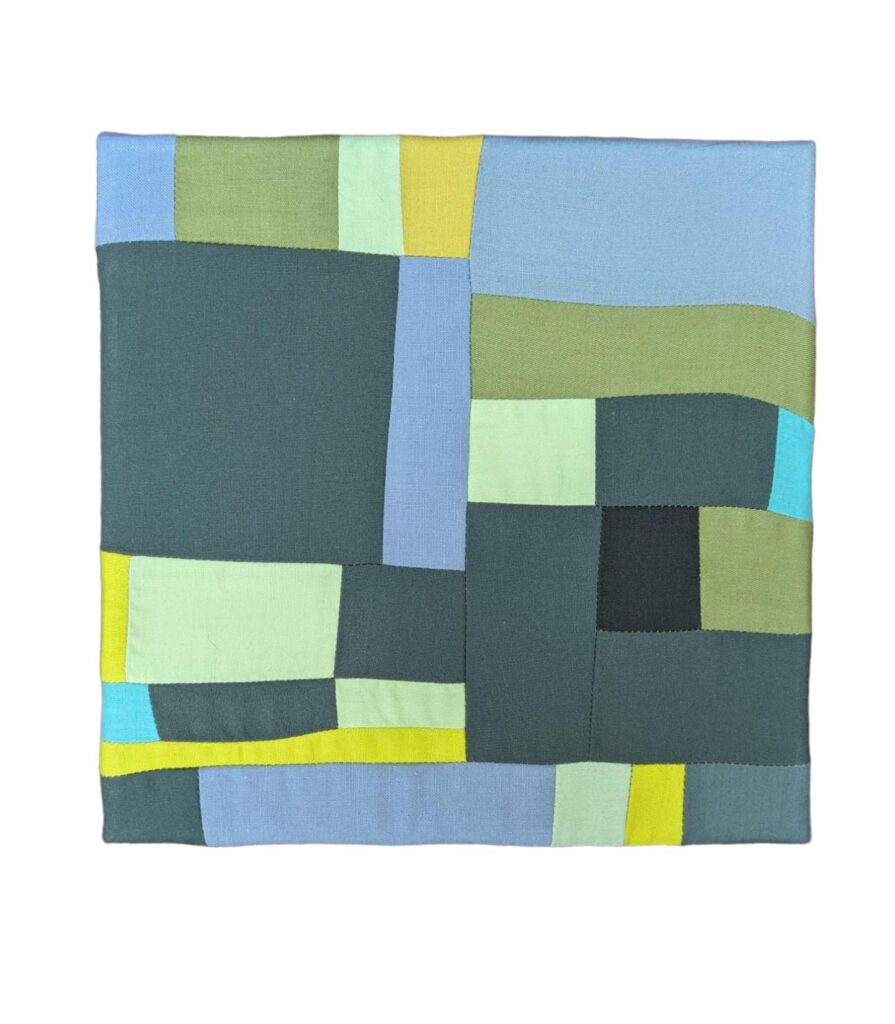
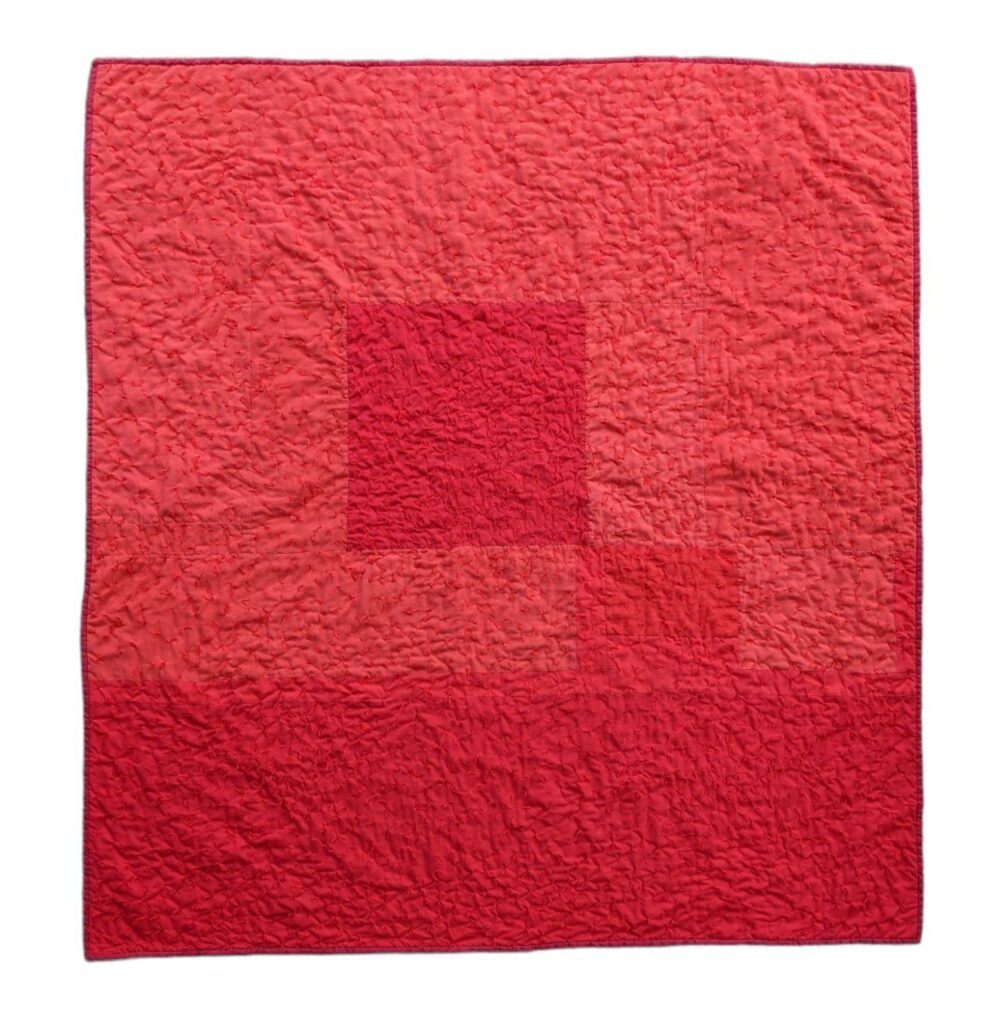
I love to work with monochromatic and analogous color schemes. Exploring variations within one color excites me. Less frequently, I enjoy using complimentary colors and high contrast within a piece I make. I rarely design anything that has many different colors. I use found, gifted, and thrifted textiles; these fabrics have a lot of personality from their use over time.
I try to let who I have become (and am becoming) shine through in what I make. This happens easily through hand stitching, which feels like every sewers’ unique fingerprint. I like how long it takes to finish a quilt and that there’s plenty of time for reflection throughout the process. Quilting helps me to refine my intuitive abilities while testing my patience. I am grateful for anything in my life that slows me down and helps me grow, and this is especially true of quilting.
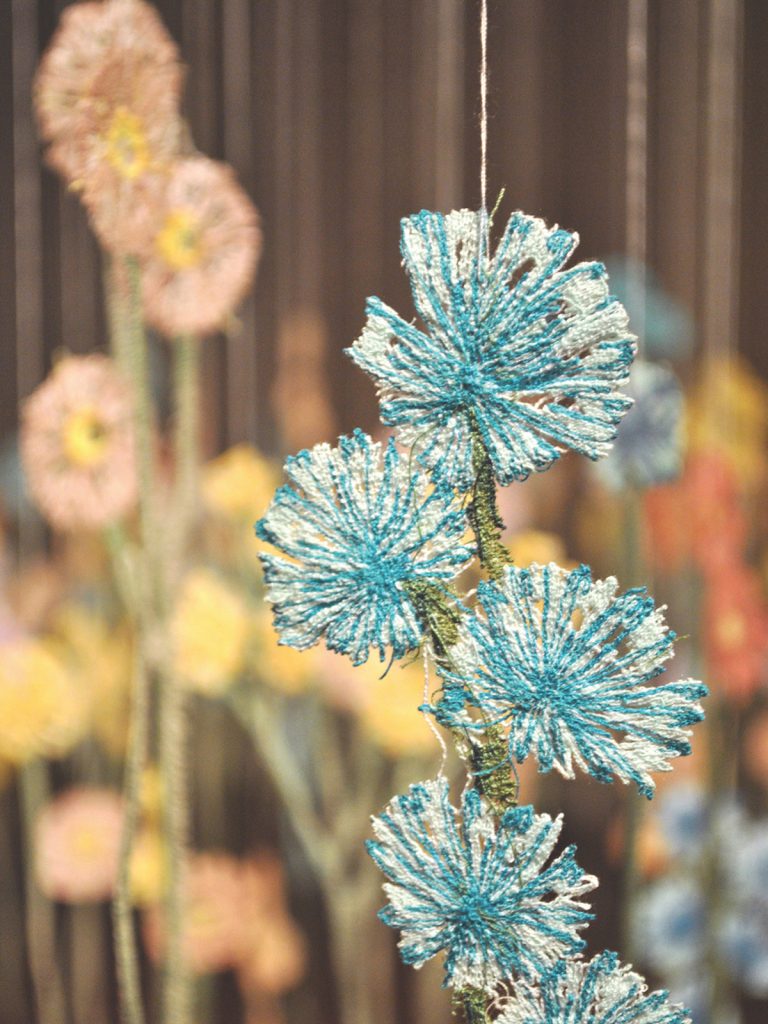
Lately I’ve been stretching my quilt blocks over frames for hanging on the wall. I recently finished a red, hand-tied lap quilt, and will now continue work on a queen-sized quilt meant to look like the night sky. I love being part of my local and virtual quilting communities and meeting others who are passionate about sewing and hand crafts. I’m excited to see how my future will unfold with quilting.
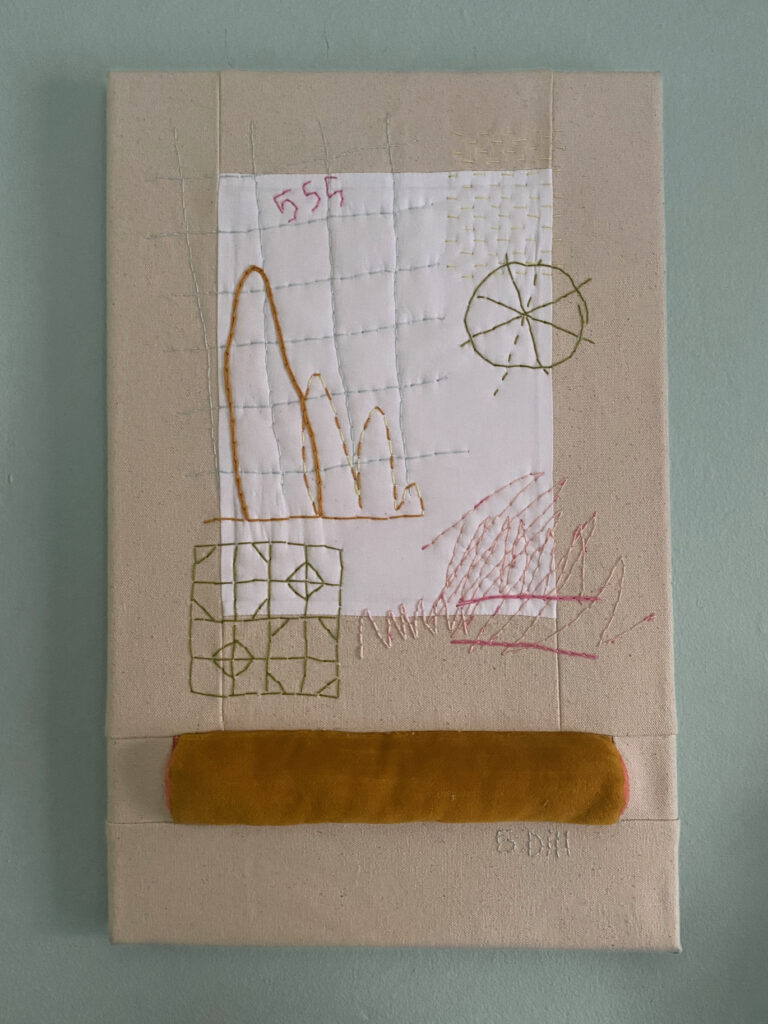
I started quilting around 2017 with some small baby quilts and picnic blankets. Very basic items, but I always designed my own patterns or made the designs up as I went. My mom taught me to sew when I was in high school, then later showed me the intricacies of quilting. She is an avid quilter and we frequently share our progress on new projects and techniques.
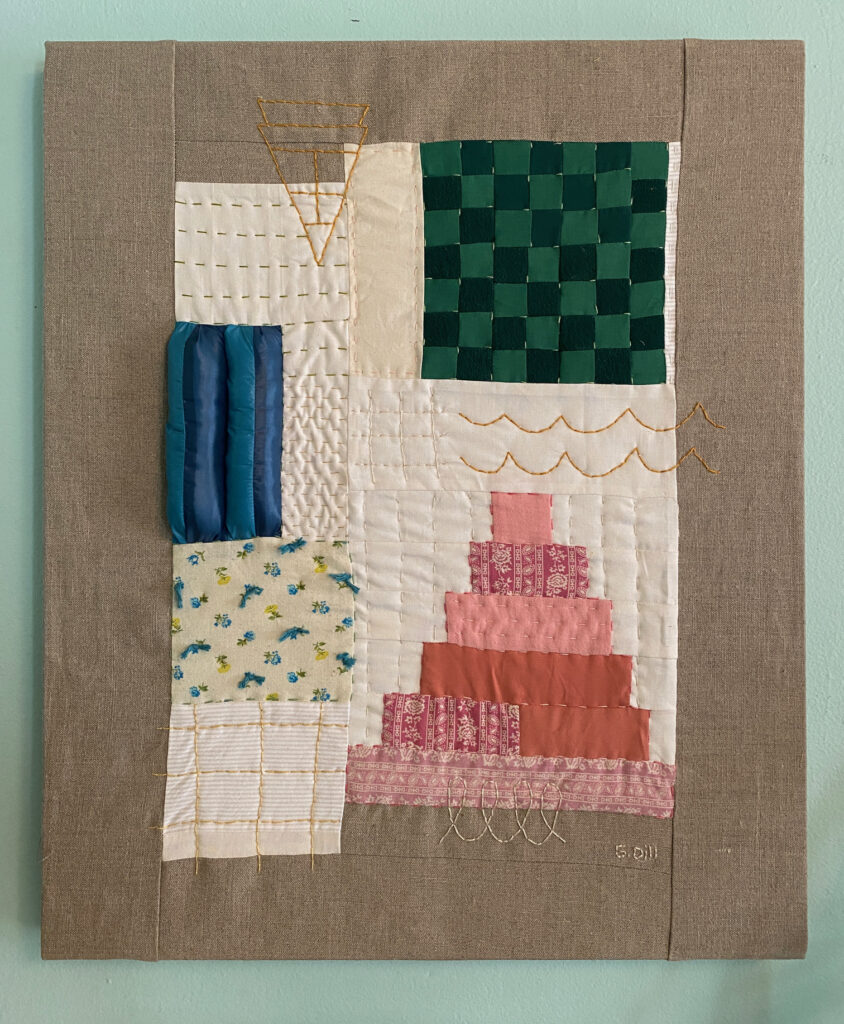
After making quite a few full-sized quilts (and having the realization of how much time it takes) I wanted to work smaller and my journey with making framed wall quilts began. This was also helped by my friends that were having babies so I could experiment with some interesting new designs on small scale baby quilts.
Right now I’m inspired by artists like Cy Twombly and Louise Bourgeois, but also looking towards classic quilt motifs. I think acknowledging and embracing the medium is important when making work meant to be hung on a wall. Otherwise why not make a picture with paint, or paper.