
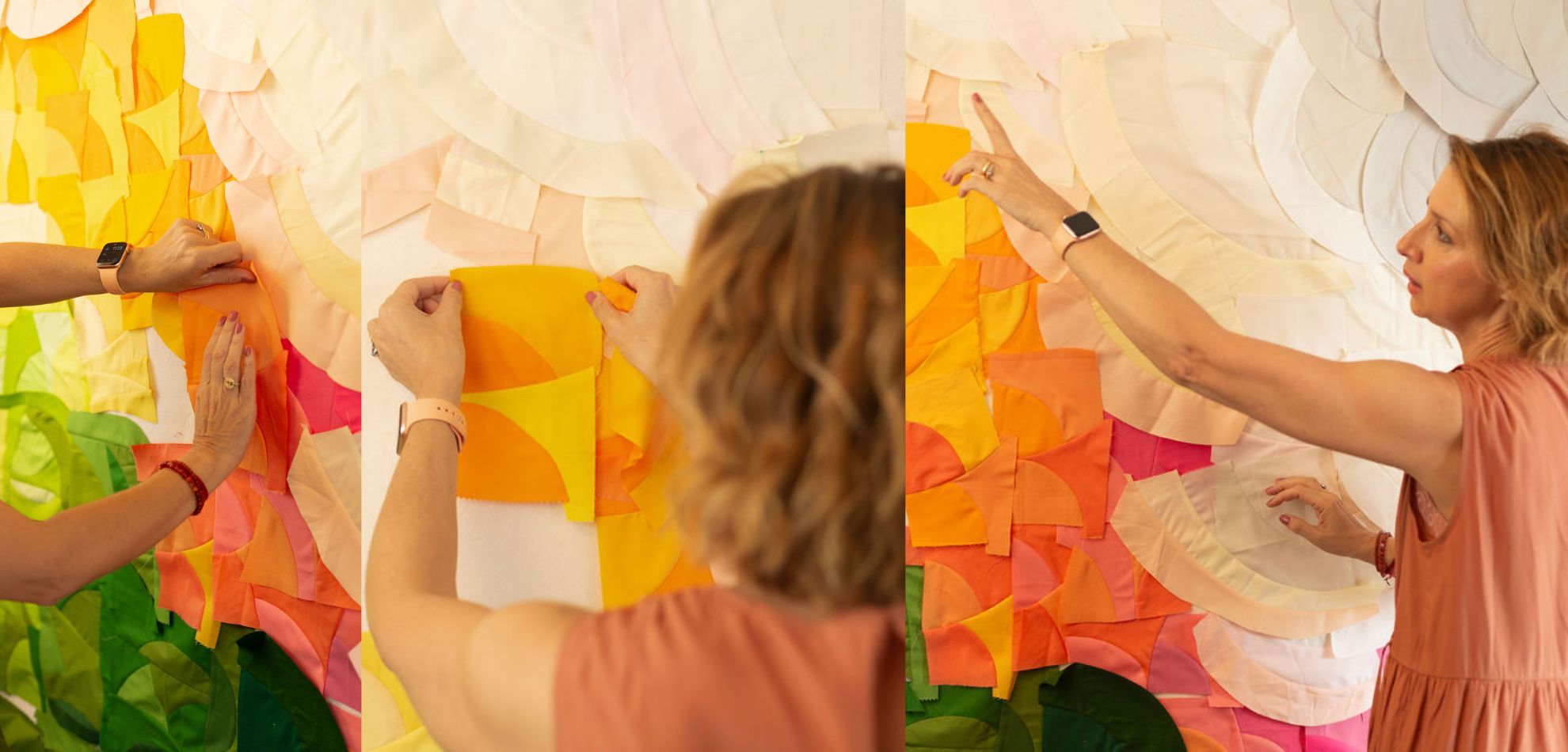
Many quilters ask, “How do I use a design wall in quilting?”
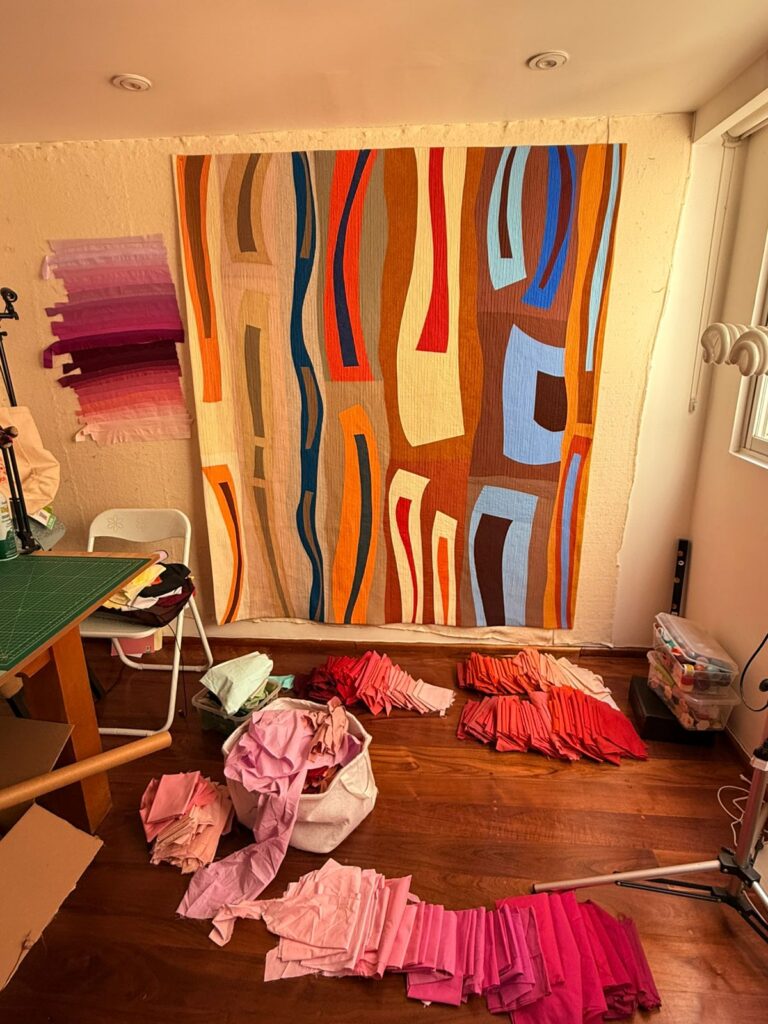
Often, the answer focuses on logistics — flannel walls, batting, foam insulation boards. But the real purpose of a design wall is not storage. It is composition.
In serious quilt design practice, the design wall becomes a thinking tool — a space to evaluate structure, value, movement, and hierarchy before sewing permanently. If used intentionally, the design wall transforms the modern quilting design process.
Why Vertical Viewing Changes Quilt Composition
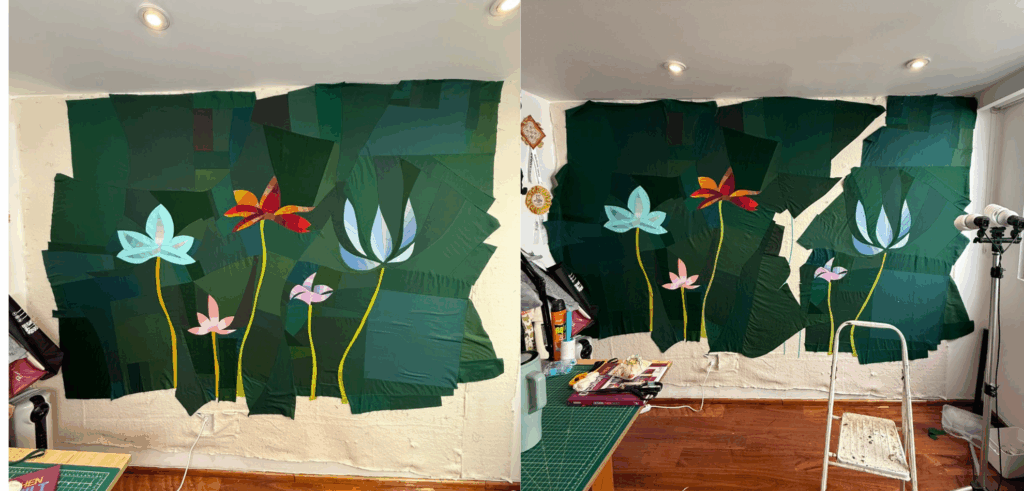
When quilt pieces are laid flat on a table, the eye processes them differently than when they are viewed vertically.
Vertical viewing allows you to evaluate:
- Overall value contrast
- Figure-ground relationships
- Dominant visual weight
- Balance and asymmetry
- Negative space effectiveness
Gestalt psychology explains that humans perceive visual systems as unified wholes rather than isolated parts.
Only when the quilt is upright can the brain properly organize the composition as a whole.
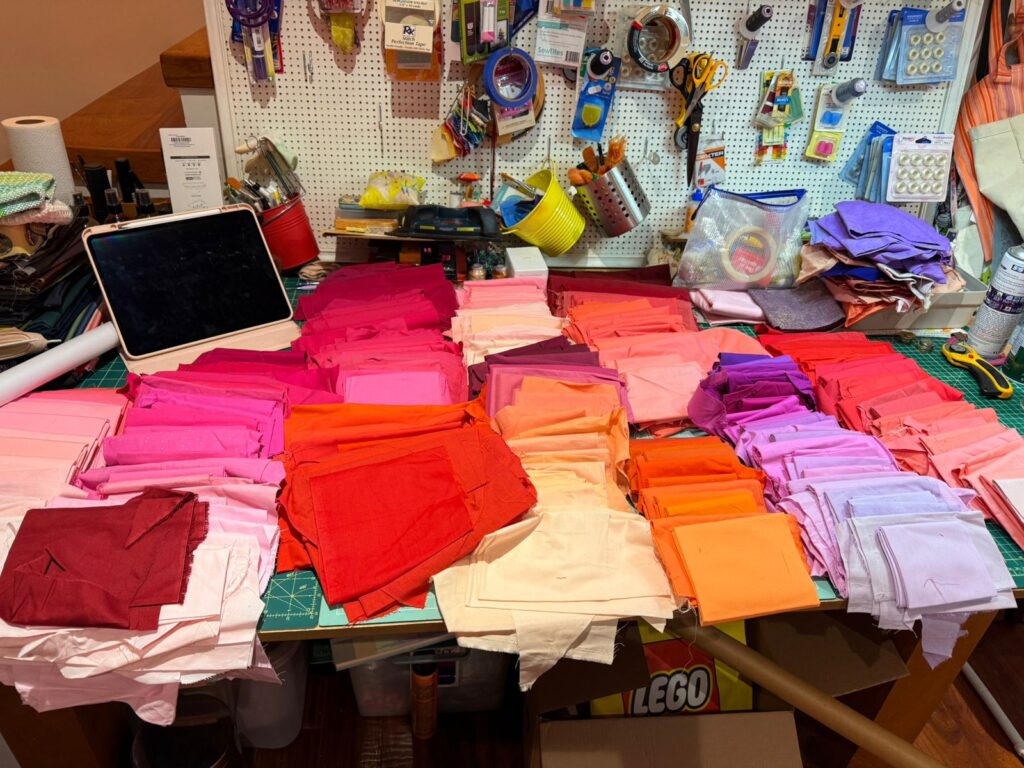
Externalized Thinking: The Cognitive Function of a Design Wall
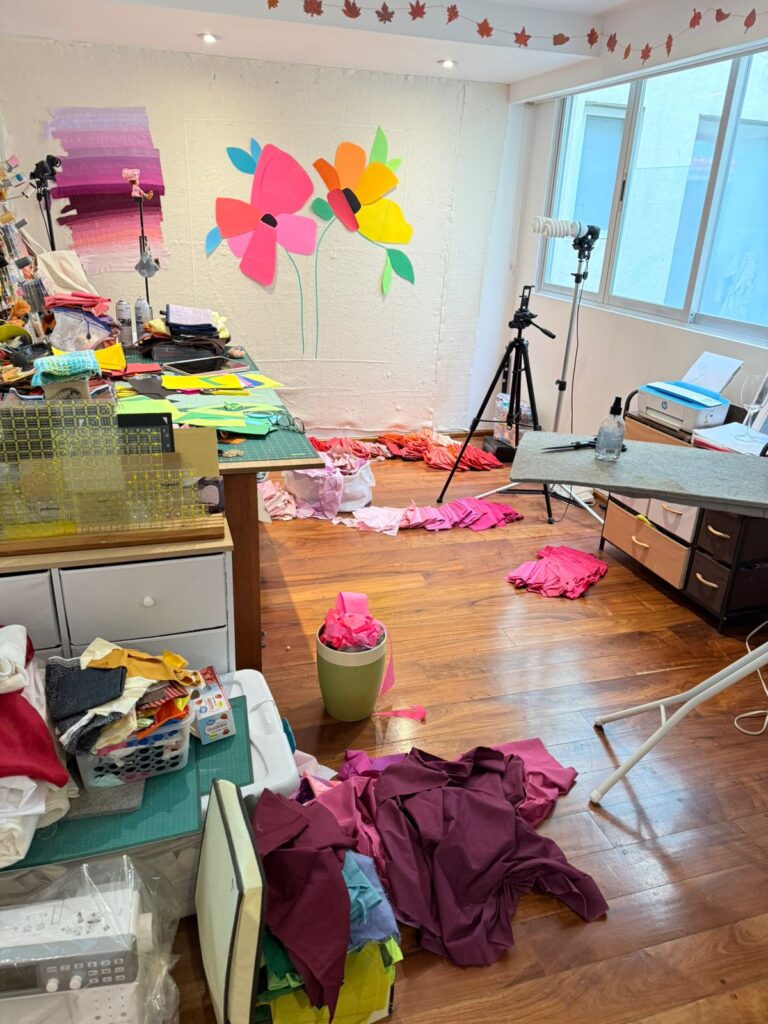
Research in cognitive science describes “distributed cognition” — the idea that thinking extends into tools and environments.
When you place shapes on a design wall, you:
- Reduce mental overload
- Externalize spatial decisions
- Make abstract relationships visible
- Increase problem-solving clarity
The wall allows you to see what you cannot imagine clearly in your head. This is one of the most overlooked design wall tips in quilting.
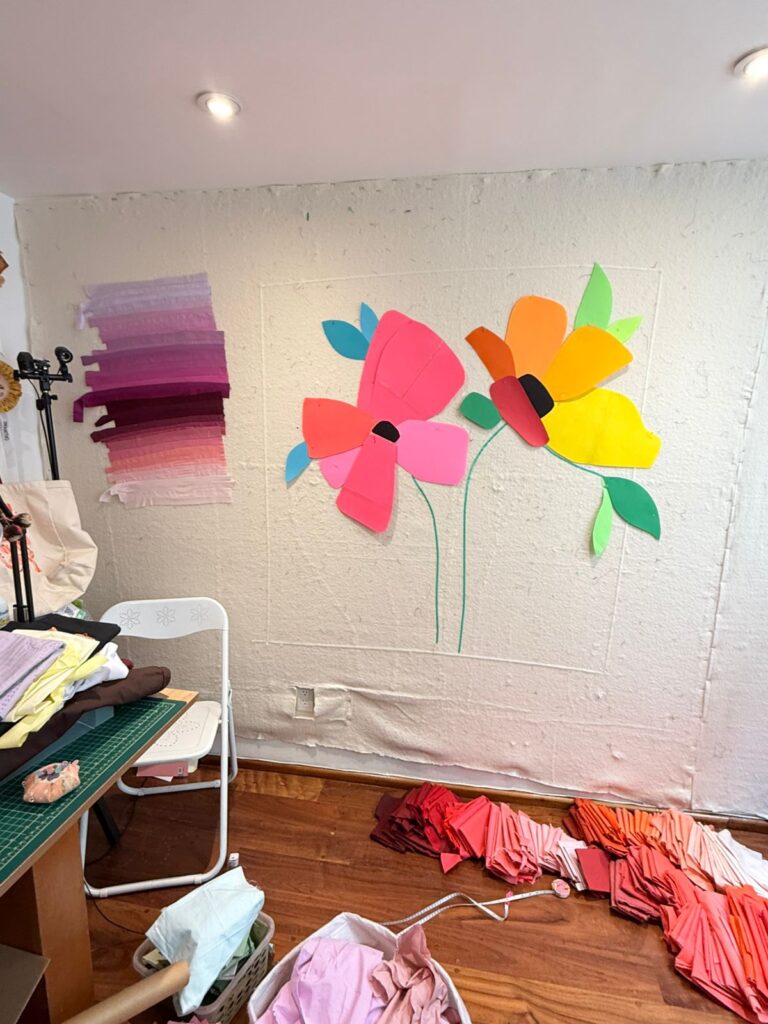
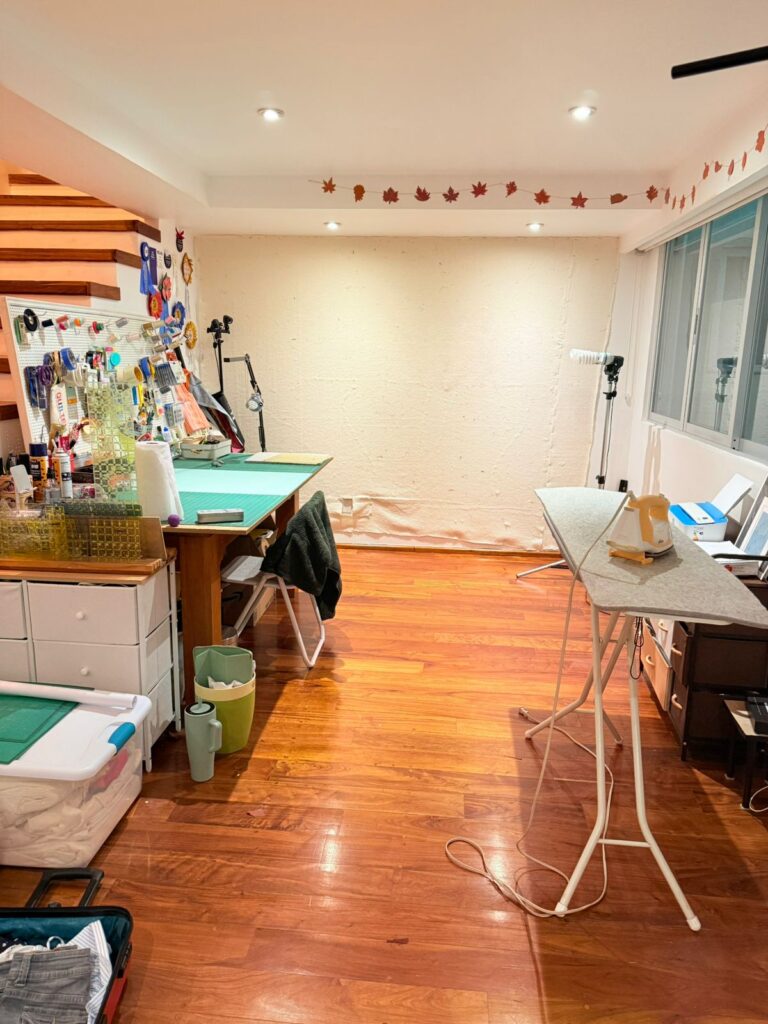
Step-by-Step: How to Use a Design Wall in Quilting Effectively
1. Evaluate Value First
Convert a photo of your design wall to black and white.
Ask:
- Does the focal point stand out?
- Is there a clear dominant value?
- Is there enough contrast?
Value determines clarity more than color.
2. Check Figure-Ground Clarity
From a distance, ask:
- What reads as figure?
- What reads as ground?
- Is the hierarchy clear or unstable?
If mid-values dominate, the quilt may feel flat. The design wall reveals this immediately.
3. Test Movement and Visual Pathways
Observe:
- Where does your eye enter?
- Where does it travel?
- Does it get stuck?
- Is there unintended imbalance?
Reposition shapes until the movement feels intentional. Because nothing is sewn yet, adjustments are low-risk.
4. Manipulate Variables Before Sewing
The design wall allows you to experiment with:
- Scale
- Rotation
- Spacing
- Cropping
- Saturation distribution
Design theory emphasizes iteration as essential to problem-solving.
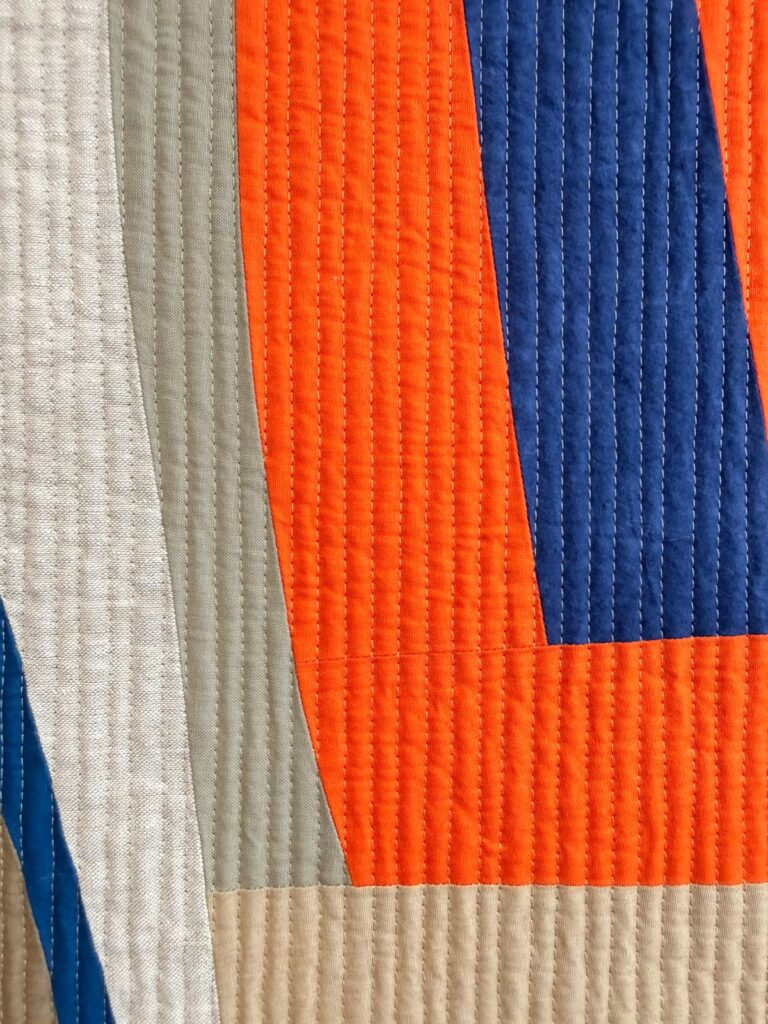
Common Mistakes When Using a Design Wall
Even experienced quilters sometimes underuse the wall.
Common issues include:
- Standing too close
- Focusing only on small details
- Ignoring value structure
- Avoiding difficult compositional changes
- Skipping photography for objective review
To properly use a design wall in quilting, distance is essential.
Step back. Photograph. Squint. Reassess.
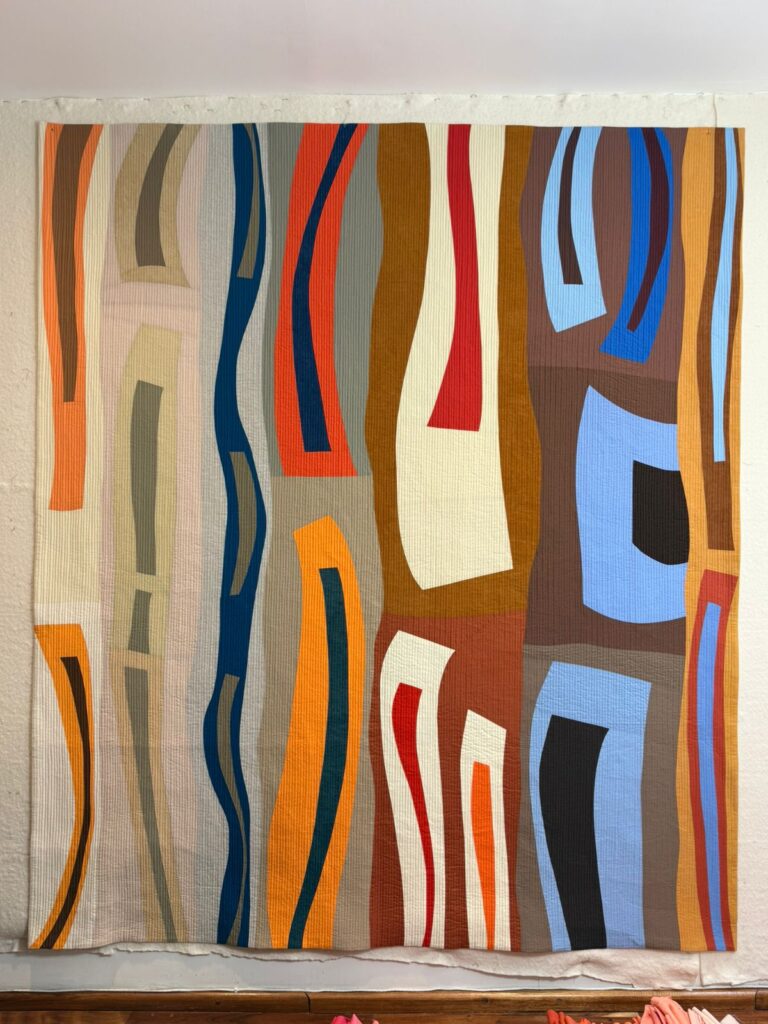
The Design Wall in Modern Quilting
In modern quilting, composition often relies on:
- Strong negative space
- Bold color fields
- Graphic shapes
- Asymmetry
These elements demand structural clarity.Without a design wall, problems in:
- Hierarchy
- Balance
- Figure-ground
- Saturation tension
often go unnoticed until quilting is complete. The design wall supports intentional design rather than reactive correction.
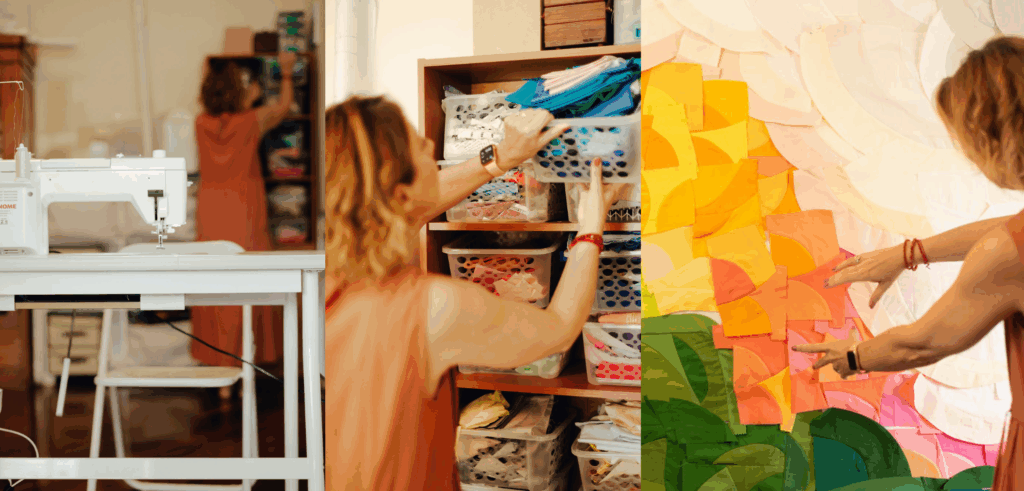
How I Teach Design Wall Practice in My Workshops
In my Elements & Principles of Design workshops, students use the design wall continuously.
We focus on:
- Value mapping
- Figure-ground evaluation
- Saturation balance
- Cropping exercises
- Controlled iteration
Students often discover that their challenge is not sewing skill — it is compositional structure.
The design wall reveals structure. And structure strengthens design.
The Design Wall as a Professional Tool
If you want to know how to use a design wall in quilting, think beyond fabric placement.
Think:
- Visual testing
- Perceptual evaluation
- Iterative design
- Structural clarity