
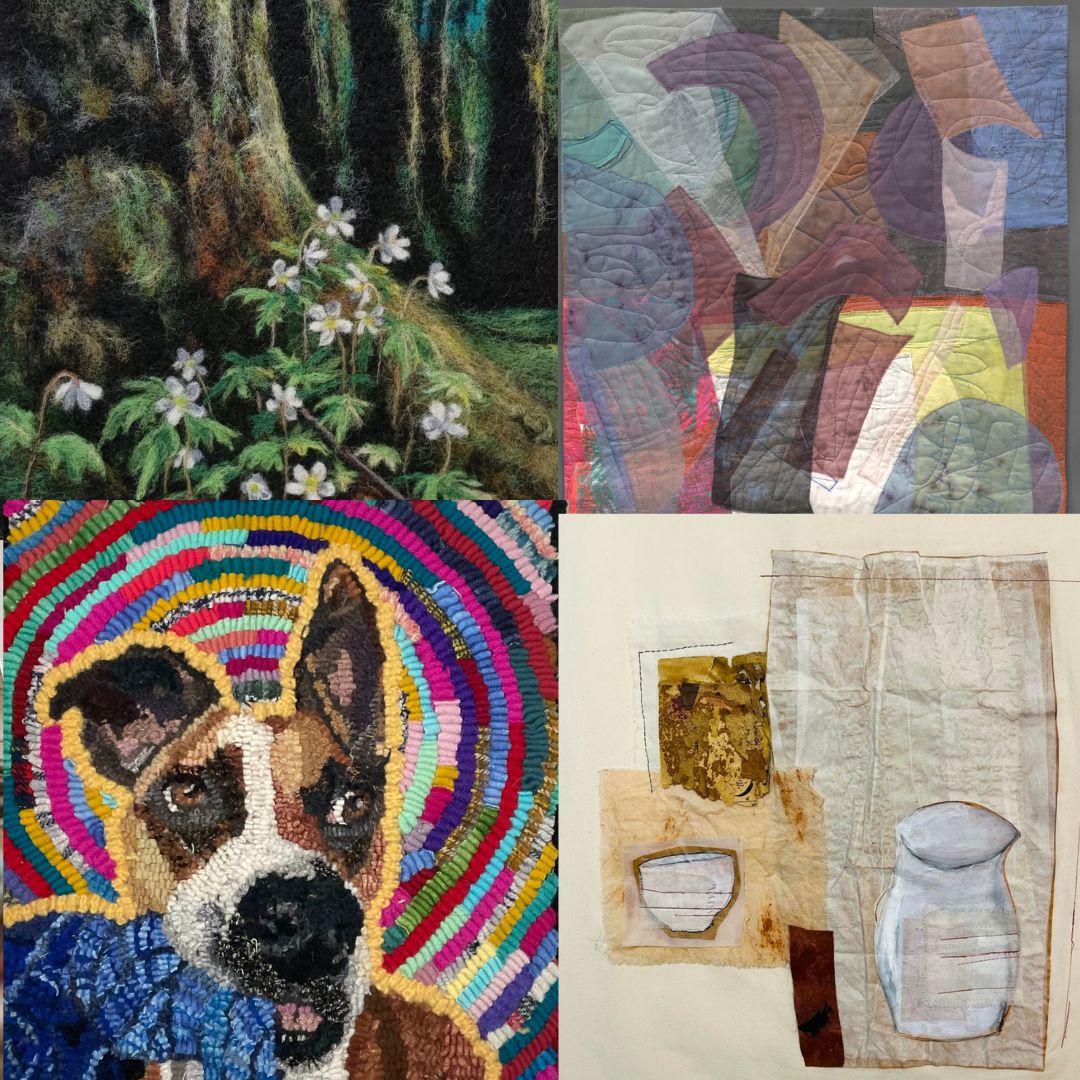
In this new showcase I’m featuring four Modern Quilters that you will love!
Tone-Kristin Lone
My name is Tone-Kristin Lone, and I am a woolfelting artist. All my life I have been interested in art and paintings, and I have used many different techniques myself. Oil painting, acrylic and aquarel, but also pencil drawing. A few years ago I saw my first woolpainting in a gallery, and I just loved the different look of it.
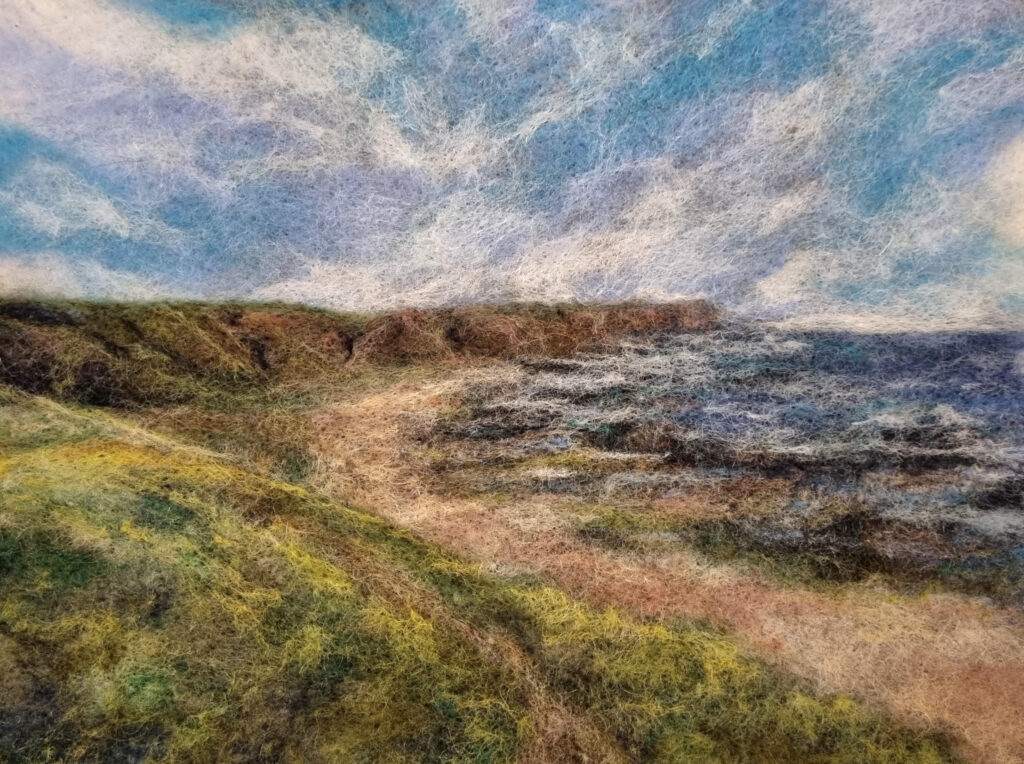
The way the fibers intertwined and made a totally different result than a painting, intrigued me and made me want to try it myself. Using YouTube and through experimenting, I have developed my skills, and now I am totally into the process of creating woolpaintings. I just love the process, starting with a few lumps of coloured wool in the beginning, working my way through the different layers, to get to the final result. To make a woolpainting is a slow process and takes a lot of workinghours. Getting the right tones and nuances can take days and even weeks. I have to stab the wool repeatedly over and over again to get the fibers to express what I want. It is almost a meditative process, and I use it as a way to clear my mind, after my full time job with refugees.
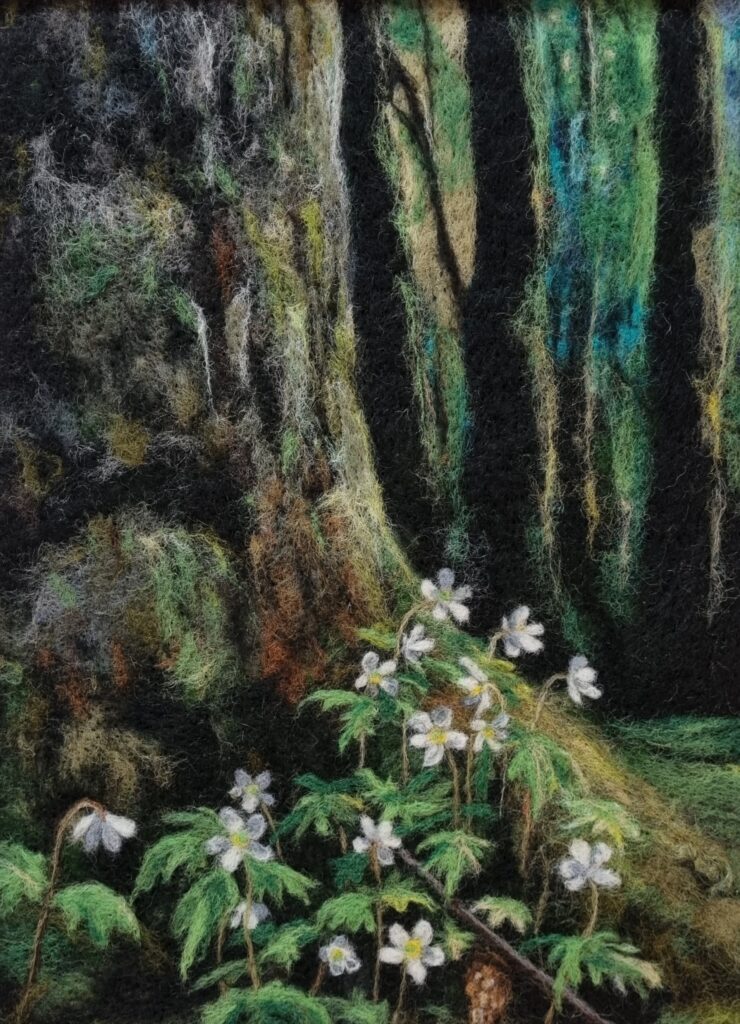
I employ two different techniques when I make my pictures. Some times I start by laying down the wool before adding water and soap. I then start the process of wetfelting. When the piece is dry, I start adding the details with the needle. Other times I use a prefelted cloth and poke the wool into it, layer by layer. Both procedures are timeconsuming, but really gratifying. And I like the way the fibers highlight the details in the woolpaintings.
A couple of years ago I started my own small creative business, and through my webshop I now sell my art to different corners of the world.
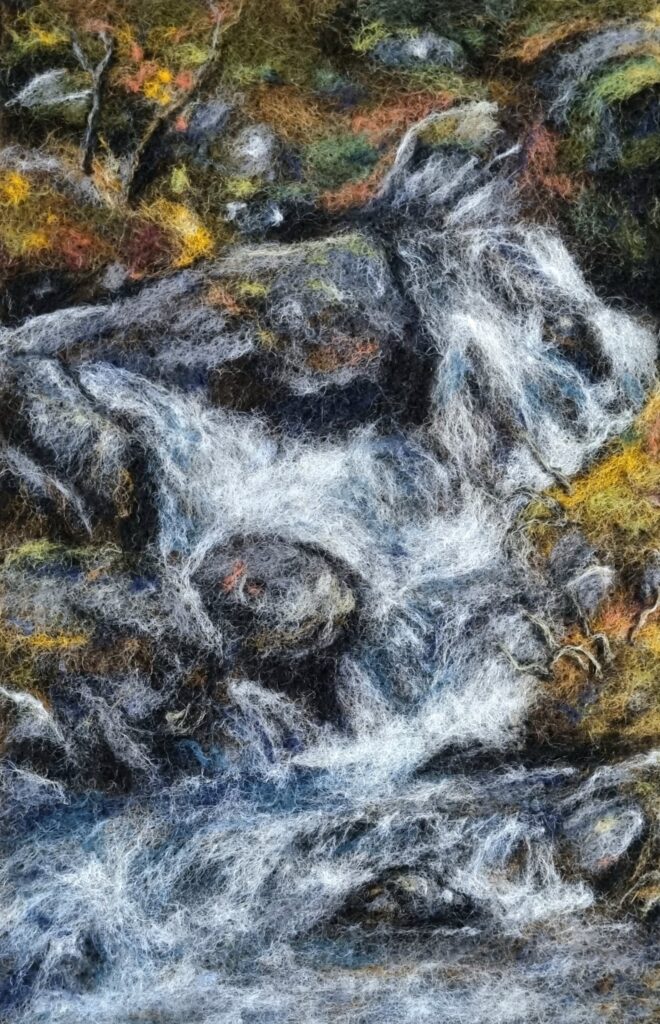
The inspiration for my motives usually comes from hikes or trips, often in the mountains or in the forests. The landscapes I create are textured and tactile. I try to capture the beautiful nature that surrounds us by using one of nature’s own materials – wool.
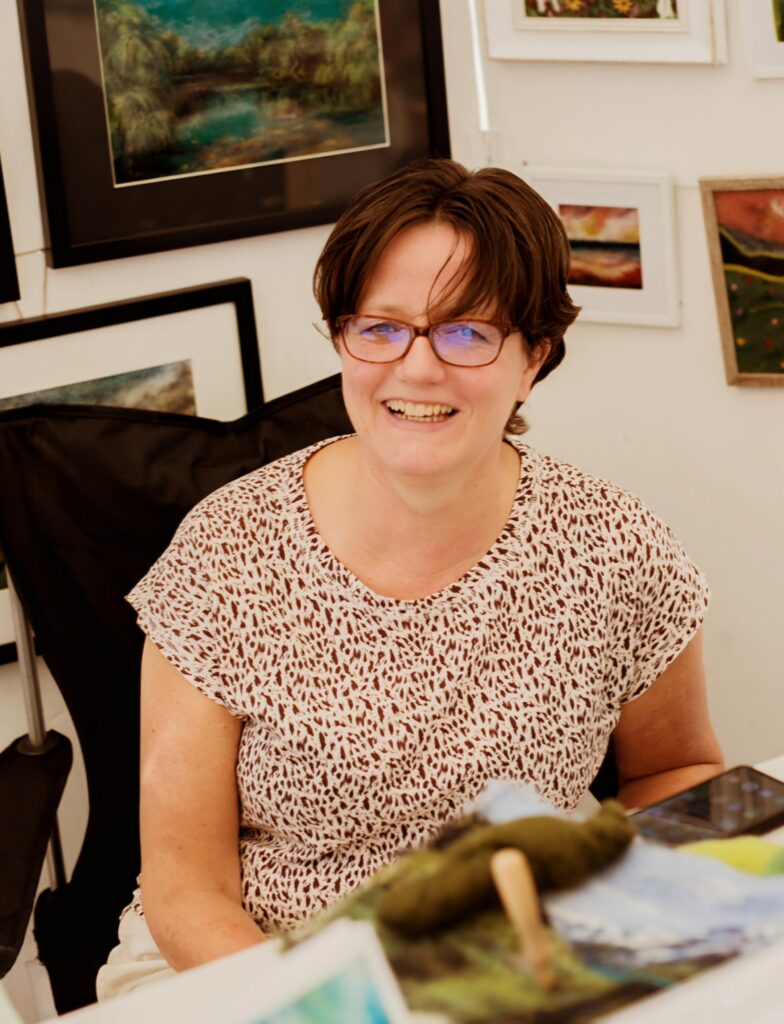
Dominie Nash
I’ve been pursuing my interest in various forms of textile art since the 1970s, starting out as a weaver. Teaching myself dyeing and batik started me on the path to surface design and quilting, and i now dye or print all the fabric i use in my fabric collage wall-hangings It’s my favorite part of the process and i continue to study and utilize new techniques.
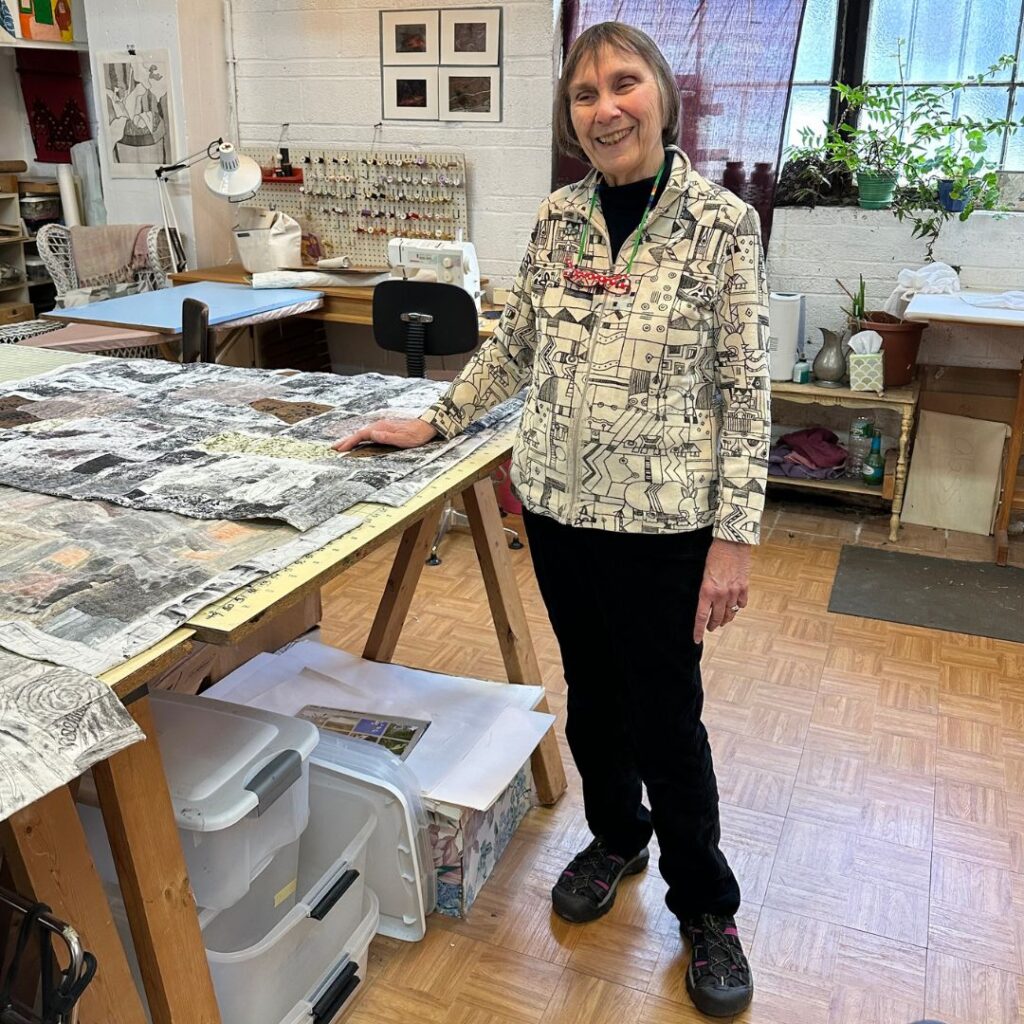
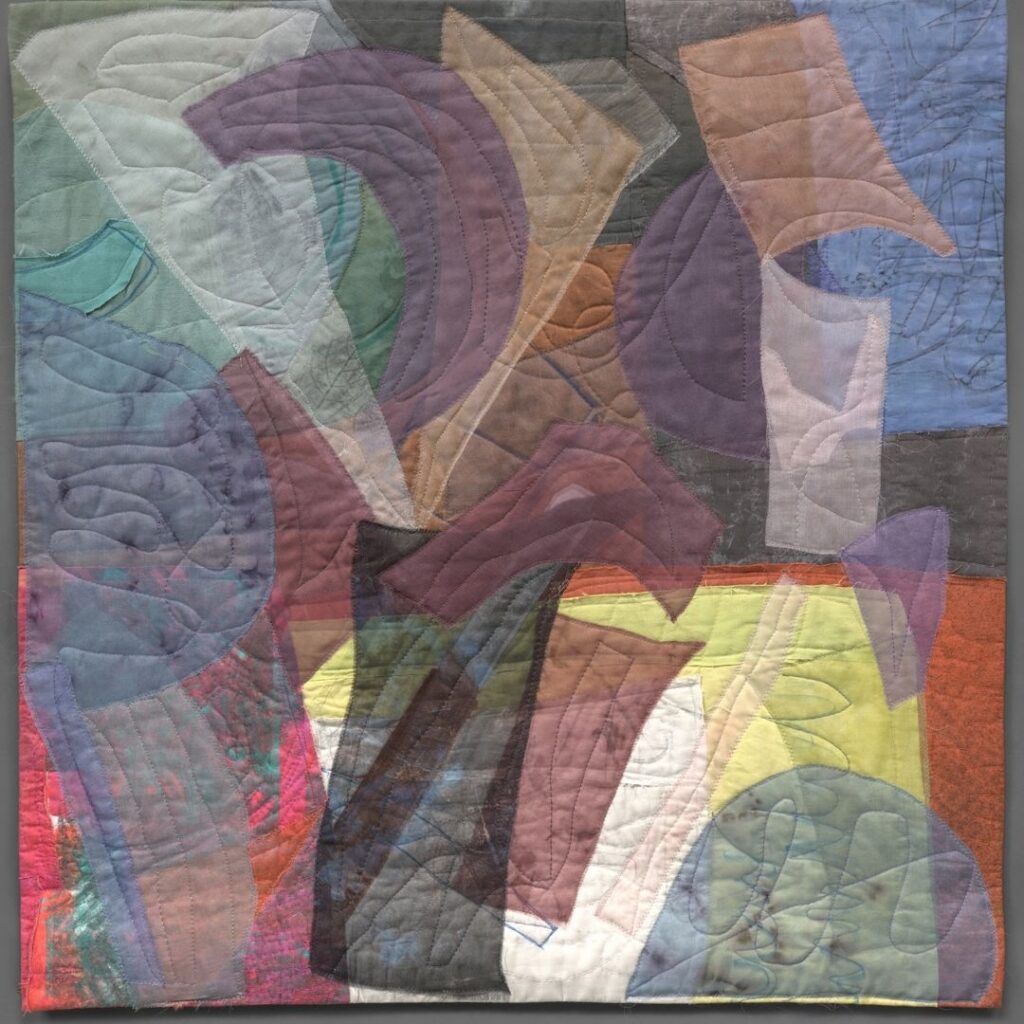
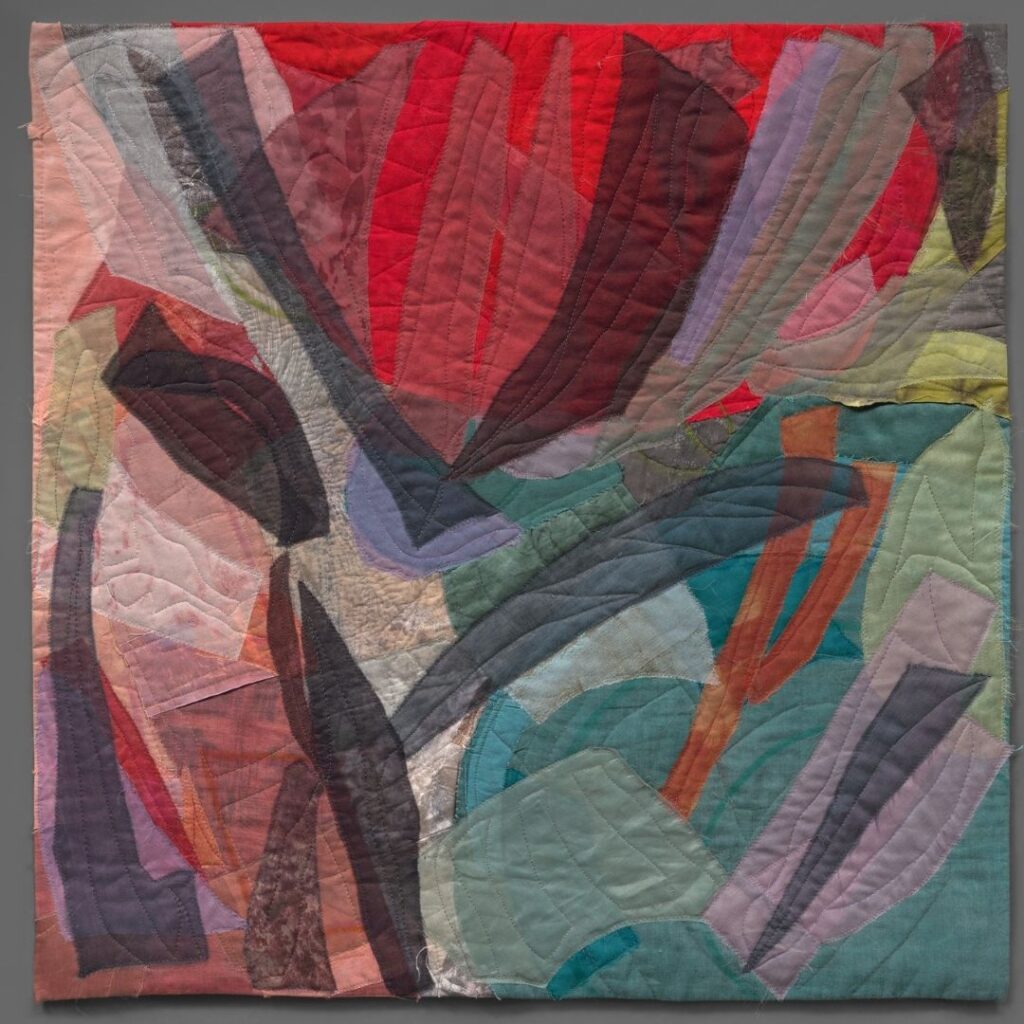
I found that working with fabric allowed me to create more spontaneous and unpredictable designs than I could achieve with weaving; I soon discovered that traditional pieced designs beautiful as they can be, didn’t suit my imprecise and loose way of working (I could never get those corners to match) I developed a sort of overlapping raw-edge applique which makes any design possible. It is basically collage. The other constant in most of my work is the use of organza overlays, which add depth and layers, and allow the various shapes and colors to blend together. In my latest series, Transformation, I use the organza to create a new image over the original one in the quilts that I ” repurpose”.
My work is primarily intuitive,though i explore certain themes or subject matter such as leaves or still lifes, There is no attempt to be realistic .I work with the feelings these things evoke The layers which result from overlapping of forms, lines , and fabrics are of particular concern to me , creating a sense of mystery and ambiguity. I hope that the viewer will want to return, and will see more and different things each time.
I practice my art every day in a studio in an artists coop in Washington DC, I’m happiest when I’m in my studio, and can’t imagine doing anything else.There are days when I accomplish very little, but being there is a necessity for eventually moving on with my art. I am stimulated and supported there by artists in many mediums. I learn so much from them as well as from my textile art colleagues in the groups and organizations i belong to. It is a wonderful community, rare in the art world or so i hear from my painter/printmaker friends. I do love to visit the many museums and galleries here in DC and find inspiration in all kinds of art.
I exhibit widely, in group/ juried shows and through solo exhibitions at local art centers. There are many opportunities through the exhibiting groups I belong to: New Image Artists in the DC area and Quilt Art in Europe.
Charlie Dalton
Charlie Dalton is an Utah/Kentucky fiber artist who follows only a few simple principles as needed. With a traditional rug hook, Charlie creates his fiber pieces by pulling wool strips through a linen backing and arranges them like lines of candy ribbon.
After spending 15 years in the classroom, lessons learned from his mother-in-law have taken him in a different direction, though his love of teaching has never waned. Leading workshops, like at Sauder Village in Ohio, or online through the In the Studio group, teaching is an integral part in Dalton’s hooking practice and ethos.
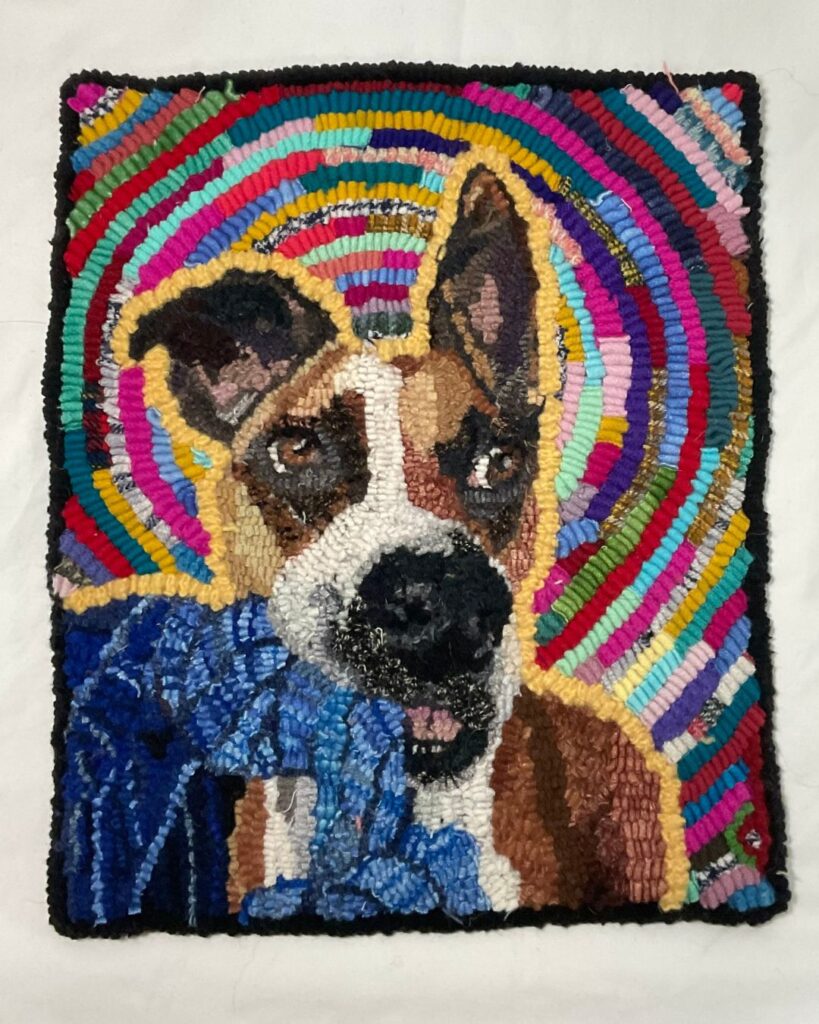
In this digitally paced world, where fast fashion and social trends drive a thoughtlessness in the use of a variety of material, a cornerstone in Charlie’s practice is the up-cycling of discarded clothing. Trying to breath fresh life back into these wool work clothes from past lives is a mixture of treasure hunt and waking Frankenstein’s monster.
Since these types of clothes are not easy to find anymore, it is a struggle to find the right values and shades “off the rack,” making it necessary to supplement his pile using dyes and other techniques in order to round out his chosen palette.
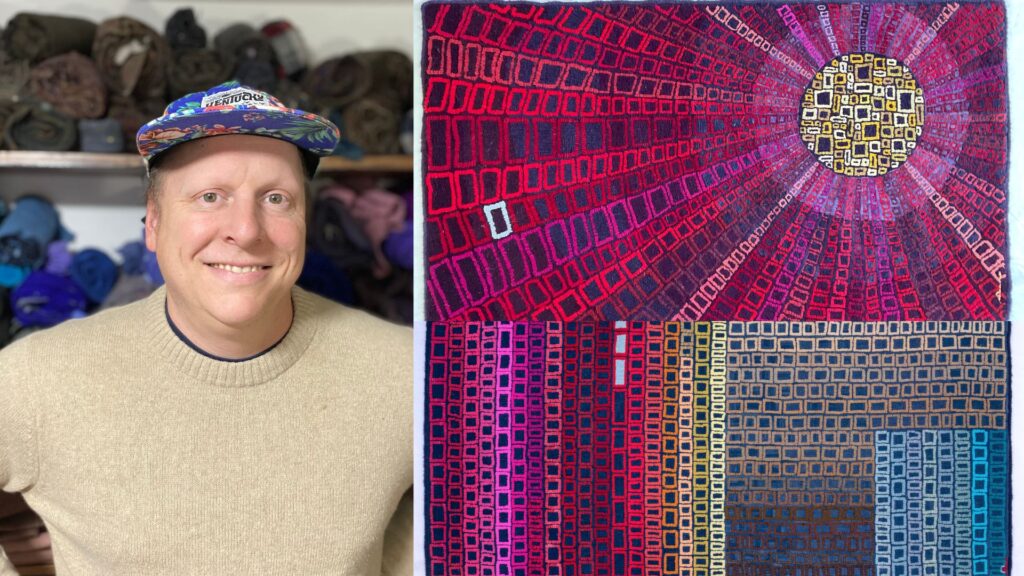
Dalton’s abstractions find their origins in nature and his environment. He is interested in invoking emotion through the slow movement of color throughout his pieces. Circles and squares in tandem with line and perspective are the nouns and verbs that he uses to produce his textured vision.
Marthe Koetsier
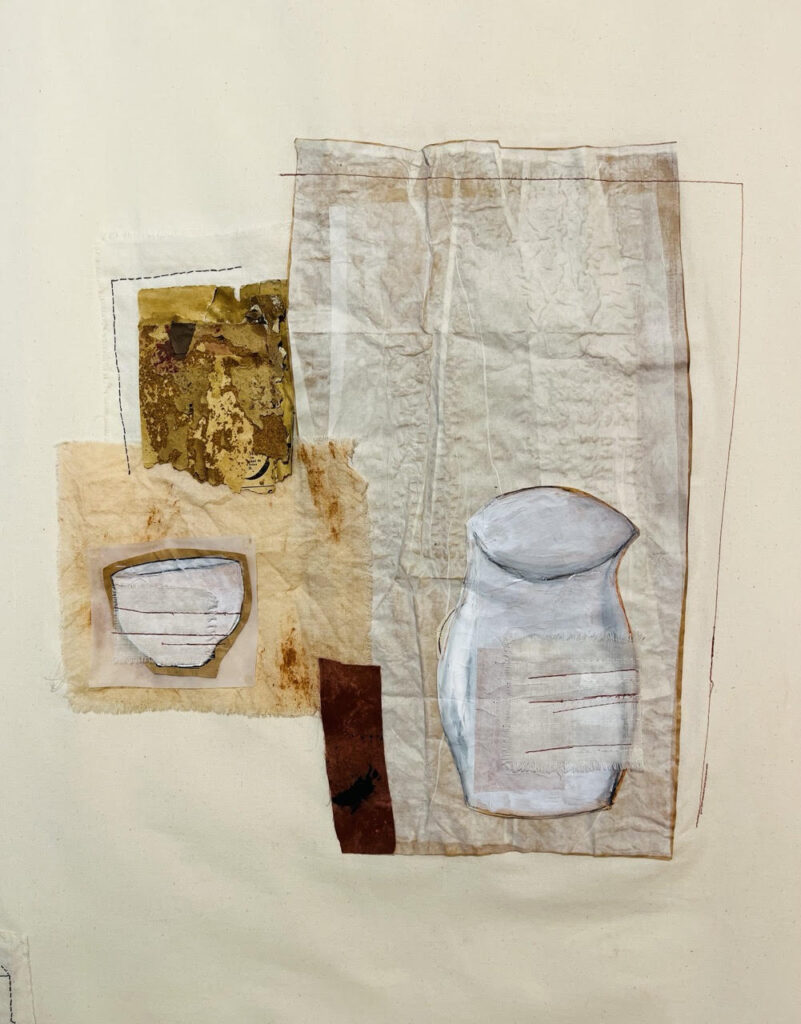
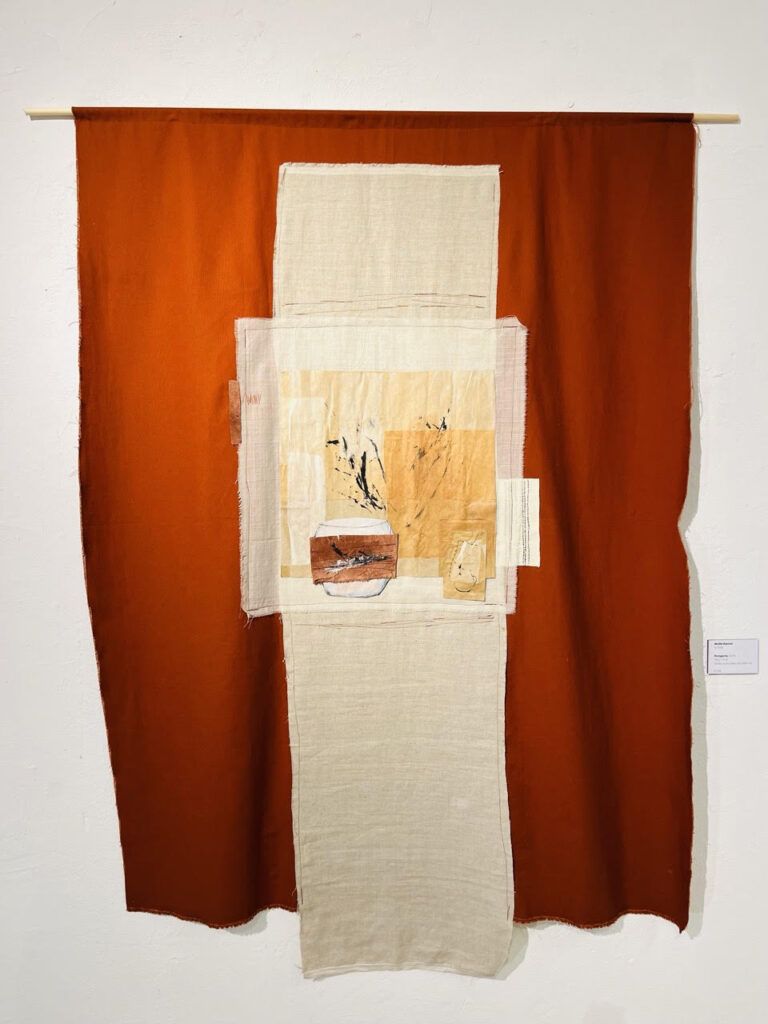
I assemble and stitch textiles, wool, pigment, paper, yarns and threads together into tapestries, creating abstract still lifes. Throughout history, tapestries have been used for narrating grand stories and depicting heroic scenes. My tapestries are an altar for the everyday, and a revaluation of simplicity, tactility and imperfection.
The colors, textures and shapes of the materials guide my creative process, in which I work intuitively. I use scrap fabrics to create layered collages that show the quality, history or signs of use embedded in cloth. In my still lifes I explore material intelligence, the idea that simple everyday objects contain a unique human wisdom and shared experience. They can invoke recognition, association, symbolism, emotion, and meaning.
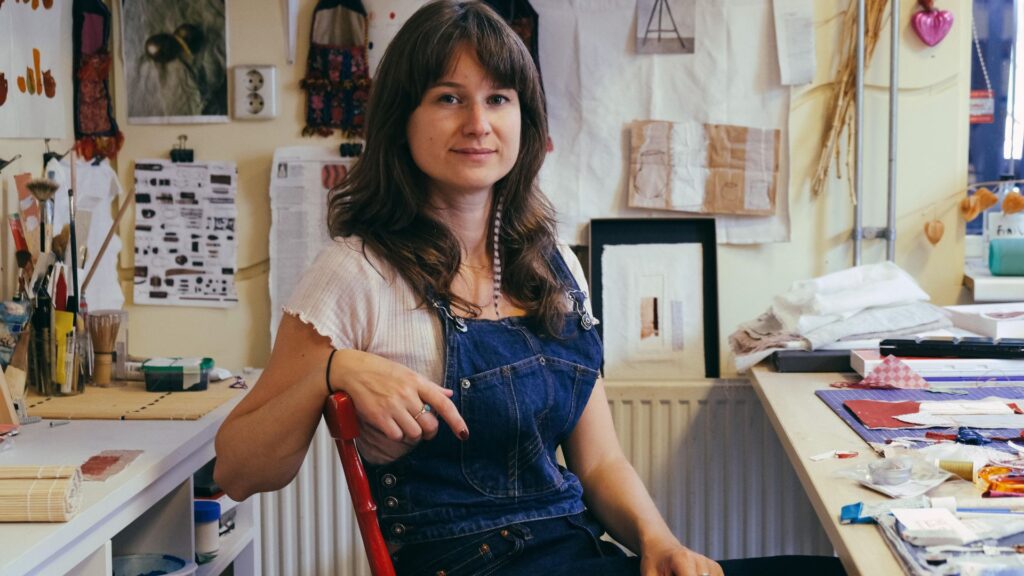
I am a self-taught artist. Starting out, I felt the need to wrap, bind, and enfold things with fabric, as an act of tenderness and to create a deeper connection with objects around me. The development of advancing technology has changed our relationship to the physical world. I missed tactility and simplicity, which I tried to reinvoke with my work. I use collage techniques that I learned from my mother as a kid. She is a visual artist and makes big abstract paintings using different kinds of paper. I also draw inspiration from the ancient Japanese Boro technique, the practice of reworking and repairing textiles through piecing, patching and stitching in order to extend their use. Combining these different influences and free experiment with materials, I feel most inspired. Creating tapestries that allow me to work with color, textures, fabrics, paper and hand stitching has given me a great sense of meaning.