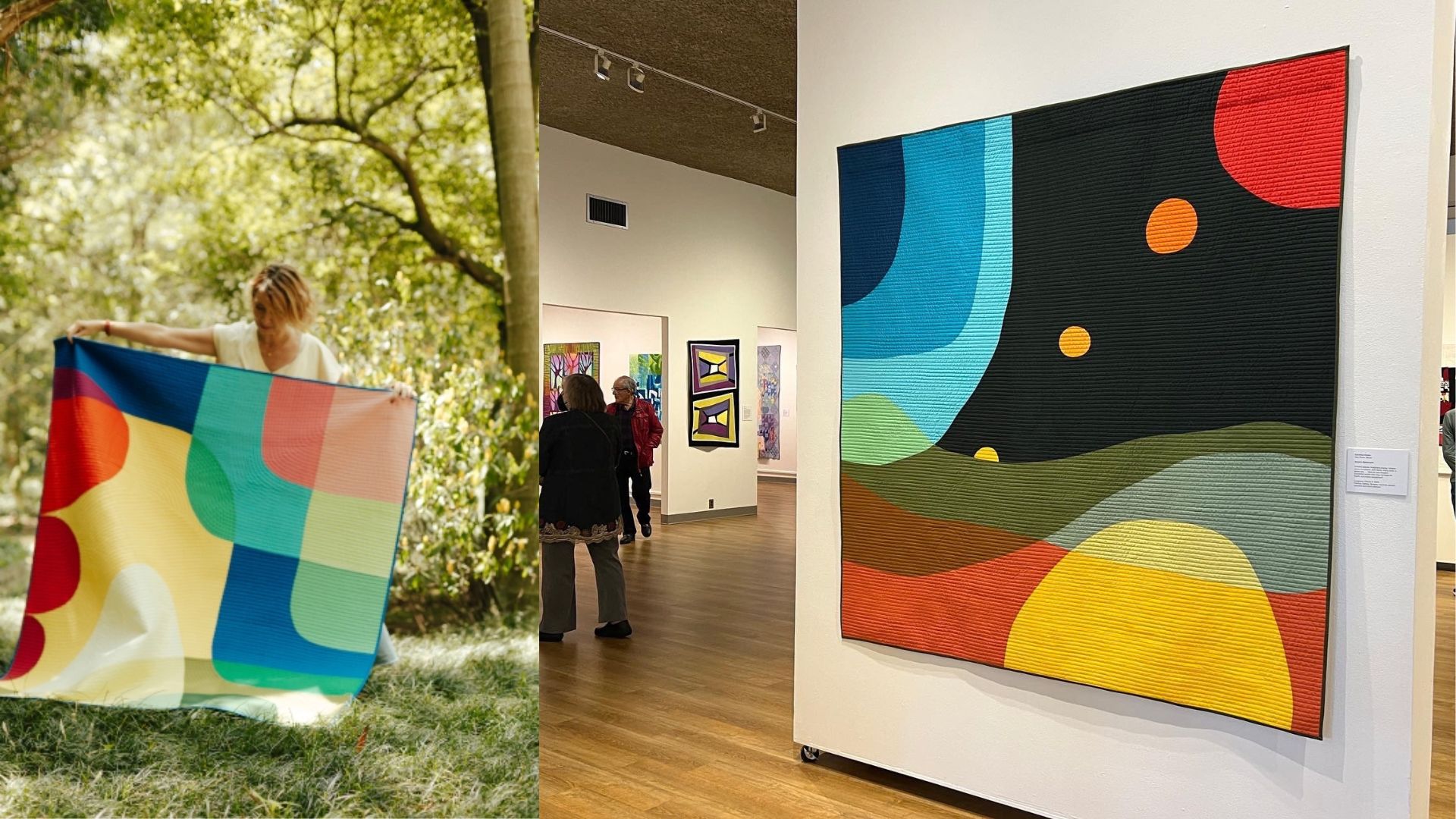

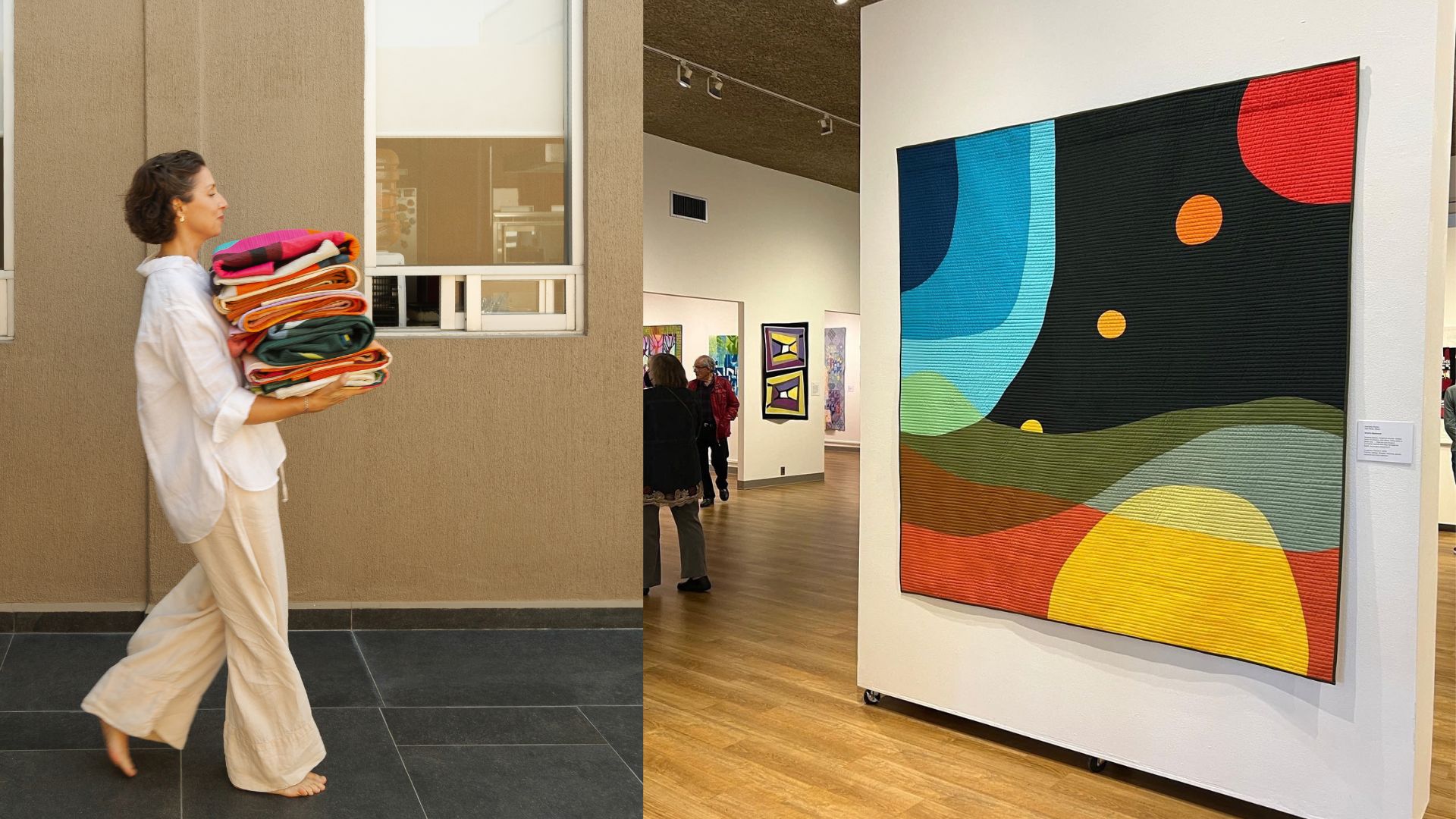
Getting rejected by quilt shows is something almost nobody talks about in public, even though almost every quilter who submits work experiences it. Putting a piece forward for a juried show takes real courage. You’re not just sharing something you made — you’re asking a stranger to judge whether it’s good enough, and then waiting for an answer you have no control over. When that answer comes back no, it’s easy to let it feel like a verdict on your worth as an artist. I’ve spent a long time learning that it isn’t, and I want to explain why, from both sides of that process — as someone who submits work, and as someone who’s sat on the other side of the table judging it.

What Being a Juror Actually Taught Me
I’ve served as a judge at the European Patchwork Meeting, at a festival in Brazil, and at Patchwork & Quiltdagen in the Netherlands. Sitting on that side of the table changed how I think about rejection completely.
Every show usually gives jurors some kind of checklist — craftsmanship, composition, technique, whether the piece fits the show’s theme. But even with a real list of criteria in front of you, it’s impossible to fully remove personal taste from the process. A juror’s own background shapes what they notice first, what kind of work they’ve spent years thinking about, what moves them versus what they respect but don’t personally connect with. A juror whose own practice is rooted in traditional piecing is going to see an improvisational, art-quilt-leaning piece differently than one who’s spent their career in modern quilting. Neither reaction is wrong. Put five different jurors with five different specialties in front of the same quilt, and you’ll get five different honest reactions, because the evaluation is being done by actual people, each carrying their own years of looking at fabric a particular way.
The Proof That It’s Not About You
The piece of evidence I keep coming back to is this: I’ve had quilts rejected by one show and accepted at another with the exact same piece, no changes at all. I’ve also had a quilt rejected by a show one year and accepted into that same show the following year — same quilt, same organization, different jury, different result. If the work itself were the deciding factor, none of that should be possible. But it happens constantly, to plenty of quilters, not only to me. I’ve heard the same story from friends who show internationally, in every category from traditional to art quilts.
Once you’ve seen that pattern enough times, it becomes hard to keep taking a single rejection personally. Your work still matters. It’s that a single juried decision is one specific group of people’s response on one specific day, not a permanent verdict on the piece or on you.

Fit Matters as Much as Quality
The more shows you apply to over time, the more you start noticing something else entirely: certain shows simply don’t fit your body of work, and your body of work doesn’t fit what they’re looking for. That’s not a mark against either side. It isn’t wrong or right. It’s just how it is. A show built around traditional technique isn’t going to be the right home for an improvisational, art-quilt-leaning piece, and that mismatch has nothing to do with how strong the work actually is.
There’s also something I think gets overlooked: a juror isn’t responding to your piece in isolation. They’re looking at everything that arrived that year, and they often have to balance the exhibition as a whole — enough variety across technique, color, scale, subject matter — rather than simply ranking pieces from best to worst on their own merits. A strong piece can still be set aside because the show already has several quilts doing something similar that year, or because the overall mix needed to lean a different direction. The crowd of everyone else applying alongside you shapes the outcome as much as your own piece does, and that part is entirely outside your control.
Why Persevering Actually Matters
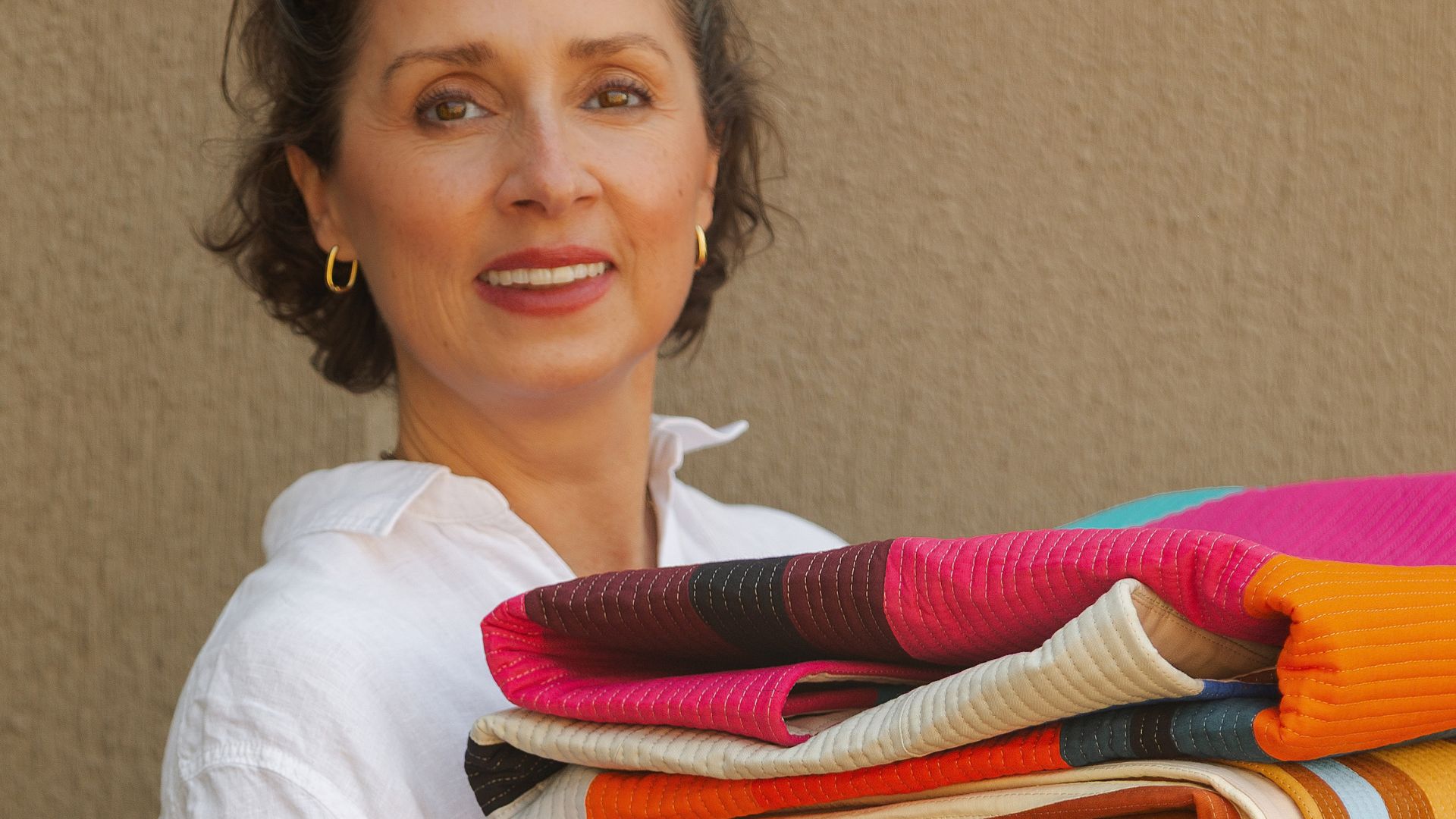
If a show, a theme, or a body of work truly matters to you, the answer I’ve landed on is simple: you keep going. Persevering through rejection doesn’t just eventually get you an acceptance — the persevering itself is what builds you as an artist. You refine your artist statement, you look harder at your own work, you get more honest about what you’re actually trying to say with a piece. I don’t think any of that happens if you stop after the first no. Some of my strongest pieces came directly out of sitting with a rejection long enough to understand what I actually wanted to say differently next time, not out of ignoring it.
I’ve also stopped counting rejections as the meaningful number. What matters to me is how much I’ve advanced — the pieces that did get accepted, the invitations that came later, the shows where a “no” one year turned into a “yes”the next. Counting rejections tells you almost nothing useful. Counting what you’re building tells you everything.

A Way of Thinking About It That I Loved
I came across a line recently that reframed all of this for me: imagine you already knew that reaching the place you’re dreaming of would take exactly one hundred rejections. How would you feel about your next one, knowing it’s simply one step closer to the number you needed to get through? I think about that a lot now. Every rejection I get isn’t evidence I’m on the wrong path. It’s just one of the rejections I always knew I’d have to collect along the way.
There’s also a plainer, more statistical way to say the same thing: the more you apply, the more chances you give yourself to be accepted. Submitting once and getting one no tells you almost nothing. Submitting to ten shows and getting seven nos and three yeses tells you a great deal — and it’s the three yeses that end up mattering, not the seven.
Where I’ve Landed
I still apply to exhibitions and shows regularly. I still get rejected regularly. At this point in my practice, it doesn’t shake me the way it used to, and I think that’s less about becoming thick-skinned and more about actually understanding what a rejection is and isn’t measuring. It isn’t measuring my worth. It’s measuring how one particular jury, on one particular day, responded to one piece out of hundreds they had to consider.
That reframe has changed how I plan my year, too. Instead of treating each submission as a single high-stakes bet, I try to think of it the way I’d think about any process with real variance built in: submit to several shows, expect a mix of outcomes, and let the acceptances accumulate over time rather than needing each individual answer to feel good on its own. If you’re building your own submission calendar, I keep an updated world calendar of quilt shows that might help you find your next place to try. And if you’re preparing a piece for the first time, my post on preparing a quilt for exhibition walks through the practical side of getting a piece ready.
The rejections haven’t stopped coming. I don’t expect they ever will, no matter how the work develops. But they’ve stopped being the thing I measure myself against, and that shift has made it a lot easier to keep submitting work I actually believe in.