

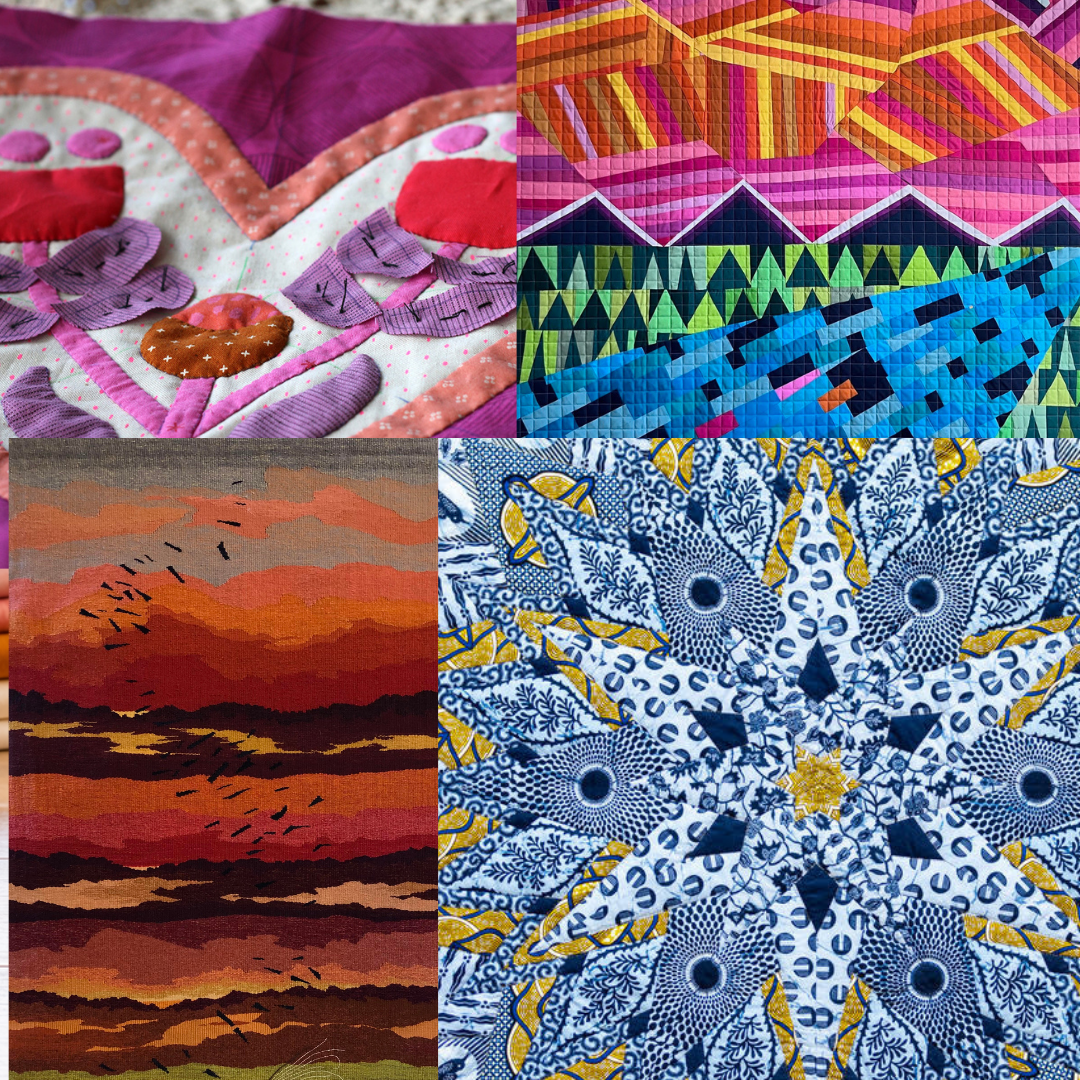
In this new showcase I’m featuring four Modern Quilters that you will love!
Jenn McMillian
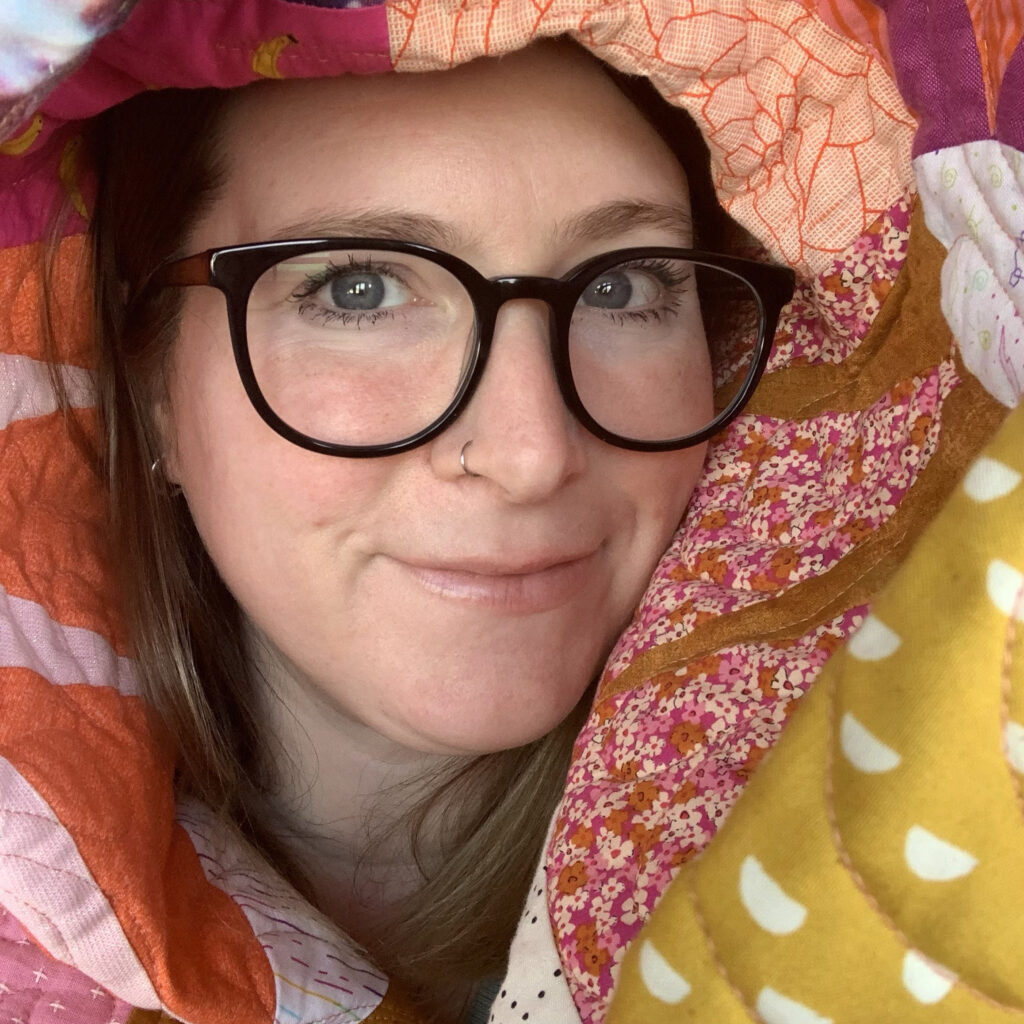
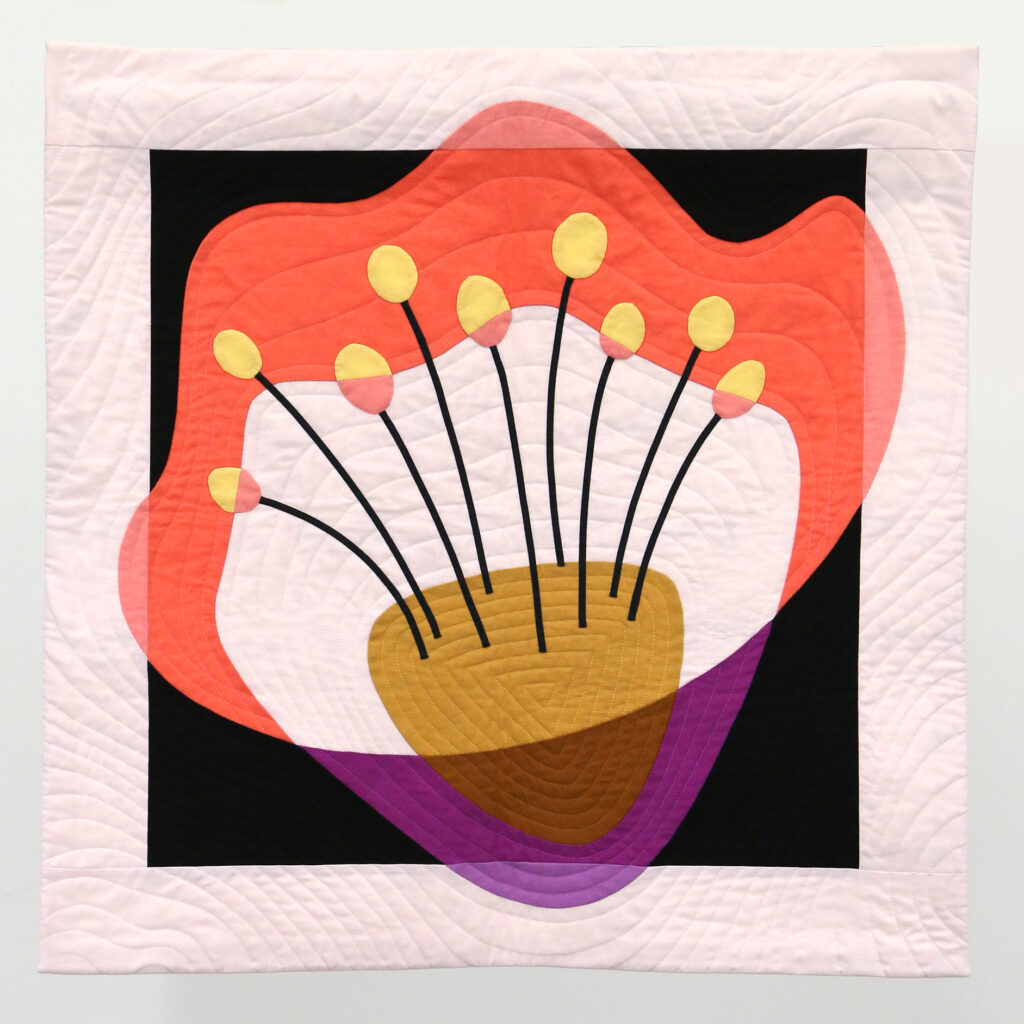
My name is Jenn McMillan; I’m a graphic designer, quilter and passionate hand-sewist
living in rural Ottawa, Ontario Canada. I learned to sew when I was very young, but my
real love for fabric and sewing started when, at 13, my grandmother took me to a local
fabric shop that had an entire wall dedicated to vintage knit fabrics. I took a few yards
home and re-made some of my favourite clothes using a 1960’s Singer Featherweight.
This is where I also learned an unfortunate lesson about direction of stretch, having cut
sleeves out in the wrong direction and not being able to get my arms in!
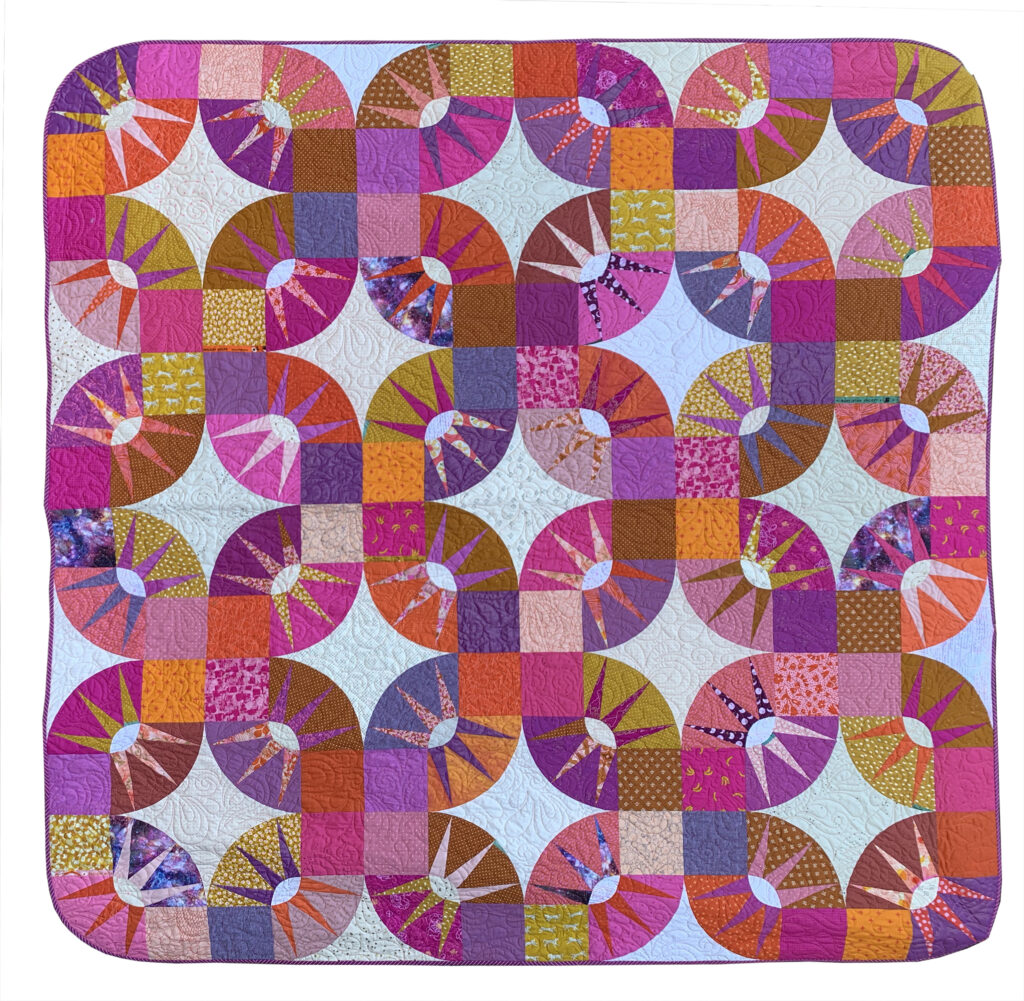
My current colour obsession is pink, orange and purple, and colours that fall within that
spectrum. I’ve made quite a few quilts over the past few years using this colour palette,
and will likely be using the scraps for years to come! My favourite colour though is a rich
roasted pecan – Ruby Star Society uses it a lot, and I find I’m quite drawn to its warmth.
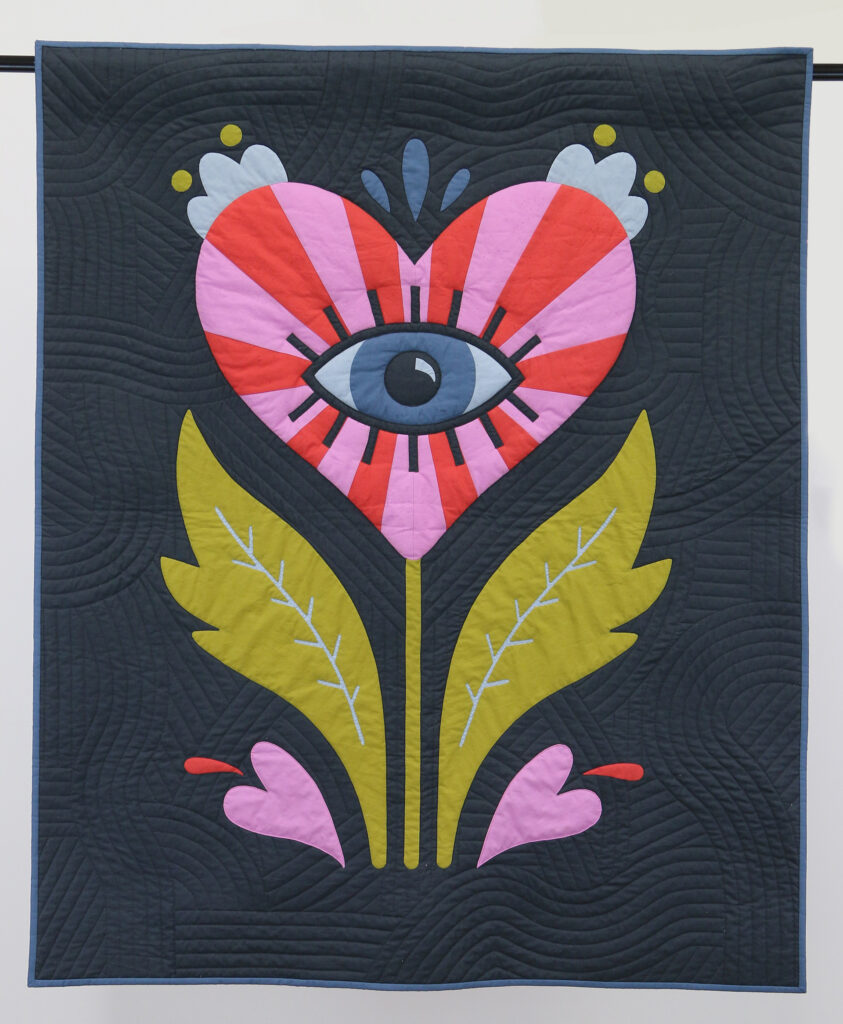
I call myself a passionate hand-sewist because my first instinct when considering a new
quilt design is if I can incorporate needle-turn applique. I find the tactile, rhythmic
motions of hand-sewing to be meditative and extremely relaxing, and having a
handwork project to help calm my mind is my favourite way to end the day. A hand-work
quilt isn’t a “make it quick and then onto the next one” type project in my view. It’s
something that I take immense pride in, when I’m sewing the last few rows or shapes,
and I think about how long I’ve been working on it, the things going on in my life during
that time, and how rewarding and incredible it is that I finished it.
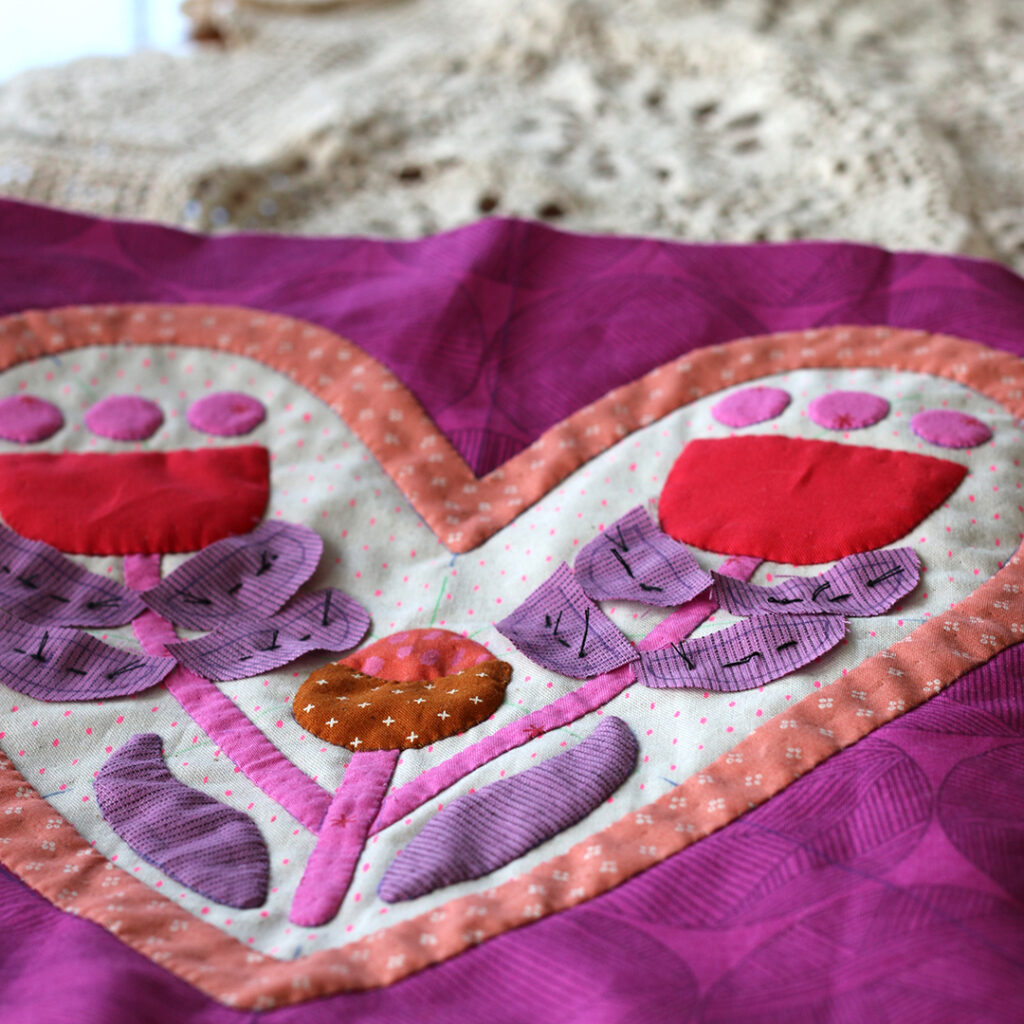
I consider needle-turn applique to be a sort of therapy. I’ve worked through some heavy
emotions after stressful life events by working on multiple needle-turn applique quilts.
Talking about quilting was one of the last full conversations I had with my grandmother,
mid Dec 2023. Two weeks later my grandfather was in the same position, and I brought
in my blocks and spent hours working on them at his bedside. “Don’t poke yourself” he
snickered at me, a few days before he as well passed. Finishing that quilt top was a
heavy moment and it’ll be very emotional when I get it quilted and bound, but I’m
looking forward to having it completed.
Being obsessed with hand sewing was one of the main reasons why I developed Sew
Fine Thread Gloss. I’m very fortunate that Jacqueline and the Soak team have taken
over production and will be able to continue providing this amazing product to other
quilters and hand-work enthusiasts worldwide!
Mary Landon
My earliest memories of sewing are at age nine, fighting with my mother because we both wanted to use her 1925 Singer. As a teen, I would ride my bike as fast and as often as I could to the Ben Franklin to buy patterns and fabrics to make myself the best hippie clothing; peasant blouses, halter tops, and hip-hugger bellbottoms.
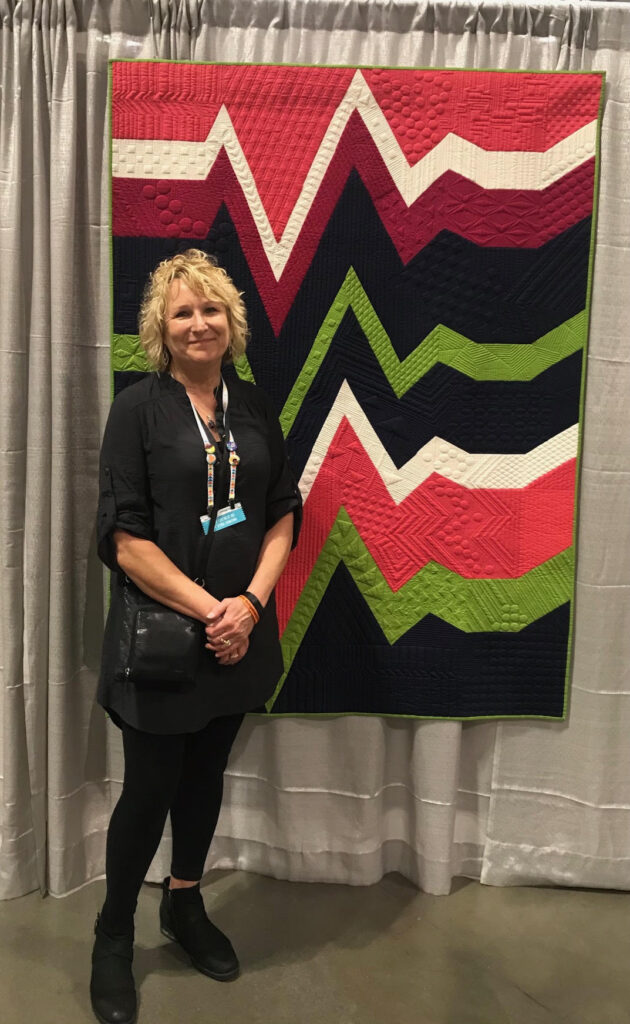
I made my first quilt in 2000, and it was so ugly I am surprised that I carried on. For many years, I focused on machine quilting and attended numerous classes with the best machine quilters. I’ve even won a few awards for machine quilting. I haven’t had any formal education in art or textiles, but have loved online classes with Irene Roderick, Gwen Marston, Carolina Oneto, and Maria Shell, and I dream of studying with Nancy Crow.
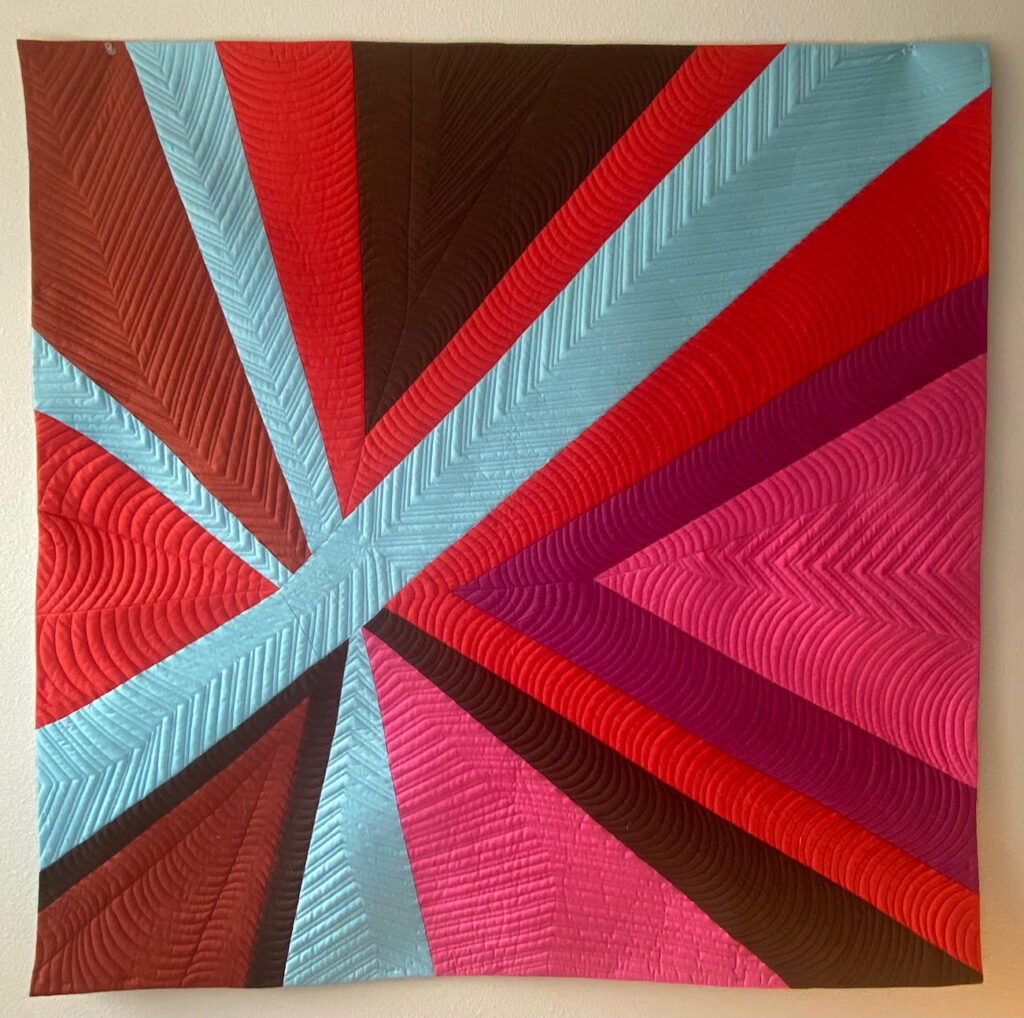
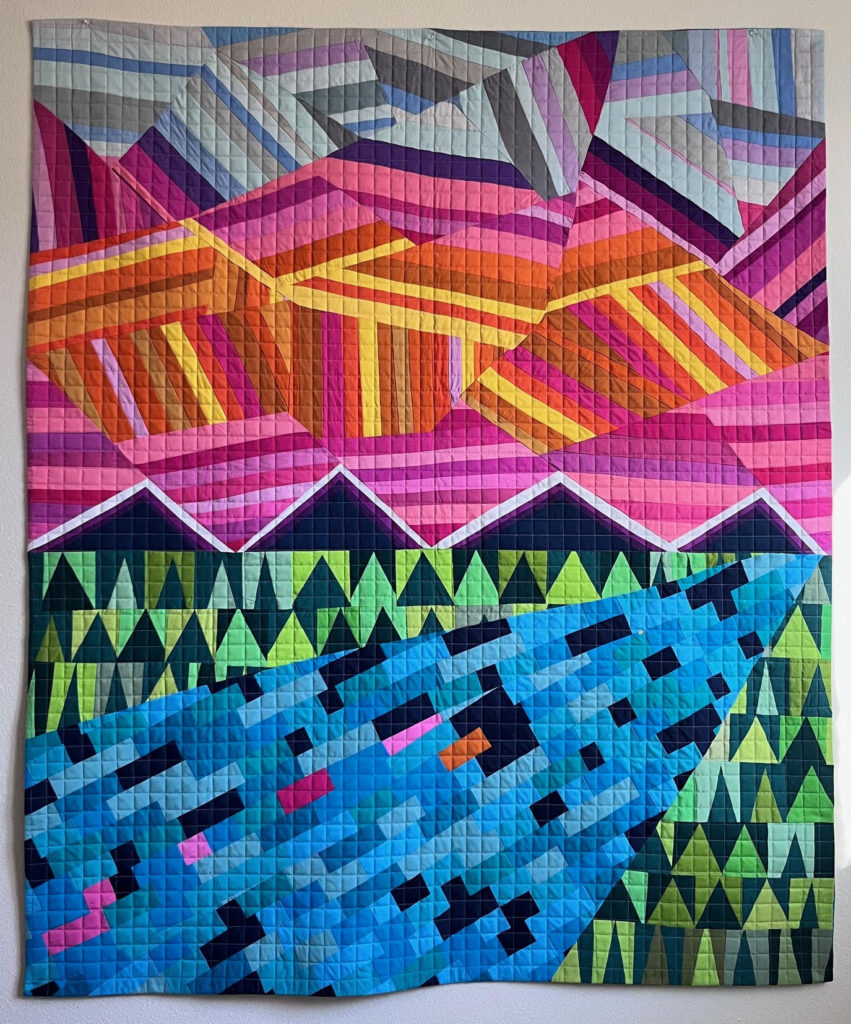
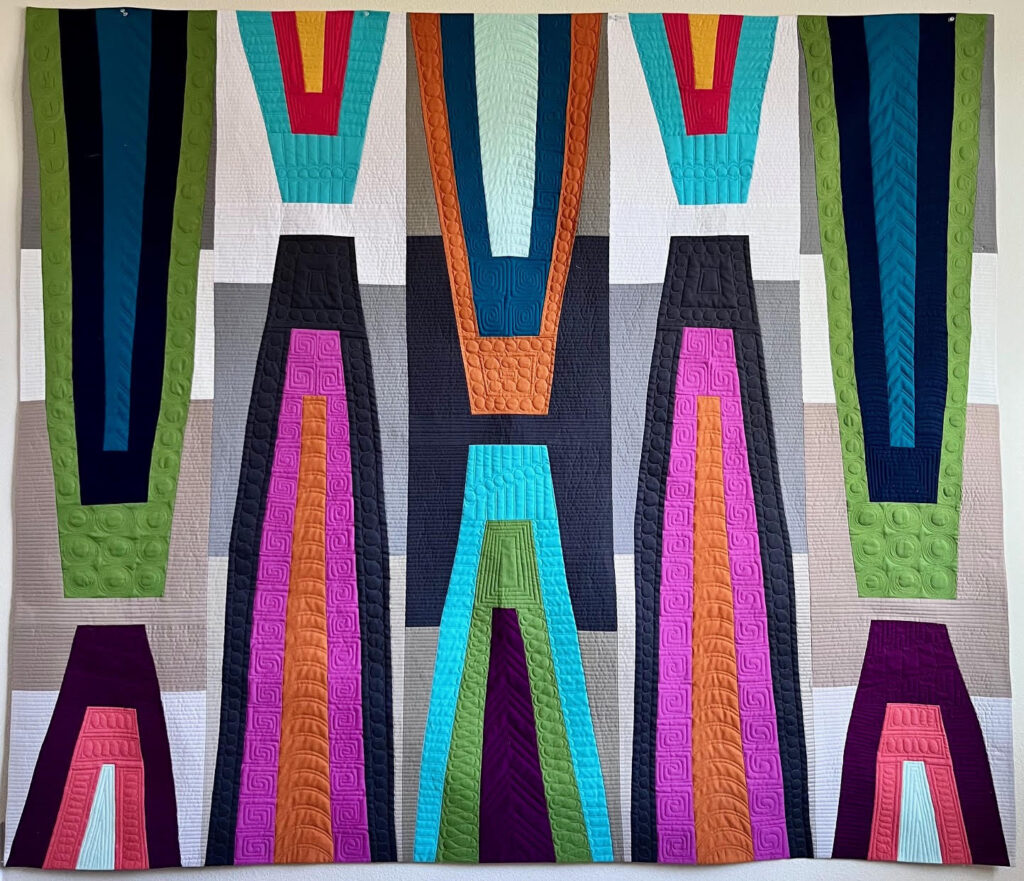
One of my favorite aspects of quiltmaking is the challenges that are created when using materials such as thrift store tablecloths, vintage quilt blocks, ties, and denim jeans. These challenges and color – especially intense color – inspire me. I am also motivated by gifting quilts to friends and family, and donating them to charitable organizations. I simply love all the possibilities of what can be created with fabrics, a rotary cutter, and a sewing machine.
Hilde Hoogwaerts
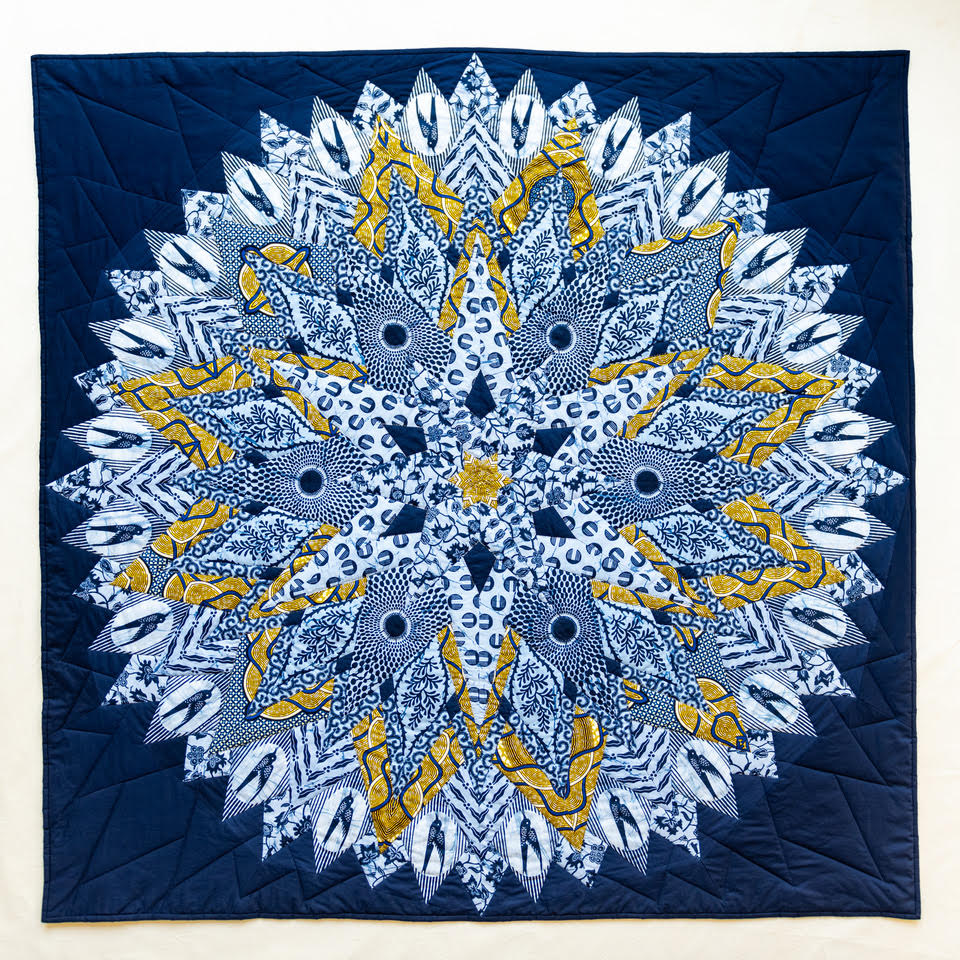
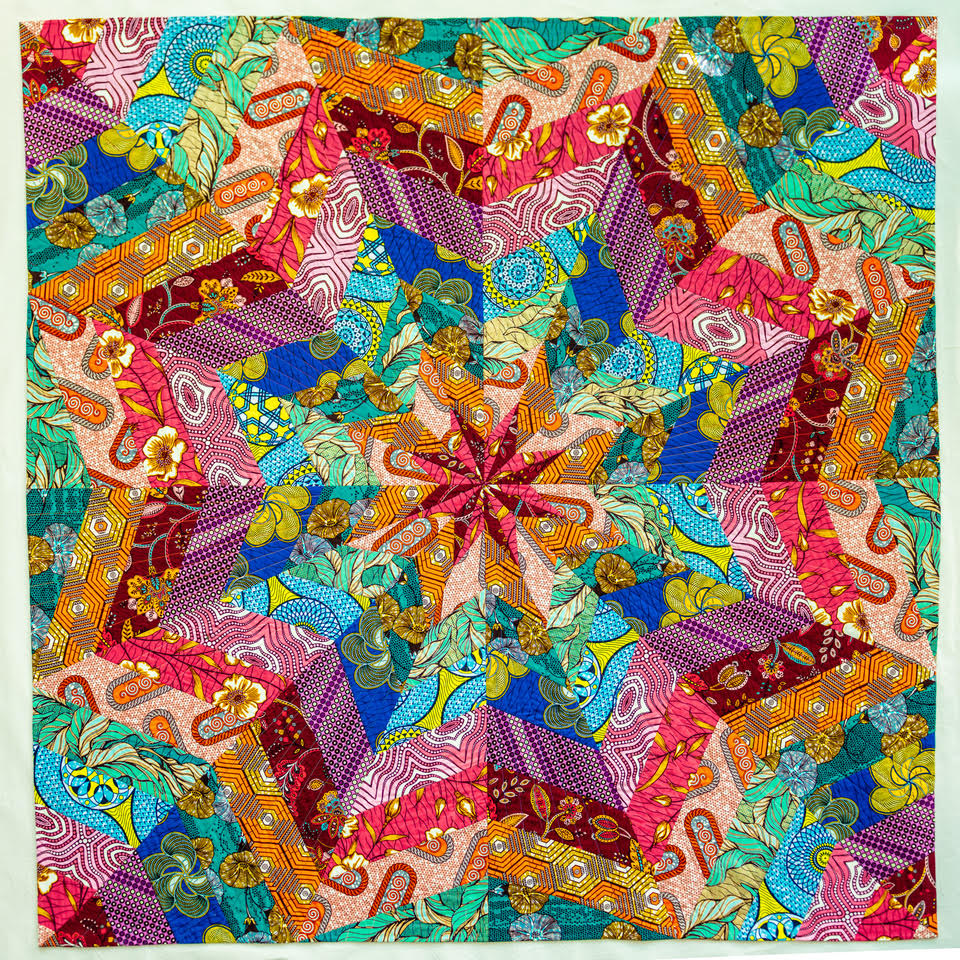
I am a quilter who loves to work with traditional and modern African wax prints in my quilts. In my quilts I mainly use traditional (star-) patterns and kaleidoscopic designs.
After living in various countries around the world for almost 25 years our last posting was in Ghana where my husband and I stayed for 3 years before moving back to our home country the Netherlands. All these experiences and encounters abroad with the local artists and cultures, and in Ghana especially the use of colours in everyday life, are having a huge influence in my work.
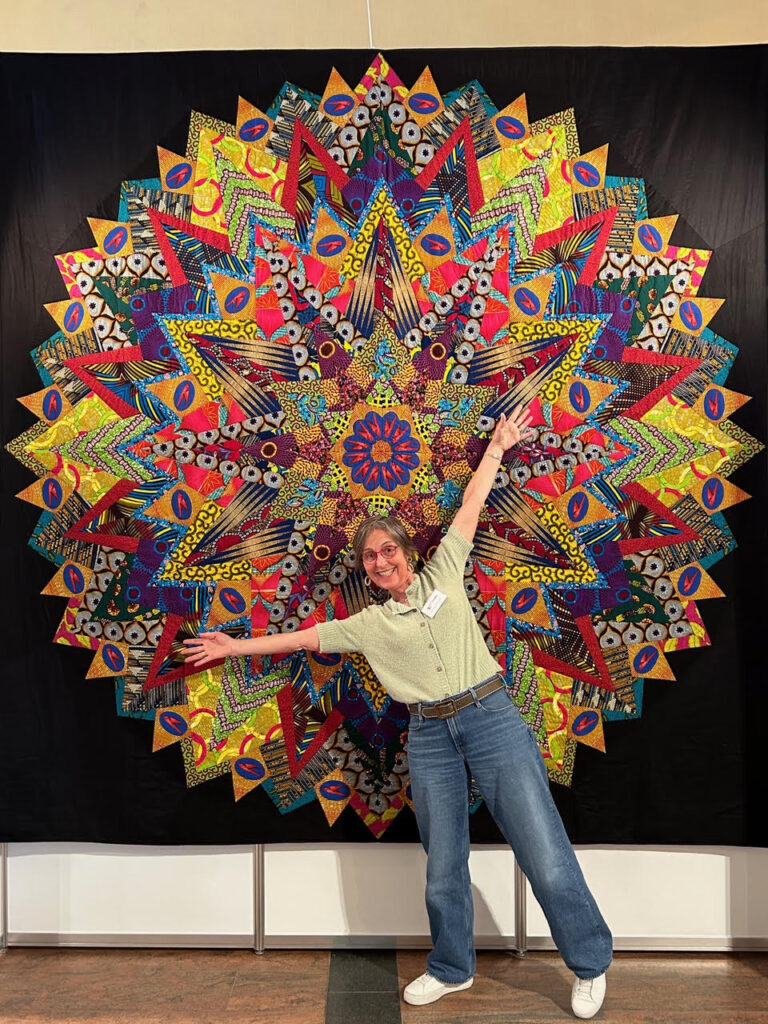
I started quilting when living in Atlanta back in 1990 and over the years, when moving around, I was more and more attracted to work with vibrant colours. So, coming to West-Africa was a great joy and I started, inspired by watching the people on the streets, to combine colours and prints I wasn’t familiar with. It became a study into how the colours and prints in the African wax fabrics ‘talk together’, how they influence each other and become one story.
When I make a new design, I draw lines on a piece of paper in real size. This way I can have an idea how certain fabric prints will come out best when using them for a certain project. The process of turning the paper design into a design with fabrics on my design wall and see how these fabrics start ‘to communicate together’ is the best part of this process.
Liz Chester
I was introduced to tapestry weaving when I was 15 by taking part in a community tapestry project in my home town of Dunfermline in Scotland. The Lyth tapestry weavers in Caithness, were my first teachers and I continued with members of the Guild of Weavers, Spinners and Dyers from Edinburgh. Despite my love for weaving, I took up a career in engineering. After 21 years in IT and two young children, in 2008 I took redundancy from my job and decided to make tapestry my professional career.
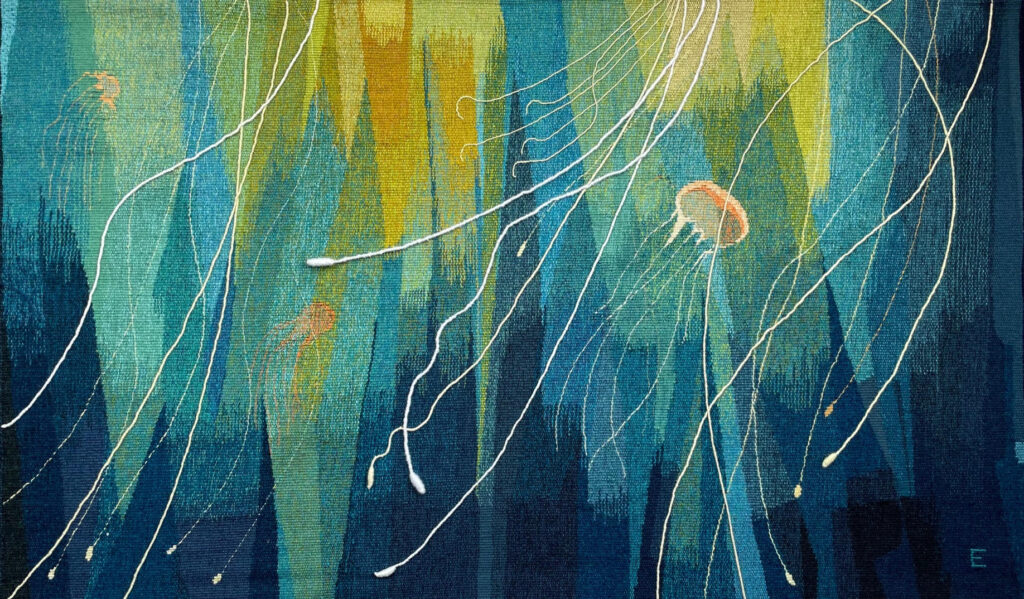
Weaving is my art medium of choice. I use the techniques which achieve the effects I want for any particular subject. The image determines how I am going to weave. My goal is to encapsulate what I am trying to put across, but also make an interesting and beautiful image. The weaving should enhance and not distract from the subject matter. I love to blend colours and getting enough space to gently grade colours is why I usually work at a sett of 10 ends per inch. My washing machine has 20 different settings but I only use three. It is tempting to collect a huge range of weaving techniques, but generally I will only use four in any individual tapestry.
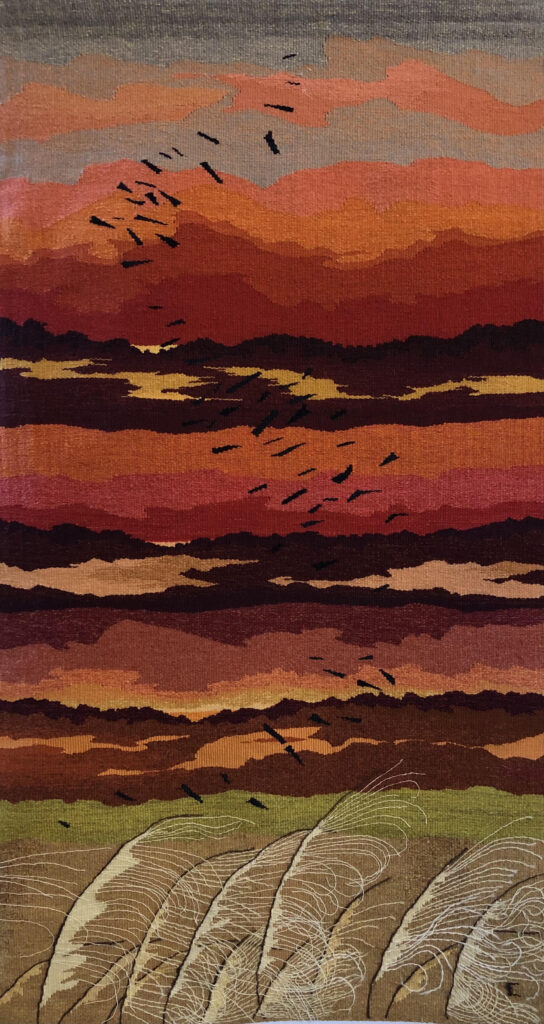
In recent work I have focussed on the human impact on the wild world. I have recurring interests in the movement of water and how humans communicate with their body language. Much of my work is pictorial, and graphic in nature, but increasingly I am working on abstraction. Often I will produce a pictorial work then follow it with another work on the same topic, but more abstract. Working on the visible helps me to find the underlying forms and lines. I have used techniques such as collaging and painting with print rollers so that my mark making is less deliberate. There are always more weaving skills to sample, but after over 40 years of weaving, I want to further develop my design and image making skills