

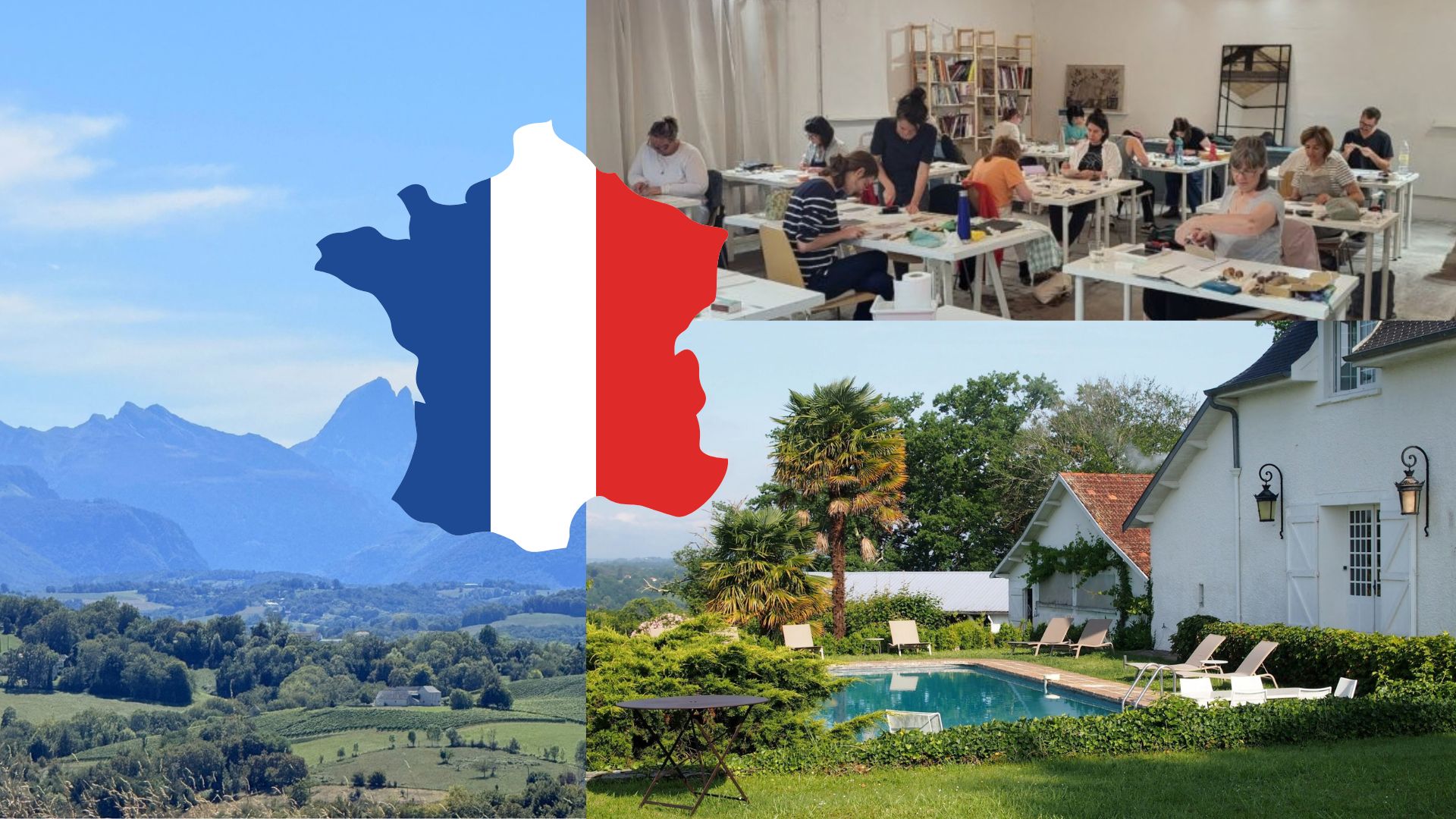
A France quilting retreat sounds, on paper, like a lot of things at once — a vacation, a workshop, a week away from your regular sewing machine. A few weeks ago I wrapped up my 2026 retreat at Clos Mirabel, near Pau in the French Pyrenees, and I want to tell you honestly what that week actually looked like, because I think it explains why I’m already looking forward to next year’s.
An Intimate Group at Clos Mirabel
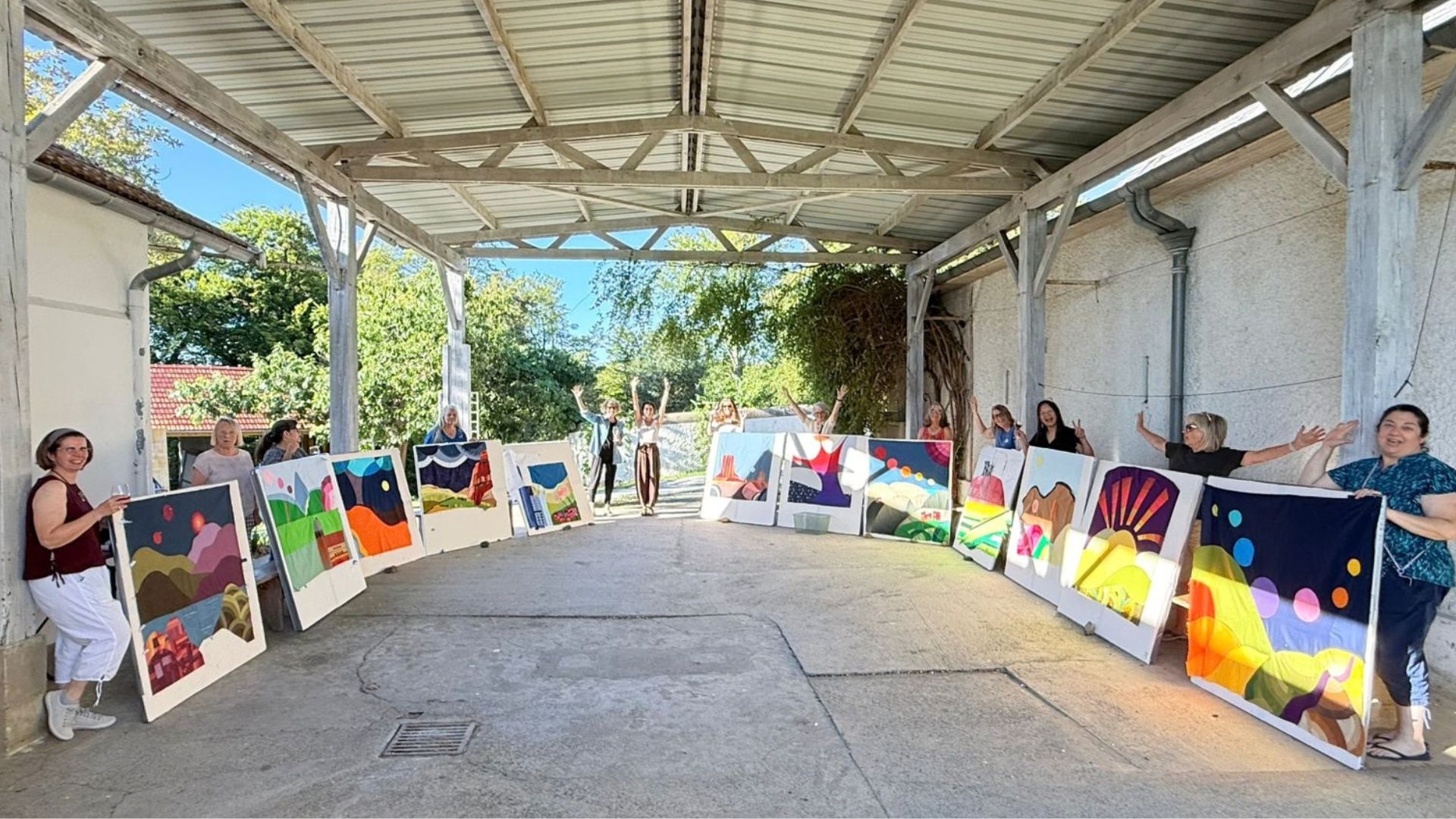
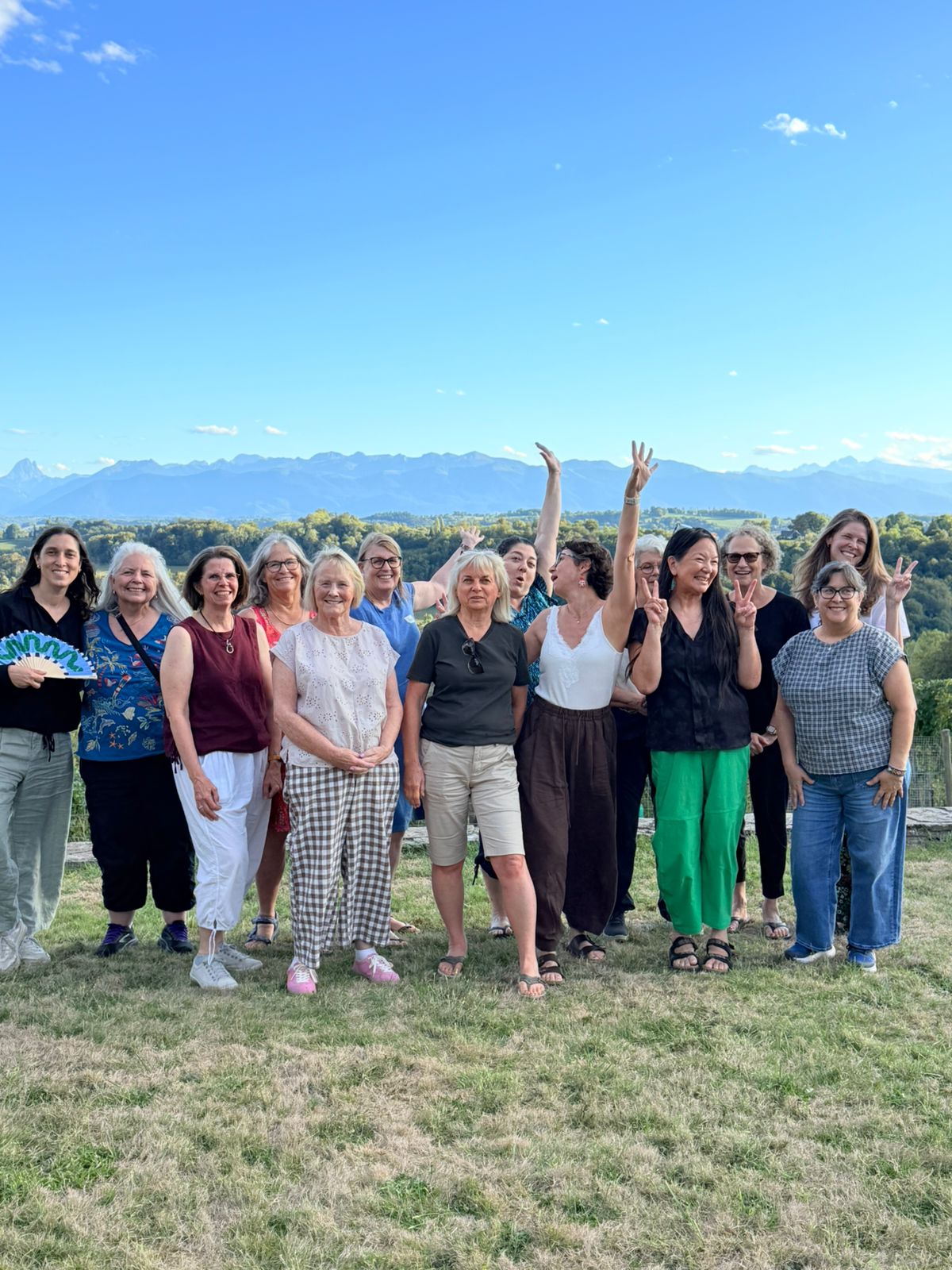
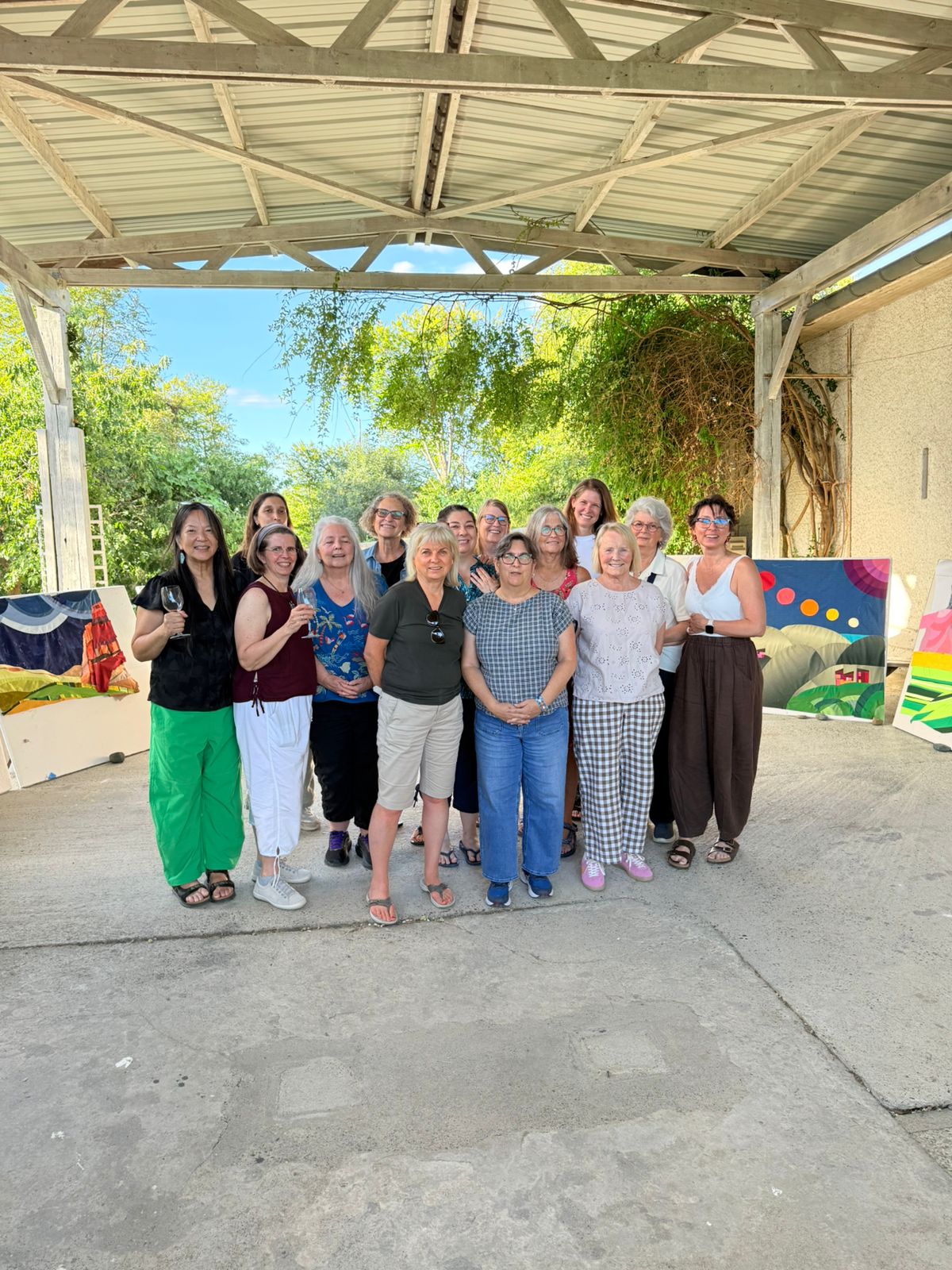
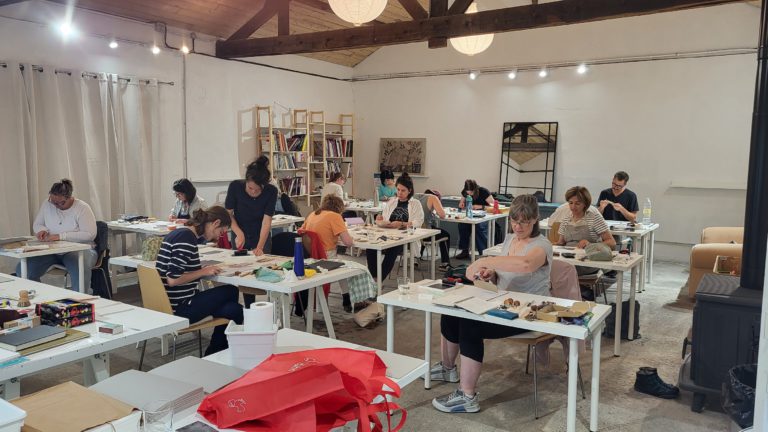
This retreat stays intimate — 14 participants at Clos Mirabel this year. That size shapes the week in a particular way: there’s room woven throughout for one-on-one time with each student’s color choices and piecing decisions, alongside the group teaching. This year’s theme was Imaginary Places, and by the end of the week, almost everyone had their top nearly finished, which felt like a real testament to how the week was structured.
The Setting Did Half the Work
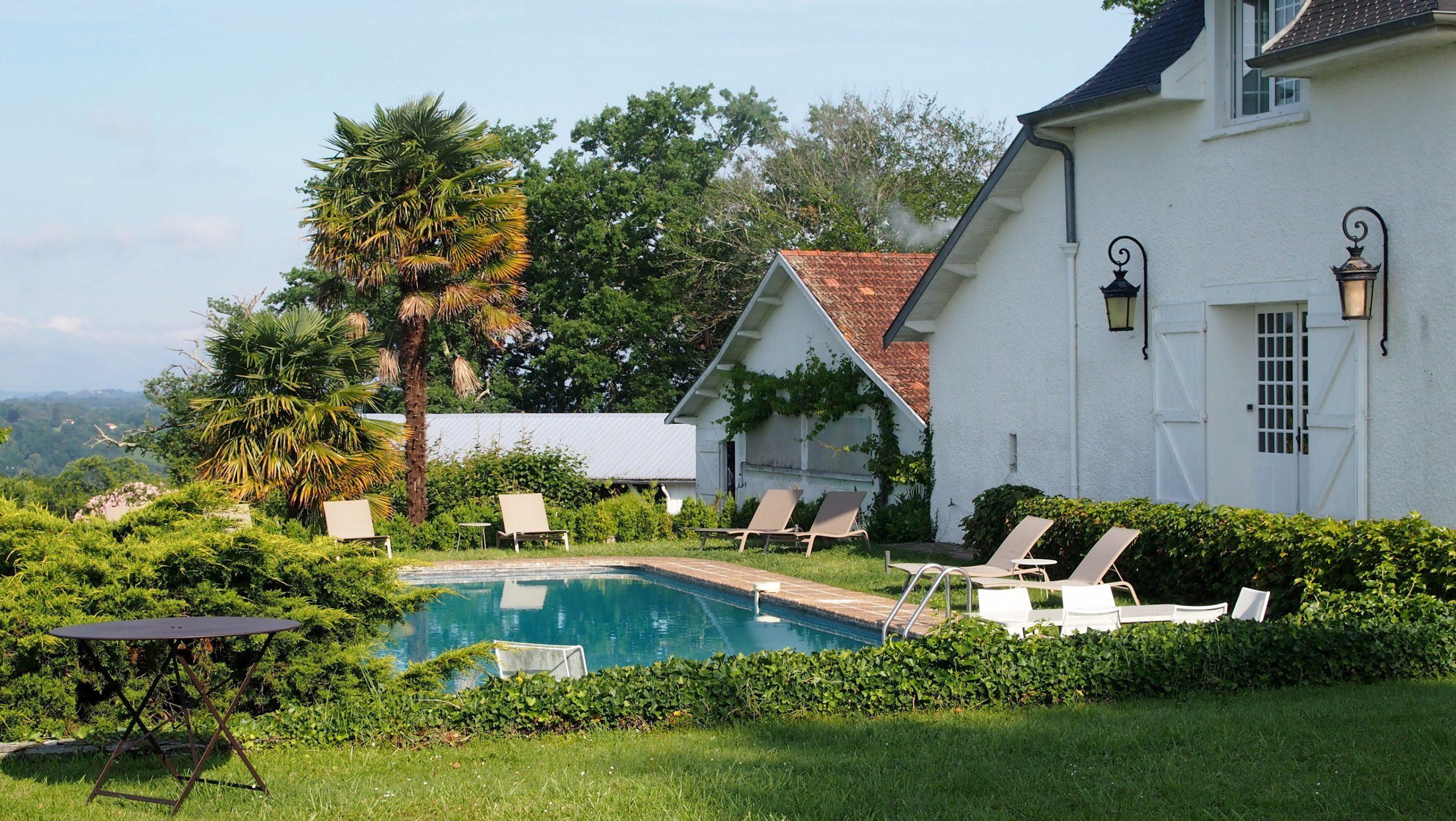
Clos Mirabel used to be a wine estate. It’s a hotel and retreat center now, but it still grows its own food — everything organic, a proper kitchen garden — and a chef prepares breakfast, lunch, and dinner every day of the retreat. The studio itself has room for everyone to spread out, good natural light.
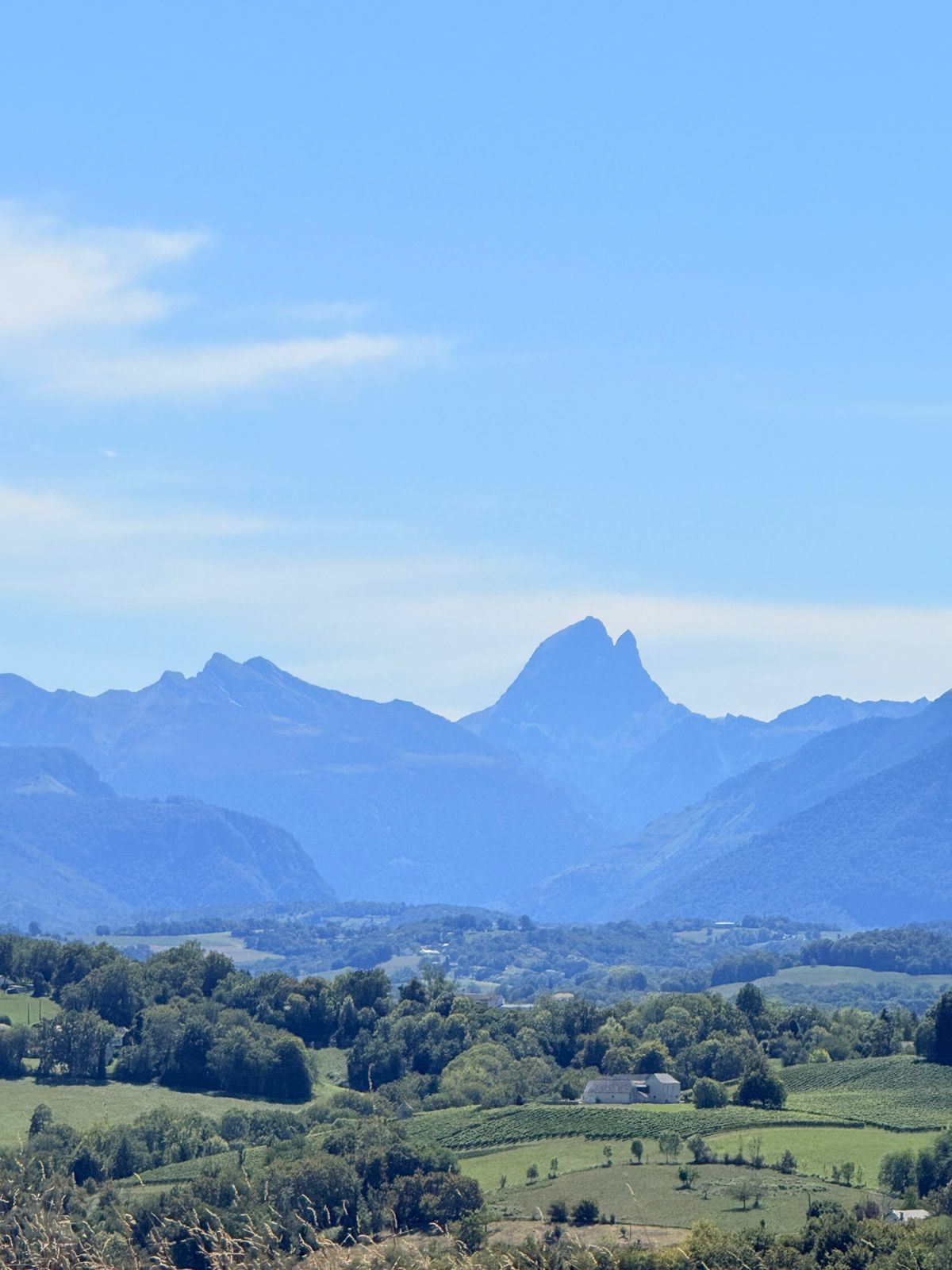
The surroundings did a lot of quiet work too. The Pyrenees are right there, visible from the property, and there’s something about working on a quilt called Imaginary Places while looking out at real mountains that I don’t think I could manufacture in a classroom back home. Between sessions there was time to wander the property itself — past the kitchen garden, through a tunnel of kiwi vines heavy with fruit, along rows of grapevines that catch the evening light. We had a free day in the middle of the week, and most people used it to visit Pau, a genuinely lovely town about an hour and a half by direct flight from Paris, which makes this retreat easier to reach than people usually expect. A few people spent the day just by the pool instead, sketching or reading, which felt like exactly the right choice too.
One evening we tasted Jurançon, the local wine from the hillsides right around Pau. It has real history behind it — legend has it that Henri IV, the future King of France, was baptized in 1533 with a drop of it, and the wine has been part of French royal tables ever since. Tasting something with that kind of local story, made from grapes grown on the hills you can see from the studio, felt like exactly the right way to end a day of piecing.
What the Days Actually Looked Like
Meals were their own part of the experience, not an afterthought between sewing sessions. Lunch most days was a long table of things pulled straight from the garden — courgette ribbon salads, tomato and basil tarts, a spread of dips and fresh bread, cheese from nearby.
Breakfast leaned just as thoughtful, with fresh berries and edible flowers scattered over the plate before anyone sat down. It’s a small thing, maybe, but eating that well in the middle of a working day changes the whole rhythm of a retreat. Nobody was rushing lunch to get back to a machine. There was time.
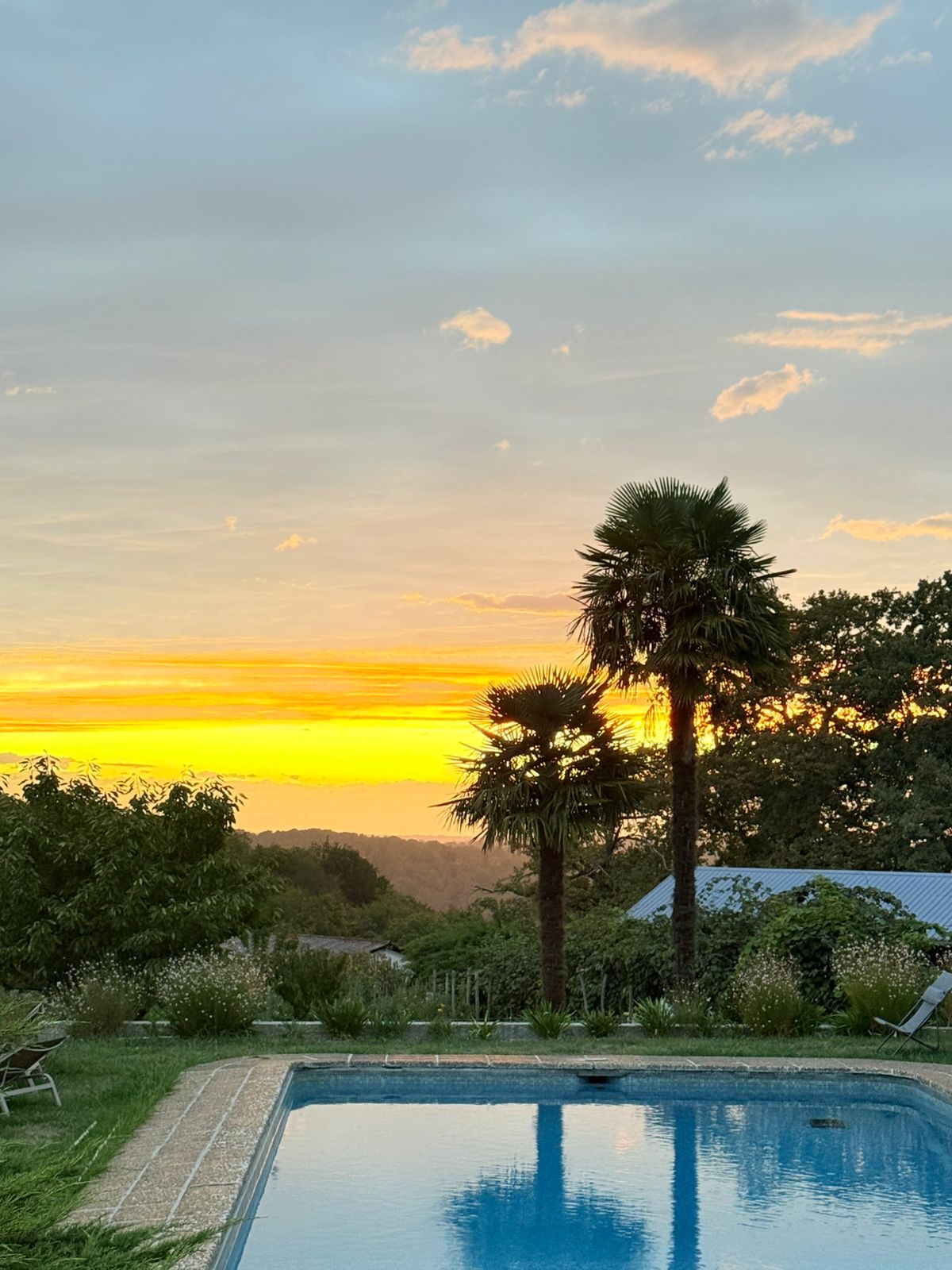
By evening, people gathered around the pool as the sun went down behind the palm trees on the property, wine in hand, still talking about color choices from that afternoon’s session.
That’s the part of a retreat that’s hardest to describe accurately and easiest to undersell: the conversations that happen once the sewing machines are off for the day are often where the real thinking happens.
What Rest Actually Does for a Retreat Like This
I don’t think the value of a week like this is only the teaching hours. Having real time to rest, to be inspired by a place rather than just instructed in it, changes what people are able to make. I watched students go further with their color transitions and their piecing decisions than I think they would have in a rushed weekend workshop, simply because they weren’t running on empty by day three.
What’s Coming in the 2027 Improv Garden Retreat
Next August, we’re back at Clos Mirabel, and the theme is my Improv Garden. We’ll still be surrounded by the same nature, flowers, and light that made this year’s retreat work — but the focus shifts toward building color transitions specifically for flowers, then moving into full improvisational construction of a garden composition, working with the actual elements and principles of design rather than a fixed pattern. No prior improv experience is needed to come — the whole week is built to take you from wherever you’re starting.
Why a Retreat, Not Just a Class
I teach plenty online, and I believe in what that format can do. But there’s a version of learning that only happens with real, sustained time in the same room, with the same small group, day after day — watching someone’s color decisions evolve from Monday to Friday, being able to sit down next to a specific piecing problem instead of explaining it in the abstract. A retreat is slower than a class by design, and I’ve come to think that slowness is most of what makes it work.
If You’re Considering Next August
The 2027 Improv Garden retreat is open for booking now, with a deposit to hold your spot and the balance due closer to the date. You can find the full details, dates, and booking information here.
I’ll be sharing more photos from this year’s group over the coming weeks — the surrounding countryside, the trip into Pau, and the quilts themselves, which genuinely surprised me with how far people pushed the Imaginary Places theme in just one week. If you’ve ever thought about combining a week of serious color and piecing work with an actual vacation in a beautiful part of France, I don’t think there’s a version of that I could describe that would do it more justice than just being there.