

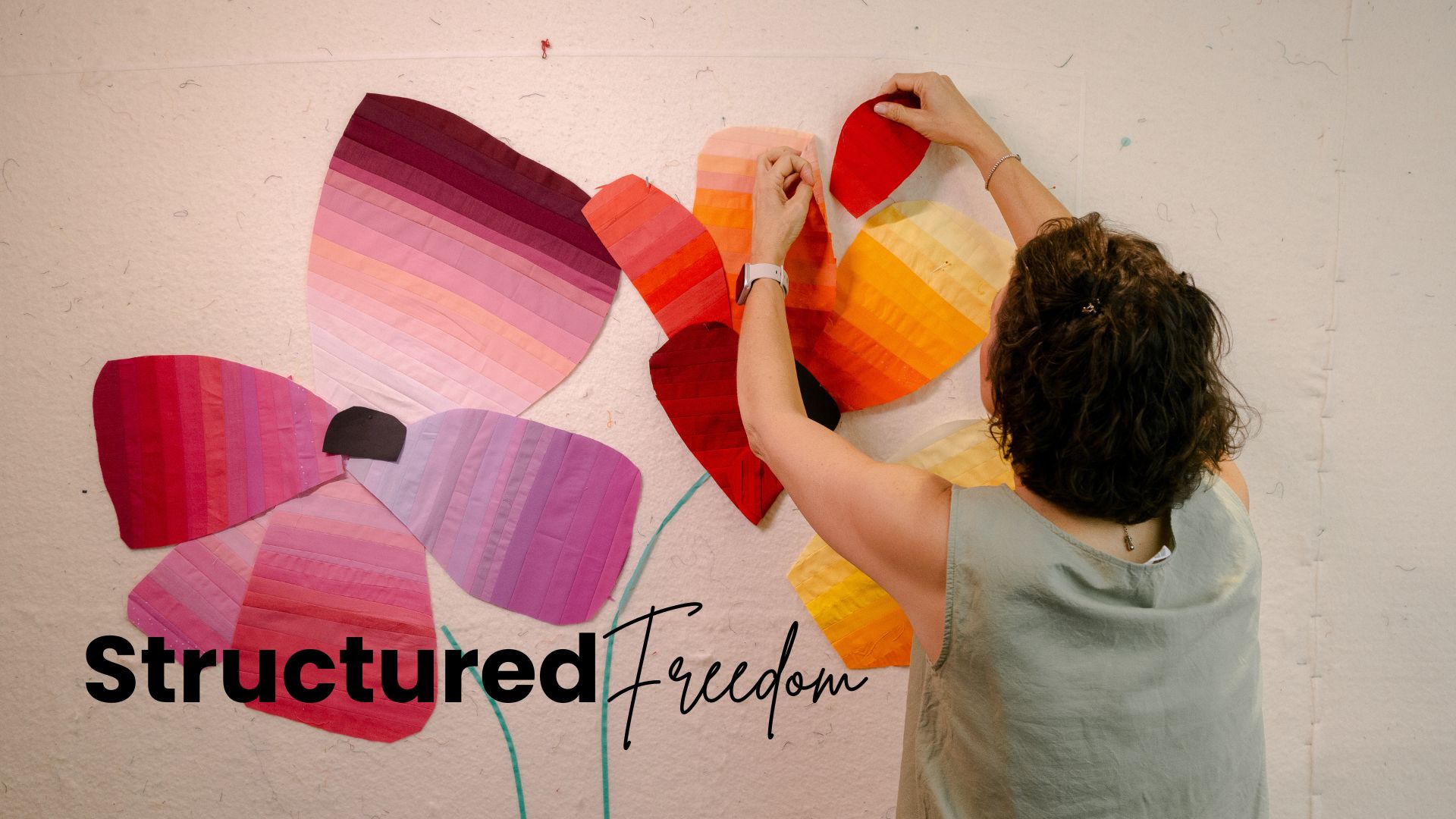
Creative constraints in quilting have a bad reputation. Most of us treat rules — a fixed palette, one shape, a strict seam allowance — as the enemy of expression, something to escape the moment we feel confident enough. I used to think that too. What I’ve learned, both from my own quilts and from the research on how creativity actually works, is closer to the opposite: the fewer choices you allow yourself, the more inventive your work becomes. I call this structured freedom, and it has become the closest thing I have to a personal philosophy of making.
Where This Idea Actually Came From
I didn’t arrive at structured freedom in a studio. I arrived at it by accident, on Instagram, when I asked my followers a simple question about their professional backgrounds before they found quilting. The replies poured in — engineers, accountants, nurses, teachers, lawyers — people whose working lives had trained them in precision, deadlines, and constraint, long before a single one of them threaded a needle. That post reached over 13,000 people and struck something real: a huge number of quilters arrive at this craft from careers built on rules, and instead of leaving those rules behind, they fold them into the work.
That’s exactly my own story. I spent years in logistics and then teaching engineering before I ever pieced a quilt, and I’ve written before about how that structural training shapes my creative process rather than working against it. The Instagram response confirmed something I’d only felt intuitively: structure isn’t the opposite of creative freedom. For a lot of us, it’s the thing that makes freedom usable.
What the Research Actually Says
This isn’t a nice story I tell myself to feel better about my process. It’s a well-documented finding in creativity research, and it runs directly counter to the popular image of the unbound artistic genius.
Harvard Business Review reviewed 145 empirical studies on how constraints affect creativity and innovation, across individuals, teams, and organizations. The consistent finding: a healthy dose of constraint improves creative output, and it’s the total absence of constraint that causes trouble. Without limits, people default to the first, most obvious idea that comes to mind — what psychologists call the path of least resistance — rather than pushing further to find something genuinely new. A well-chosen constraint forces you past your first instinct.
 Psychologist Patricia Stokes, who taught at Barnard College, Columbia University, built an entire body of research around this exact question, later published as Creativity from Constraints: The Psychology of Breakthrough. Stokes studied how figures like Frank Lloyd Wright and Igor Stravinsky made their breakthroughs — and found, again and again, that it wasn’t boundary-free freedom that produced the leap. It was a self-imposed rule, held with discipline, that forced the work somewhere it wouldn’t otherwise have gone. Wright’s insistence on working within a strict geometric grid, project after project, is what pushed him toward the radical spatial inventions that later defined his career. The constraint didn’t limit the breakthrough. It manufactured it.
Igor Stravinsky made a version of the same argument about his own music: the more constraints an artist accepts, he believed, the freer the imagination becomes inside them, because total liberty leaves you with nothing to push against.
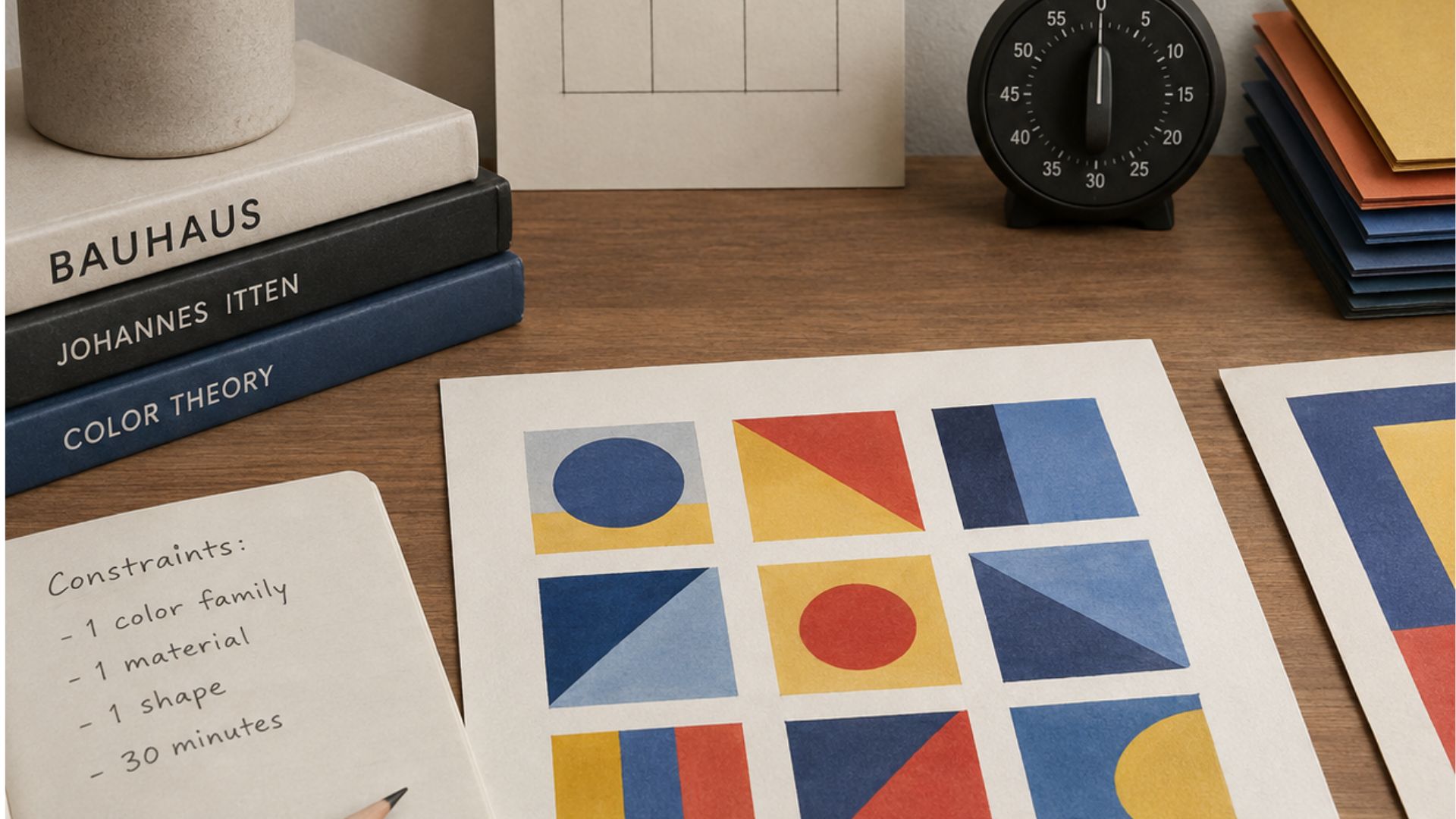
This is also the foundation the Bauhaus was built on. Johannes Itten’s foundation course — the same tradition my own teacher, Eduardo Vilches, carried forward at Universidad Católica in Santiago — was structured almost entirely around imposed exercises: a fixed set of materials, a single contrast to explore, a strict time limit. Students weren’t handed a blank canvas and told to express themselves. They were handed a rule and told to find out what happened inside it. A century later, that pedagogy is still how most serious art and design programs teach color and composition, precisely because it works. I’ve traced that same Itten-to-Vilches lineage in more detail in The Bauhaus Legacy, if you want the fuller story.
The Structure Has to Come First
This took me the longest to actually understand, and it’s the real heart of structured freedom: the structure has to come first. You can’t improvise meaningfully into a void. A quilter who sits down with unlimited fabric, no palette, no shape rule, and no size constraint isn’t set up for maximum freedom. They’re set up for paralysis. I’ve written before about improvisation as creative power, and the improvisation that actually works is never truly unstructured. It’s a structure loose enough to respond to, and tight enough to respond within.
This is also why I teach the way I do. My workshop Limits and Creativity exists because I watched the same pattern over and over in my students: the ones who were given a real constraint — one color family, one shape, a fixed number of fabrics — consistently produced more original, more personal work than the ones who were told they could do anything. Anything is a paralyzing brief. One color and total freedom of shape is a generative one.
What This Looks Like in My Own Work
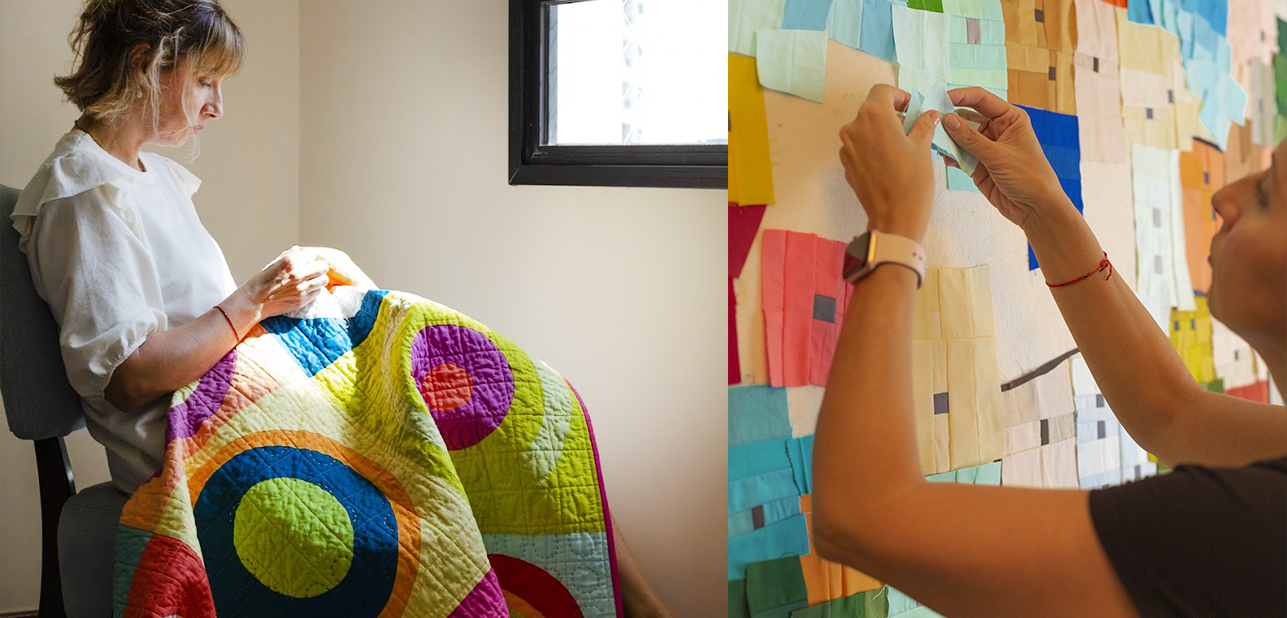
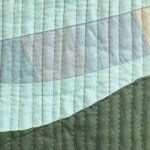
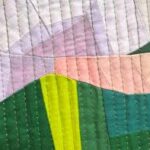
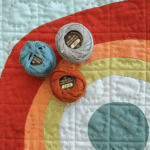
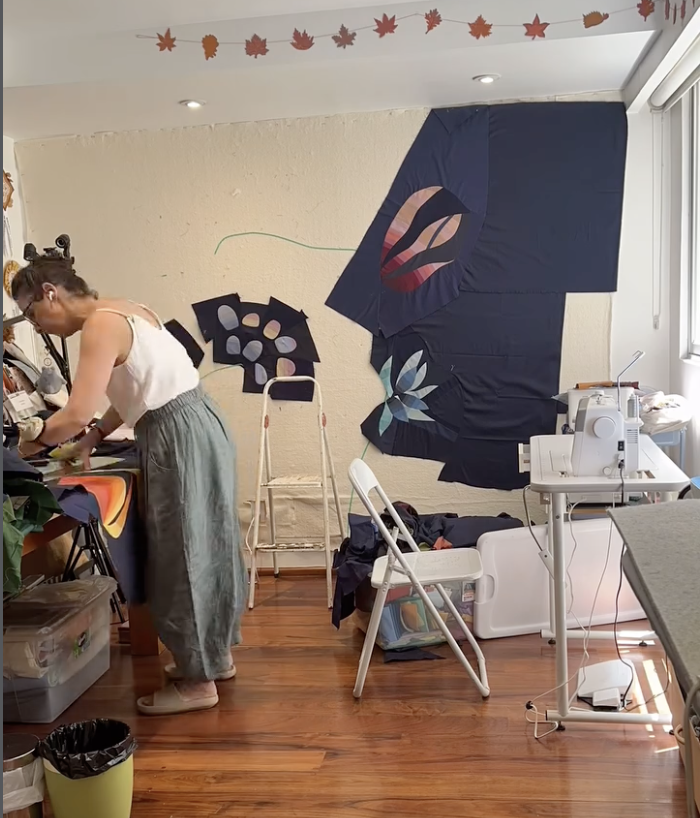
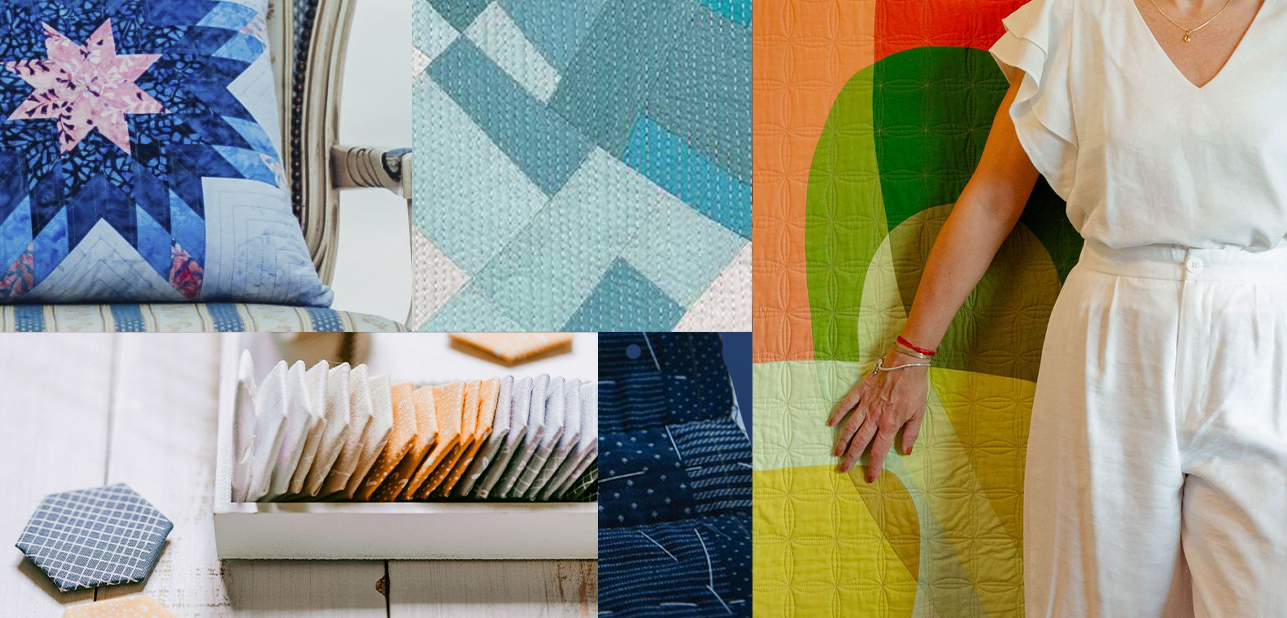
Structured freedom isn’t an abstraction for me — it’s the actual mechanism behind almost every design decision I make. I work exclusively in solid fabrics, which is itself a constraint I chose deliberately: no print to hide behind, no busyness to disguise a weak color decision. Every bit of texture in my quilts has to come from the quilting stitch itself, because I’ve removed every other option. That single rule has done more for my color instincts than any amount of unrestricted freedom ever could have.
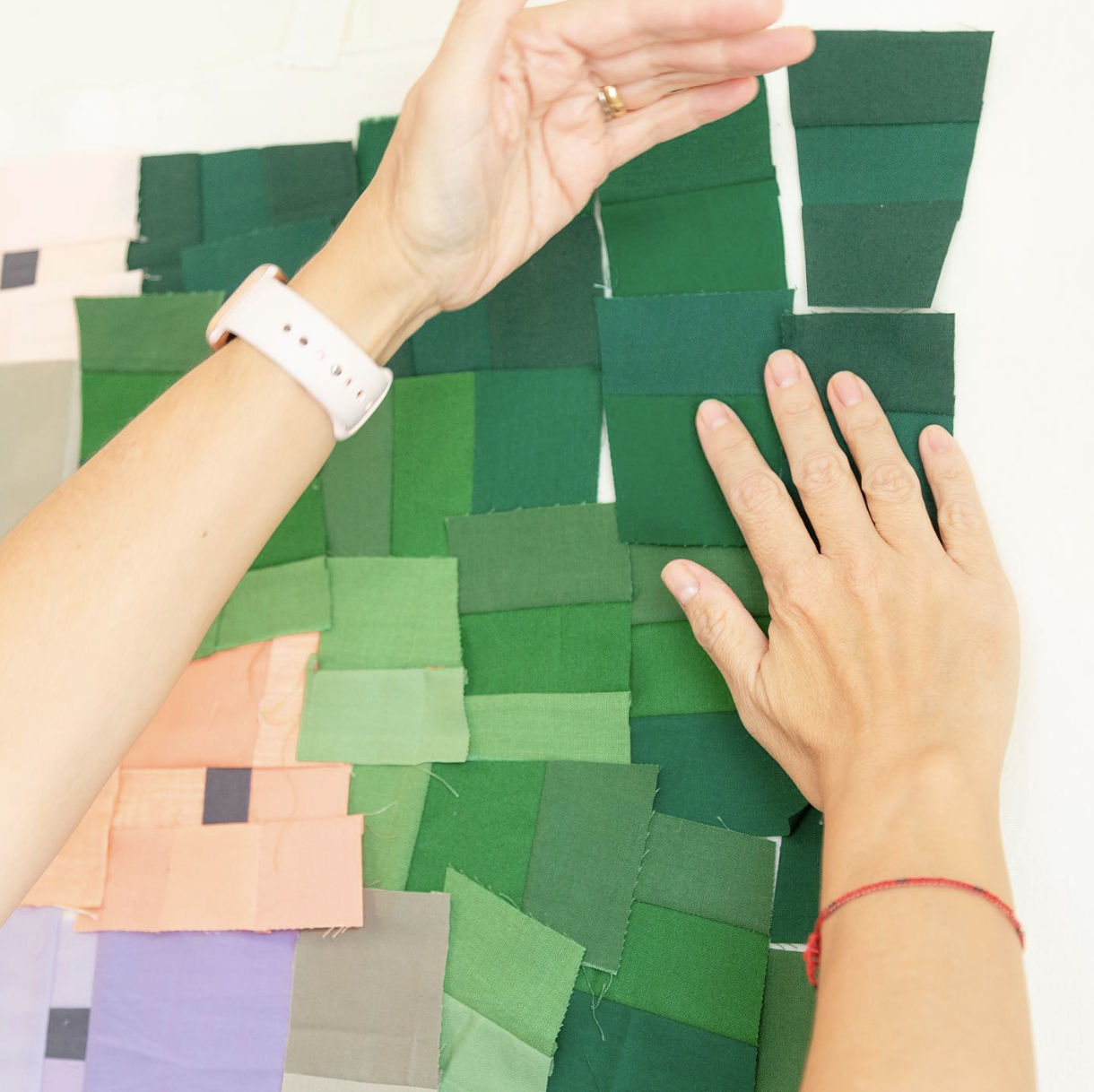
The same logic runs through my curved piecing — the freehand cutting I teach in Organic Shapes. Cutting without a template, freehand, feels like the freest part of my process — and it is, but only because it happens inside the constraint of a chosen palette and a rough compositional idea already in place. Remove the constraint and the same freehand cutting becomes directionless. It’s the boundary that gives the improvisation something to mean.
I’ve also written about how imperfection is essential to creative work — and structured freedom is closely related. A visible mistake, a seam that didn’t go as planned, is only meaningful because it happened inside a structure the viewer can sense. Without the structure, there’s no contrast for the imperfection to stand out against.
Try One Constraint, Not All of Them
You don’t need a grand philosophy to test this — you need exactly one deliberate limit on your next project, held seriously enough that you can’t quietly abandon it the moment it becomes inconvenient. Pick a single lever, not five at once, and see what changes in how quickly your decisions come.
If you want the fuller set of these exercises — the actual constraint recipes I use in my own studio practice, walked through with real quilts built from each one — that’s exactly what my Limits and Creativity workshop covers in depth.
We Are All Creative — Within Something
This idea connects directly to something I believe deeply: that creativity is not a rare gift but a basic human capacity. But that capacity needs somewhere to press against. Structured freedom is my answer to what that “somewhere” is — not a cage, but a shape strong enough to improvise inside of. The engineers and accountants and nurses who answered my Instagram post already knew this from their working lives, long before quilting gave them a place to use it on purpose. If your own creative life started somewhere structured — a classroom, a lab, a spreadsheet — I’d guess it’s already doing more for your quilting than you’ve given it credit for.
I keep coming back to this idea because it never fully resolves. Every time I think I’ve internalized it, a new quilt reminds me that the discomfort of choosing a limit, and trusting it, is the actual work — not a hurdle before the real work starts.
So here’s the question I’m actually sitting with lately: what’s the one rule in your own creative life that turned out to be doing more for you than you gave it credit for?
And if structured freedom is a topic your guild would want as a lecture rather than a blog post, it’s one of the talks and workshops I bring on the road.
If you want more of this kind of thing in your inbox, you can subscribe on the homepage — you’ll get a free pattern for joining.
Sources referenced: Harvard Business Review (hbr.org/2019/11/why-constraints-are-good-for-innovation); Patricia D. Stokes, Creativity from Constraints: The Psychology of Breakthrough (2005).